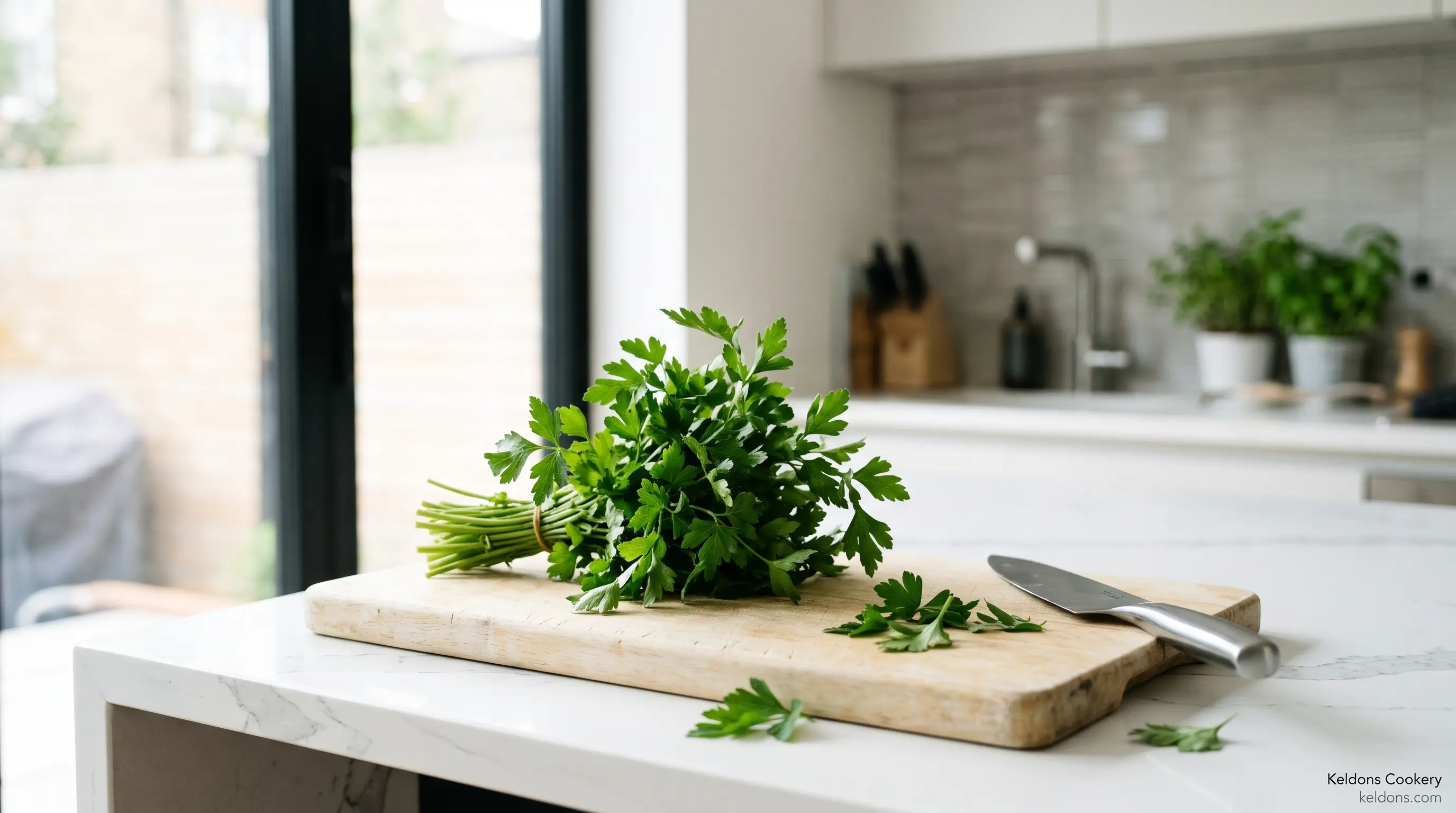
Parsley
Nutritional Values
In a Pinch Substitutions:
- Fresh Chervil: Swap in an equal 1:1 ratio for delicate French sauces or light egg dishes; it offers a similar feathery texture with a very faint, pleasant anise undertone.
- Fresh Cilantro: Use cup-for-cup in zesty marinades, grain bowls, and fresh salsas if you enjoy its bold, citrusy herbal punch, though its distinct aroma is far more pungent.
- Fresh Celery Leaves: Chop tender inner leaves finely in equal measure for hearty soups or stocks to replicate that crisp, grassy bite and bright green plate presentation.
Tricks and Hacks
- Stem Broth Boost: Never discard crunchy stems; tie them into bundles to simmer inside stocks, braises, and soups for deep aromatic depth before straining cleanly away.
- Paper Towel Roll: Roll damp washed leaves tightly inside dry paper towels before chopping to slice cleanly without crushing delicate cell walls into wet green paste.
- Gremolata Finish: Mince fresh flat leaves alongside fresh lemon zest and raw minced garlic to produce a classic, zesty finishing topper for braised meats and stews.
Advertisement
Longevity
- Shelf Life: Trim stem ends, place upright in a jar with an inch of fresh water, tent loosely with a plastic bag, and refrigerate at 36°F to 38°F to keep crisp for 2 weeks.
- Freezer Life: Blend clean leaves with extra virgin olive oil, freeze in silicone ice cube trays, and store cubes in airtight bags for up to 6 months for quick sauce drops.
Savvy Savings
- Money Saver: Buy whole leafy bunches with roots or long stems intact at international markets; they cost a fraction of expensive pre-packaged plastic supermarket clamshells.
- Other Uses: Puree surplus wilting bunches with toasted walnuts, garlic, parmesan, and olive oil to make a vibrant, nutrient-dense parsley pesto for quick weeknight pasta.
Advertisement
Health Benefits
- Nutritional Highlights: Remarkably packed with vitamin K, vitamin C, vitamin A, folate, iron, and powerful plant flavonoid antioxidants like apigenin and luteolin.
- Body Benefits: Supports bone mineralization, aids immune defense, acts as a gentle natural diuretic, and delivers high chlorophyll levels to naturally freshen breath.
Advertisement
Parsley, Sage, Rosemary, and Mine
Reclaiming parsley from its outdated role as a forgotten diner garnish is one of the quickest ways to bring vivid color and punchy freshness to everyday cooking. Whether you whip it into a garlicky chimichurri, stir handfuls into a warm skillet of pasta, or toss it across roasted root vegetables, this emerald gem always delivers. Keep a fresh jar standing tall in your fridge, and let its bright green energy take over.Advertisement
Quick Picks
Advertisement
Advertisement
Handy Tip
When boiling rice, stir a little olive oil or cooking oil into the water. This simple hack prevents the grains from clumping and sticking together, making sure each grain of rice remains separate and fluffy. It's a small step but it makes a big difference.
Featured Offering

Advertisement
Keldons Cookery © 1998 - 2026 All rights Reserved | Secured with SSL
Homemade Goodness. Cook what you eat. Love what you cook!