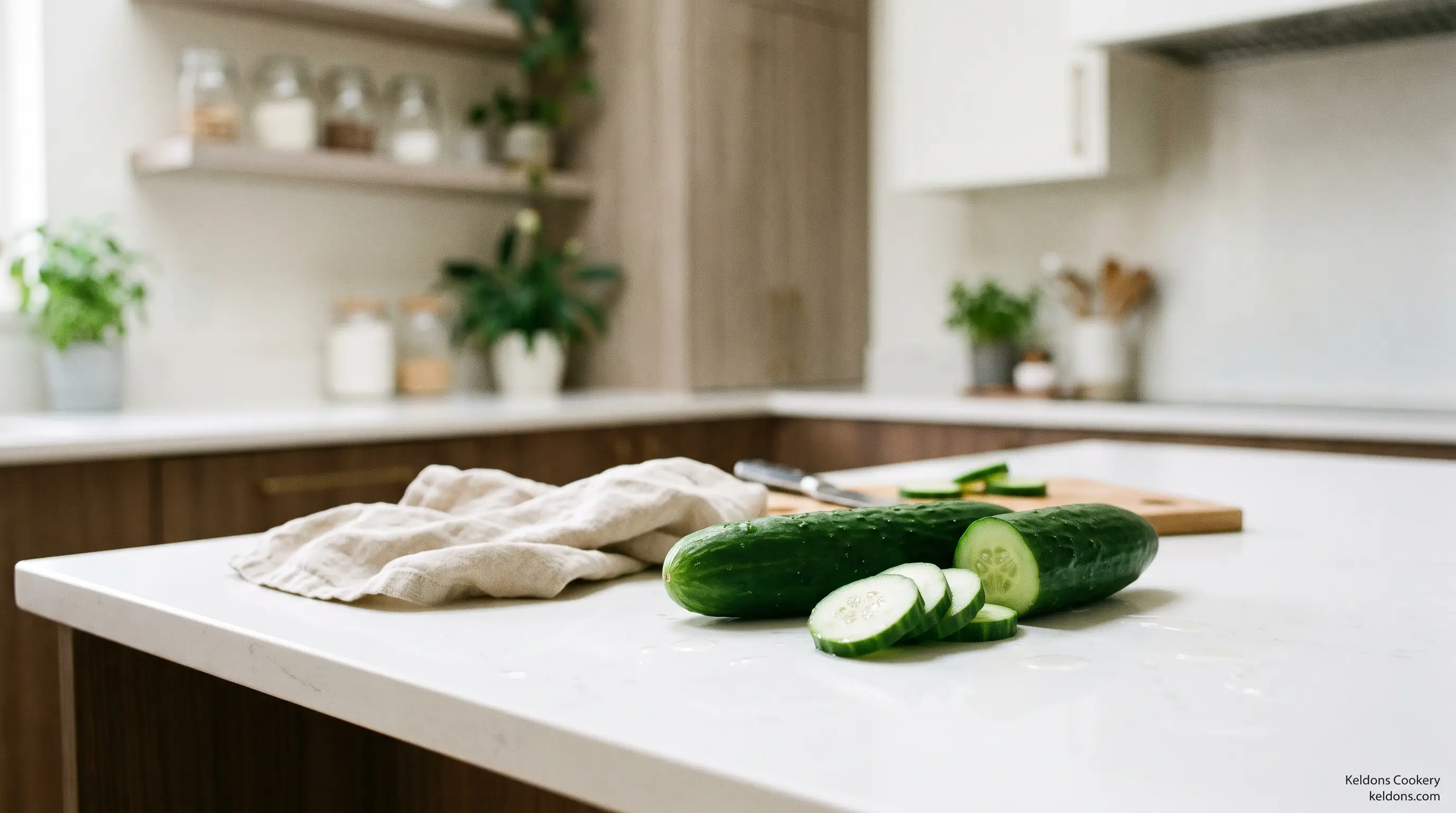
Cucumbers
Nutritional Values
Common Grocery Cucumber Varieties
- English Greenhouse Cucumbers: Long, slender fruits wrapped in plastic film with thin, tender skin and tiny seeds that require zero peeling or scooping before slicing into fresh salads.
- Garden Slicing Cucumbers: Shorter, thicker dark green cucumbers coated in food-grade wax to retain moisture, featuring firmer skin and larger seeds best peeled and scooped before use.
- Persian & Kirby Picklers: Petite, bumpy-skinned varieties prized for dense, crisp flesh and minimal water content that stay extra crunchy in quick vinegar pickles and fresh mezze platters.
Crisp Raw & Chilled Kitchen Uses
- Finely Diced Salads: Fold small, uniform cucumber cubes into herb tabbouleh, tomato salads, and chopped grain bowls where cool crunch balances bright lemon juice and fruity olive oil.
- Creamy Yogurt Dips: Grate peeled cucumber and squeeze out excess liquid before stirring into thick yogurt, garlic, and dill for classic Greek tzatziki or cooling South Asian raita.
- Quick Fridge Pickles: Submerge thin cucumber coins in warm cider vinegar, water, salt, sugar, and dill seeds for twenty-four hours to create snappy sandwich toppers without canning.
Advertisement
Moisture Control & Peeling Tips
- Salting Out Water: Toss sliced cucumbers with a pinch of salt in a colander for fifteen minutes, then pat dry so excess water never dilutes creamy dressings or makes sandwiches soggy.
- Striped Peeling Trick: Run a vegetable peeler lengthwise down garden cucumbers in alternating strips to leave behind decorative green bands, gentle fiber, and pleasant textural contrast.
- Center Seed Scooping: Halve thick slicing cucumbers lengthwise and drag a small metal spoon down the center channel to remove watery seed pockets before dicing for salsas or salads.
Crunchy Pantry & Produce Swaps
- Raw Green Zucchini: Substitute finely diced raw young zucchini in chopped salads and slaws when cucumbers are unavailable, trading watery sweetness for slightly firmer, nutty crunch.
- Crisp Jicama Sticks: Swap peeled jicama matchsticks into fresh salsas and crudité platters for clean, juicy snap and mild sweetness that holds up for hours without weeping moisture.
- Celery Hearts & Fennel: Use thinly sliced pale celery stalks or crisp fennel bulb in grain salads to provide cool, hydrating texture alongside subtle herbal and savory aromatics.
Advertisement
Proper Counter & Fridge Storage
- Mild Fridge Shelf: Store whole cucumbers on an upper refrigerator shelf rather than the coldest back corner, preventing chilling injury that causes water-soaked pits and mushy spots.
- Paper Towel Cushion: Wrap dry, unwashed cucumbers loosely in a clean paper towel inside an open produce bag to absorb surface condensation and keep skins crisp for up to one week.
- Ethylene Gas Distance: Keep cucumbers separated from ripe tomatoes, bananas, and apples in storage, because natural ethylene gas from those fruits accelerates yellowing and softening.
Advertisement
Cool As A Cucumber
Cucumbers are the ultimate low-effort refresher for busy home kitchens, bringing crisp snap and clean hydration to everything from a five-minute sandwich to a vibrant Mediterranean grain salad. Whether you are grating them into garlicky yogurt dip, slicing English rounds onto crunchy toast, or salting coins for a quick vinegar pickle, this garden classic keeps your menu feeling bright without ever turning on the stove. Keep a few tucked safely on an upper fridge shelf and stay cool at dinnertime.Advertisement
Advertisement
Advertisement
Handy Tip
Forget the old wives' tale of throwing pasta against the wall to see if it's cooked. Not only does this make your kitchen walls difficult to clean, but it's also not the most reliable method to test pasta's doneness. There's a better way to make sure your pasta is perfectly cooked.
Featured Offering
Wild Game Rattlesnake And Bean Chili
Recipe of: United States

Filed Under: Wild Game
Prep Method: Stove Top
Base: Rattlesnake
Made with: 11 Ingredients
Advertisement
Keldons Cookery © 1998 - 2026 All rights Reserved | Secured with SSL
Homemade Goodness. Cook what you eat. Love what you cook!