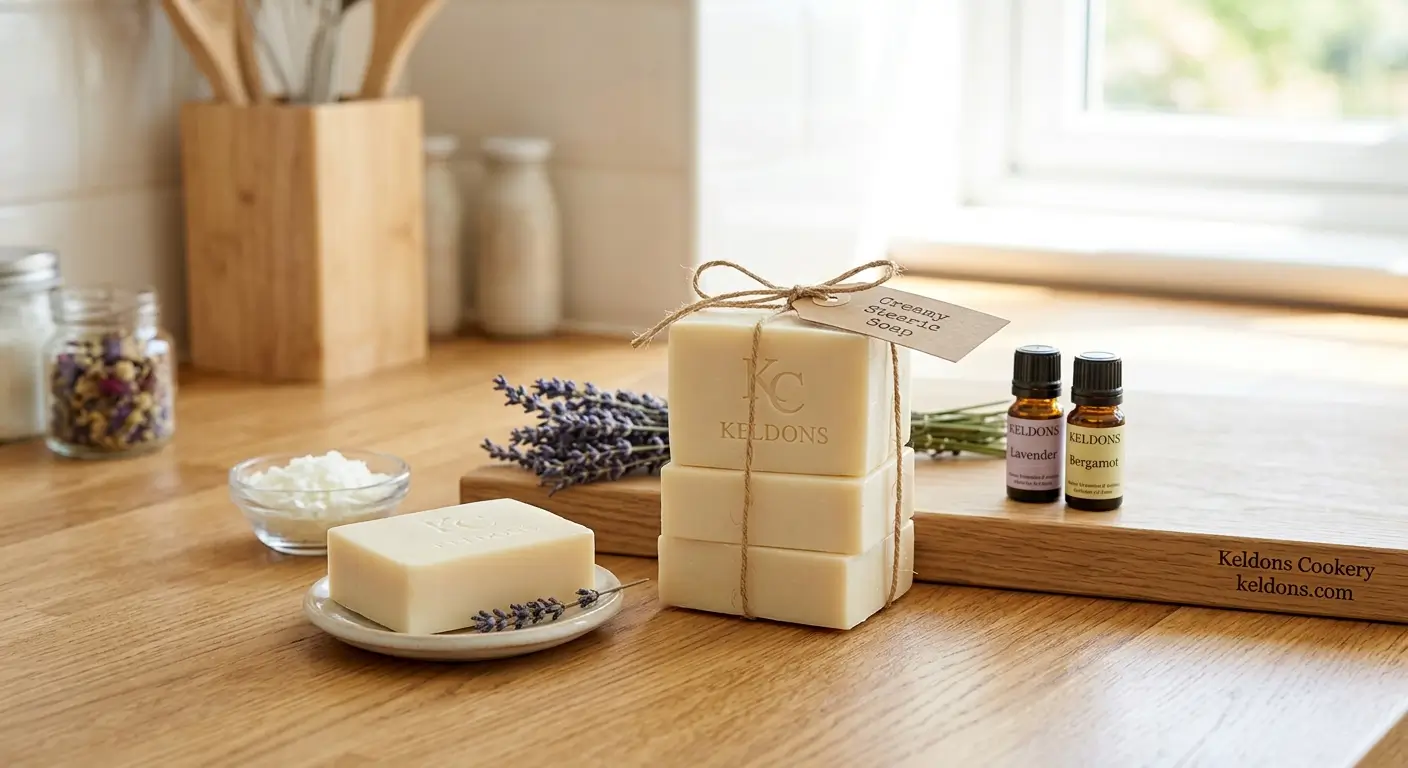
Creamy Stearic Soap
 Canada
Nutritional Values (per serving)
Ingredients:
| Qty | Unit | Ingredient | ||
|---|---|---|---|---|
| 1 1/4 | cups | Stearic Acid |
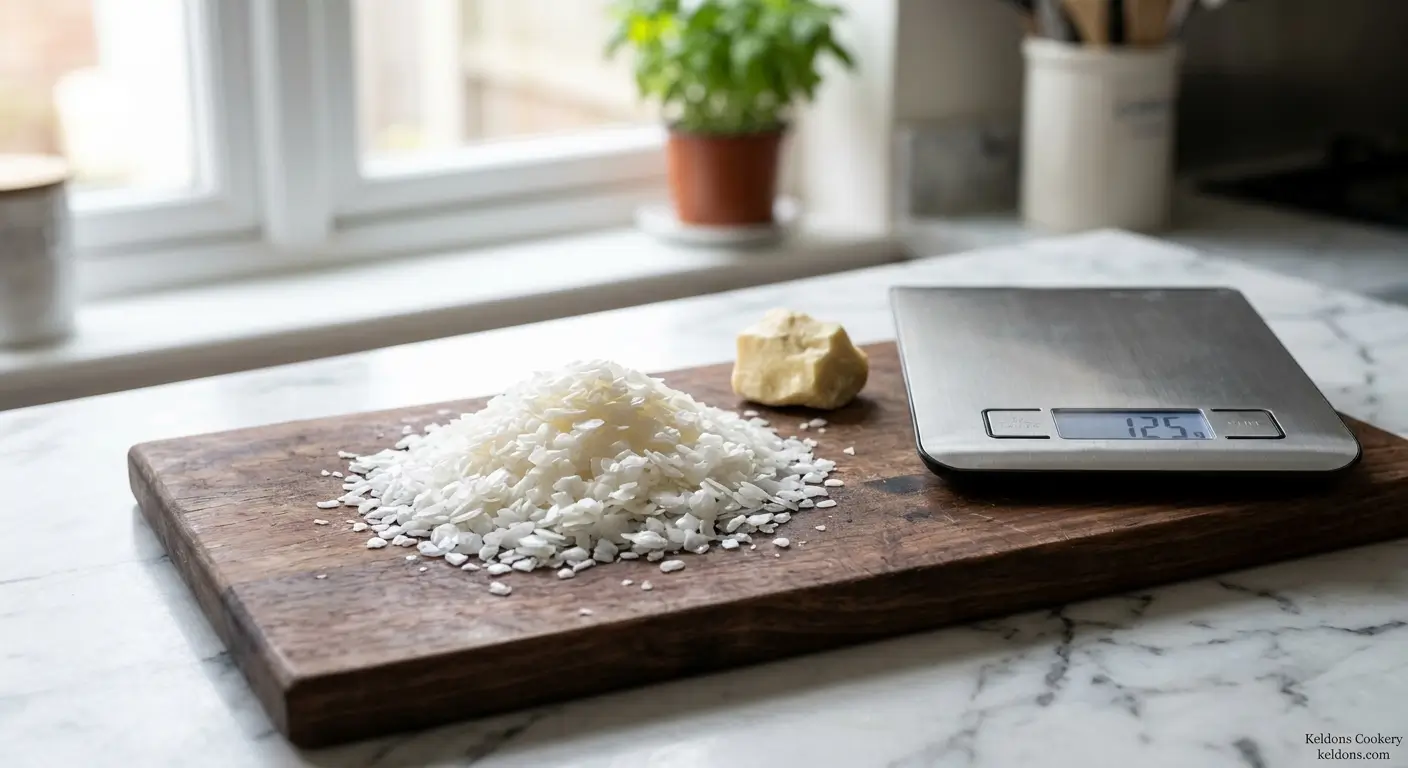
Stearic Acid
Stearic acid - pronounced 'STEE-ar-ik AS-id' is a natural fat found in animal products and some plants. The name comes from an old Greek word for firm fat or tallow....
|
|
| 1/3 | cup | Coconut Oil | ||
| 1/3 | cup | Olive Oil |
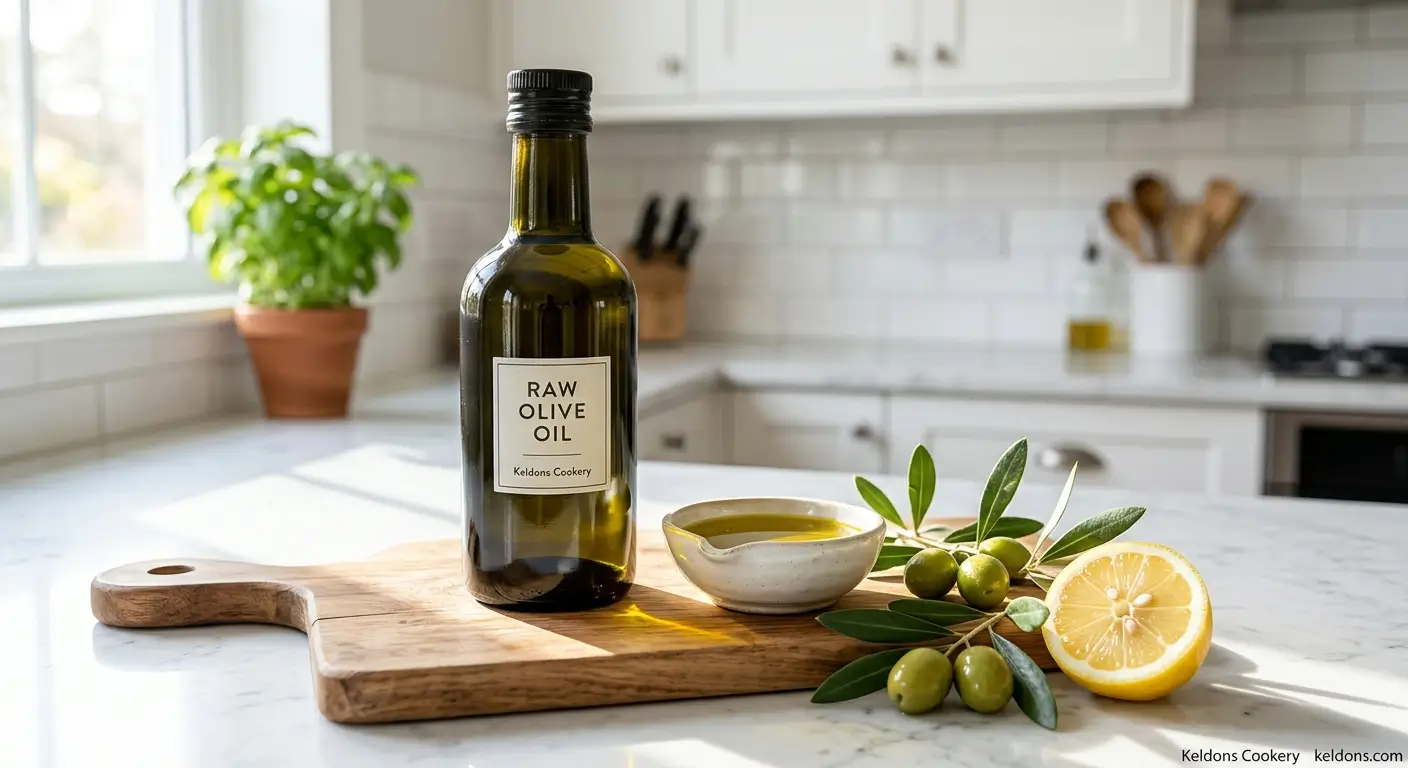
Olive Oil
Olive oil (pronounced AHL-iv oyl) is the luxurious liquid gold of the pantry shelf, acting as a rich, silky foundation that effortlessly breathes aromatic Mediterranean life into your everyday cooking....
|
|
| 3 | ounces | Lye | ||
| 1 | cup | Water » distilled |
Water
Water, the essence of life, is a transparent, tasteless, and odorless liquid that covers about 71% of the Earth's surface. Its neutral flavor allows other ingredients to shine while enhancing...
|
|
| 1 | part | Essential Oils » for scent |
| Prep Time | Process Time | Overall Time |
|---|---|---|
| 30 Minutes | 6 Weeks | 6 weeks 30 minutes |
Directions:
Warning: This process uses 3 ounces of lye (sodium hydroxide). Lye is a highly corrosive chemical that can cause severe skin burns and eye damage. Always wear your safety goggles and heavy gloves. Always work in a well-ventilated space or outdoors. Always pour the 3 ounces of lye slowly into the 1 cup of distilled water. Never pour water into lye, or it will splash and react violently. Keep children and pets away from your workspace.
1. Ventilate: Move to a well-ventilated area, put on your safety gear, and slowly add the 3 ounces of lye into the 1 cup of distilled water inside a heat-resistant container.
2. Dissolve: Stir the liquid carefully with a heat-resistant spoon until the 3 ounces of lye is fully dissolved, then set the container aside to cool down.
3. Melt: Place 1 1/4 cups of stearic acid, 1/3 cup of coconut oil, and 1/3 cup of olive oil into a double boiler, and gently heat them until they turn completely liquid.
4. Monitor: Check the heat with your thermometer to make sure the melted 1 1/4 cups of stearic acid, 1/3 cup of coconut oil, and 1/3 cup of olive oil do not go over 105°F.
5. Combine: Wait until both the 3 ounces of lye liquid and the melted oils are between 95°F and 105°F, then slowly pour the lye liquid into the oils while stirring continuously.
6. Blend: Mix the liquid with an immersion stick blender until it thickens to a pudding-like consistency called 'trace', showing the soap mixture is safely bound together.
7. Scent: Pour 1 part of your favorite essential oils into the thickened soap mixture if you want a nice fragrance, and stir gently to mix it in completely.
8. Mold: Pour the finished soap mixture carefully into your prepared soap mold.
9. Cover: Place a layer of plastic wrap directly over the top of the soap mixture in the mold to keep white ash from forming on your bars.
10. Insulate: Wrap the whole covered mold tightly in old towels to keep the heat trapped inside.
11. Rest: Allow the soap mixture to sit completely undisturbed in the wrapped mold for 24 hours until it feels nice and firm.
12. Slice: Unmold the firm soap block and cut it into clean bars using a sharp kitchen knife or a dedicated soap cutter tool.
13. Cure: Stand the cut soap bars upright in a cool, dry place with good airflow, and leave them to cure for 4 to 6 weeks.
14. Harden: Let the soap bars rest for the full curing time so they become mild on the skin and perfectly hard.
15. Enjoy: Share your beautifully cured, handcrafted bars with family and friends!
 / 2778
Recipes that Compliment:
Advertisement
Tested & True
Brining chicken in saltwater before cooking can significantly enhance its juiciness and flavor. This simple hack involves soaking the chicken in a saltwater solution, which helps the meat retain moisture and stay succulent throughout the cooking process.
Advertisement
Quick Picks
/ 2167 / 2636 / 3496 / 2852 / 4970
Keldons Cookery © 1998 - 2026 All rights Reserved | Secured with SSL
Homemade Goodness. Cook what you eat. Love what you cook!