Sesame Seeds
Nutritional Values
Close Cousins & Stand-Ins
- Hulled Hemp Hearts: Offer a remarkably similar mild, nutty richness and soft crunch when sprinkled over warm grain bowls, roasted vegetables, or morning avocado toast.
- Poppy Seeds: Deliver comparable tiny visual contrast and subtle earthy snap on baked burger buns, lemon muffins, and creamy coleslaw dressings when you run low.
- Finely Chopped Peanuts: Provide bold roasted nuttiness and hearty texture across stir-fries, cold sesame noodles, and spicy Asian dipping sauces in a quick pantry pinch.
- Sunflower Seeds: Mimic the toasted oilseed flavor profile when lightly crushed and dry-pan roasted, working especially well for homemade tahini-style spreads and crusts.
Kitchen Cheat Codes
- Dry Skillet Toast: Shake raw seeds in a dry stainless steel skillet over medium-low heat for three minutes until golden and fragrant to unlock deep, complex roasted oils.
- Immediate Pan Transfer: Tip toasted seeds onto a cool ceramic plate the second they turn golden, because residual skillet heat continues cooking and quickly burns them bitter.
- Sticky Crust Binder: Brush chicken breasts or tuna steaks with a thin glaze of egg white or honey before pressing into seeds so the crunchy coating stays firmly attached.
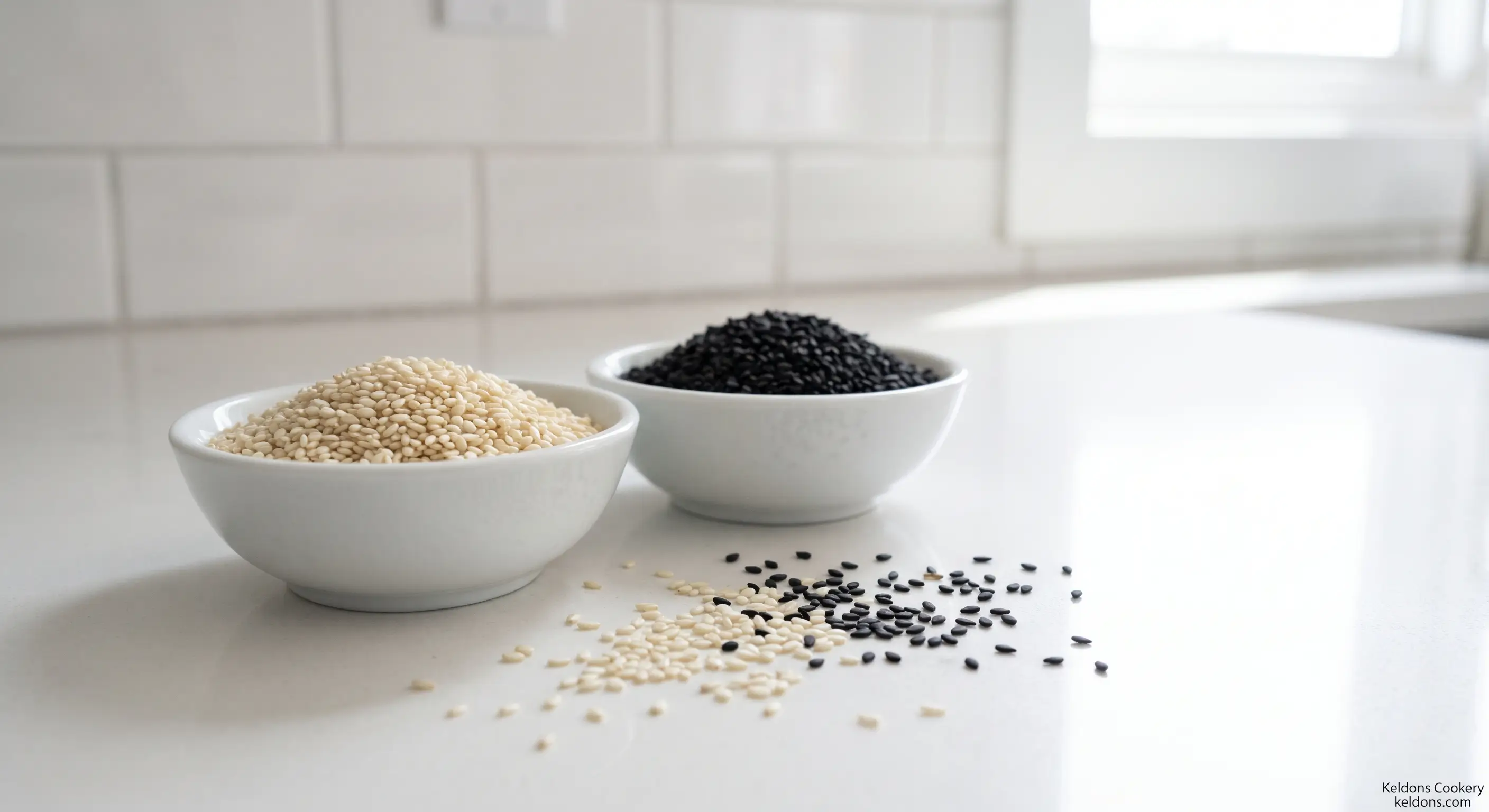
- Two-Tone Visual Pop: Mix equal parts white and black sesame seeds in a dedicated shaker jar to give simple rice bowls, sushi rolls, and steamed greens instant contrast.
Advertisement
White vs. Black Sesame Seeds
- Hulled White Varieties: Feature a smooth, ivory exterior with the fibrous outer hull removed, delivering a mild, buttery sweetness ideal for burger buns, tahini, and candies.
- Unhulled Tan Varieties: Retain their intact outer husk, giving them extra mineral-rich crunch, slightly deeper earthy notes, and higher calcium content than hulled seeds.
- Earthy Black Varieties: Keep their dark, dramatic hull intact, offering a bolder, slightly bitter roasted flavor prized in Asian desserts, noodle garnishes, and spice blends.
- Distinct Oil Profiles: White seeds press into mild, light cooking oils, while heavily roasted seeds yield the dark, intensely aromatic toasted sesame oil used for finishing.
Staying Alive: Shelf & Stash
- Cool Pantry Storage: Keep tightly sealed glass jars in a dark cupboard away from stove heat and sunlight, preserving fresh crunch for up to three months at room temperature.
- Refrigerate for Longevity: Move opened bags into an airtight container inside your refrigerator door to protect delicate polyunsaturated oils from oxidizing for up to six months.
- Freezer Bulk Vault: Stash large value bags inside your freezer for a full year; tiny seeds contain very little water and can be toasted straight from frozen without thawing.
- Separate Toasted Batches: Store pre-toasted seeds in a smaller labeled jar and use them within a few weeks, since heating accelerates natural oil breakdown compared to raw seeds.
Advertisement
Why Your Body Smiles
- Bone-Building Minerals: Pack impressive amounts of plant-based calcium, magnesium, and phosphorus—especially in unhulled varieties—to support strong daily skeletal health.
- Heart-Healthy Fats: Supply beneficial monounsaturated and polyunsaturated fatty acids alongside unique plant lignans that help support healthy cholesterol balance.
- Plant Protein & Fiber: Add concentrated nutty protein and gut-friendly dietary fiber to simple salads and stir-fries without weighing down light weeknight meals.
- Antioxidant Protection: Deliver natural sesamin and vitamin E compounds that help shield everyday cells from oxidative stress while boosting overall dish flavor.
Advertisement
Open Sesame to Better Flavor
Never treat these tiny pantry gems like an afterthought reserved solely for fast-food burger buns. Five minutes in a warm dry skillet turns humble sesame seeds into crunchy, golden flavor bombs that rescue plain rice, upgrade roasted broccoli, and give weeknight noodles instant restaurant flair. Keep a jar chilled, toast them just until fragrant, and watch every dish come alive. Grab a jar on your next store run and unlock a whole world of crunch.Advertisement
Quick Picks
Advertisement
Advertisement
Handy Tip
To enjoy the smoothest, most flavorful ice cream every time, keep it tightly covered with a lid or plastic wrap. This simple hack prevents freezer burn, safeguarding your ice cream’s texture and taste. Never settle for icy or scoops again, cover up and savor the deliciousness.
Featured Offering
Fava Bean Salad
Recipe of: Italy

Filed Under: Vegetable
Prep Method: Stove Top
Made with: 8 Ingredients
Advertisement
Keldons Cookery © 1998 - 2026 All rights Reserved | Secured with SSL
Homemade Goodness. Cook what you eat. Love what you cook!