Leeks
Nutritional Values
Close Cousins & Stand-Ins
- Sweet Vidalia Onions: Deliver a comparable gentle, sugary allium base when slowly sweated in butter or olive oil for creamy soups, quiches, and savory tart fillings.
- Whole Scallions: Offer bright, crisp allium flavor using both their tender white bulbs and green tops, making an easy weeknight stand-in for quick sautés and stir-fries.
- French Shallots: Provide delicate, sweet-savory complexity with zero harsh bite when finely sliced and melted slowly into pan sauces, risottos, and braised chicken.
- Tender Fennel Bulbs: Mimic the silky, melting texture of braised leeks while adding a subtle, sweet anise warmth to roasted vegetable trays and seafood stews.
Kitchen Cheat Codes
- Cold Water Swish Bath: Slice stalks lengthwise and chop into half-moons, then swish them in a big bowl of cold water so heavy sand sinks to the bottom while clean rings float.
- Skim From the Top: Scoop washed leek rings directly out of the water bath with a slotted spoon instead of pouring through a colander, leaving gritty dirt behind in the bowl.
- Low and Slow Sweat: Cook sliced white and light green rings over low heat with butter and a pinch of salt until translucent and sweet, never letting them scorch bitter.
- Save Tough Dark Tops: Freeze washed dark green leaves in a zip-top bag to simmer into homemade chicken or vegetable stocks instead of tossing edible flavor in the trash.
Advertisement
Anatomy of a Leek
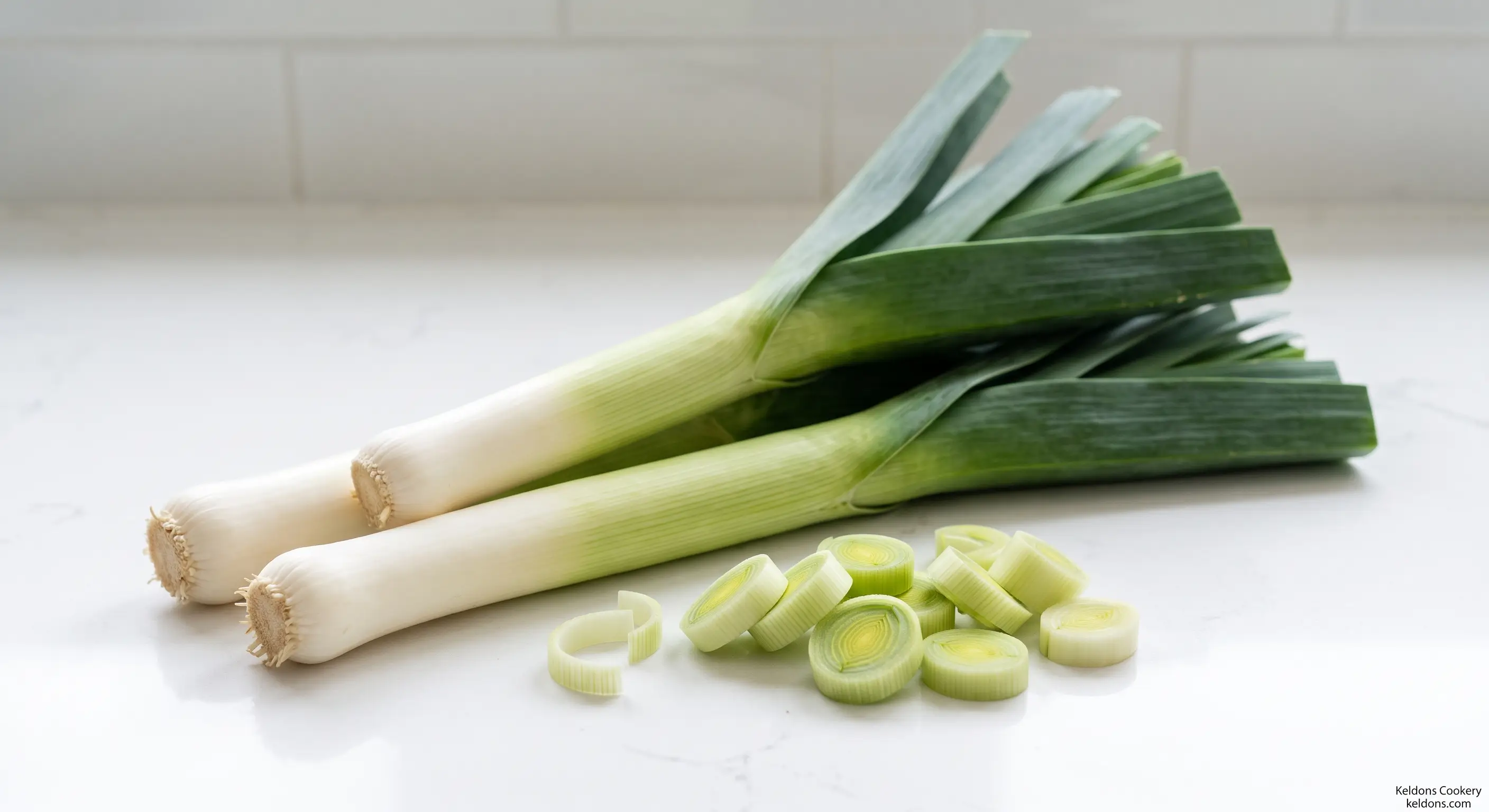
- Tender White Base: Represents the sweetest, softest portion of the stalk, melting effortlessly into velvety potato soups, creamy gratins, and delicate butter-braised sides.
- Pale Light Green Neck: Offers a slightly firmer bite and balanced grassy sweetness, working seamlessly alongside the white base in tarts, frittatas, and pan sauces.
- Fibrous Dark Green Leaves: Contain tough cellulose fibers that stay chewy in quick sautés, making them best reserved for bouquet garni bundles, stocks, and long braises.
- Bearded Root End: Holds the concentric rings together during slicing; trim away the stringy root hairs cleanly while keeping a thin slice of the base intact for easier prep.
Staying Alive: Shelf & Stash
- Unwashed Crisper Storage: Tuck whole, unwashed leeks loosely wrapped in a perforated plastic bag inside your fridge crisper drawer to keep stalks firm for up to two weeks.
- Odor Containment Wrap: Seal cut or trimmed stalks inside an airtight container or beeswax wrap so their gentle allium aroma does not perfume nearby butter or berries.
- Dry After Washing: Spin chopped leeks completely dry in a salad spinner before refrigerating in a paper-towel-lined container to prevent premature slime and spoilage.
- Blanch Before Freezing: Blanch sliced rings in boiling water for two minutes, shock in ice water, and pat dry before freezing flat for convenient soup starters all winter.
Advertisement
Why Your Body Smiles
- Prebiotic Gut Fuel: Supply rich soluble inulin fibers that nourish beneficial digestive bacteria and support smooth, comfortable everyday gut function.
- Heart-Protective Polyphenols: Deliver natural kaempferol antioxidants alongside vitamin K to help support healthy blood vessels and everyday cardiovascular wellness.
- Gentle Digestive Profile: Offer classic allium nutrients with milder sulfur compounds than raw bulb onions, making them gentler on sensitive stomachs when cooked.
- Low-Calorie Flavor Volume: Add generous sweet-savory body, vitamins A and C, and satisfying texture to soups and skillets with minimal calories or fat.
Advertisement
Take a Leek on the Wild Side
Never let a little hidden garden grit scare you away from one of the sweetest, most versatile alliums in the produce aisle. Once you master the five-minute cold water swish bath, leeks turn humble potatoes into five-star soup, transform weeknight pasta into silky comfort food, and rescue plain roasted chicken with sweet caramelized depth. Grab a fresh bunch, wash them right, and let them melt into dinner tonight.Advertisement
Quick Picks
Advertisement
Advertisement
Handy Tip
Don't let your coffee beans lose their aroma. Keep them fresh by storing them in an airtight container. This blocks moisture and air, which can degrade the beans and diminish their rich flavor. With this hack, every cup of coffee you brew will taste freshly roasted.
Featured Offering
Avocado Buttermilk Sherbet
Recipe of: Canada

Filed Under: Fruit
Prep Method: Freezer
Made with: 6 Ingredients
Advertisement
Keldons Cookery © 1998 - 2026 All rights Reserved | Secured with SSL
Homemade Goodness. Cook what you eat. Love what you cook!