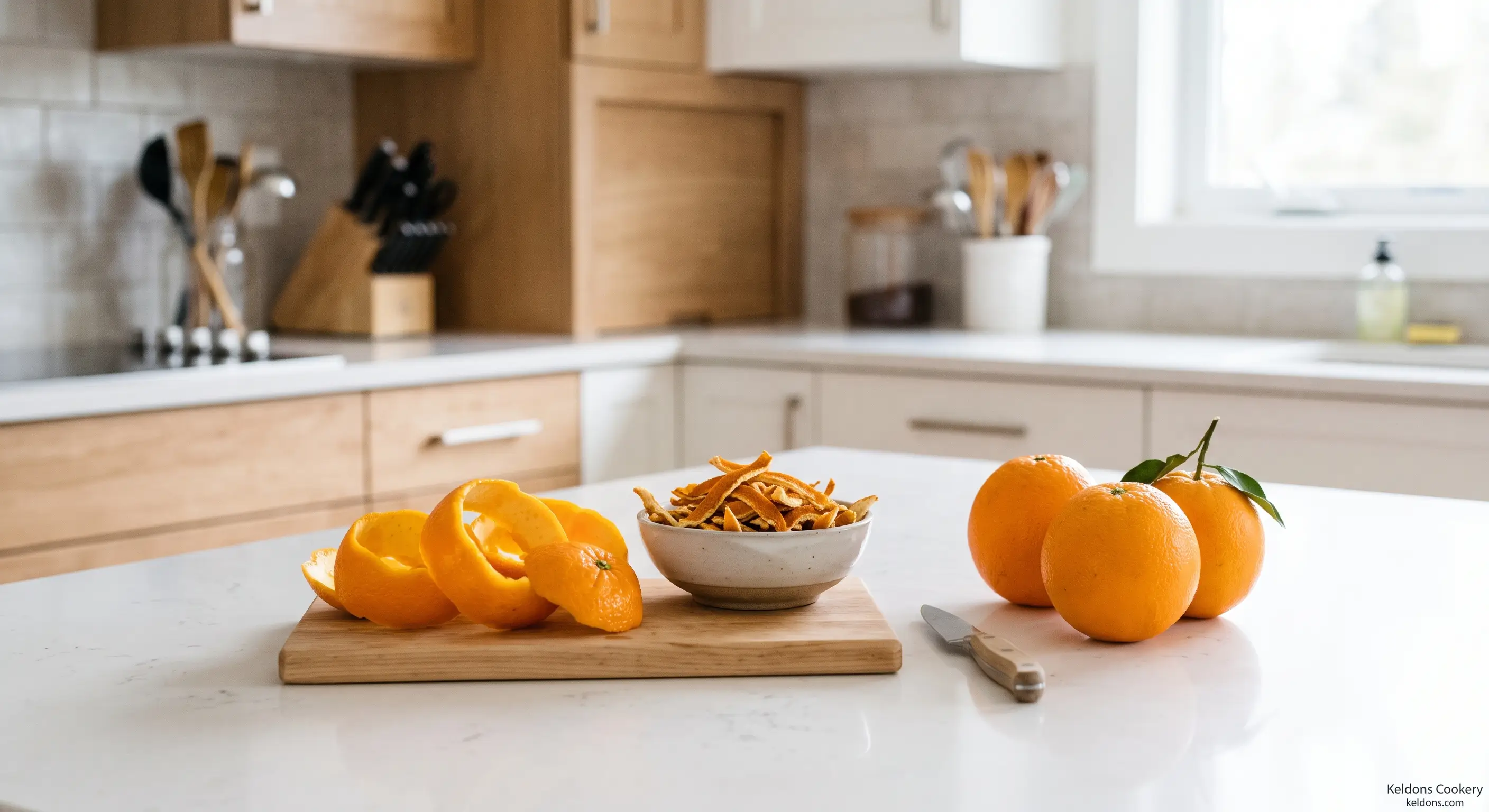
Orange Peel
Nutritional Values
Peel Strips vs. Fine Zest
- Intact Strips & Twists: Unlike finely grated zest that melts directly into batters, wide strips of orange peel hold their structure during long simmering and lift out cleanly before you plate the finished dish.
- Controlling White Pith: Using a sharp Y-peeler shaves off broad, supple ribbons with minimal white pith attached, giving you pure, sweet essential oils without turning delicate syrups or teas unpleasantly bitter.
- When Pith Helps: Leaving a bit of the spongy white inner layer intact is actually desirable when making candied orange peel or traditional marmalade, as that pith absorbs sugar syrup and adds chewy body.
Fresh vs. Dried Orange Peel
- Fresh Supple Rind: Newly peeled strips deliver bright, floral, oil-rich citrus aroma that shines in cold cocktail twists, homemade bitters, quick poaching liquids, and freshly infused simple syrups.
- Dried & Cured Peel: Dehydrated orange peel concentrates warm, earthy, slightly spiced citrus notes that bloom slowly in simmering stews, Chinese five-spice braises, mulling spice bags, and loose-leaf teas.
- Pantry Swap Ratio: Because drying removes moisture and intensifies aromatics, use roughly one-third as much dried orange peel by volume when substituting it for fresh peel strips in soups or marinades.
Advertisement
Savory & Sweet Kitchen Uses
- Slow-Cooked Braises: Tossing two or three wide peel strips into pork carnitas, beef short ribs, or duck ragu cuts through rich fat while layering subtle, aromatic citrus complexity into the cooking liquid.
- Candied Chocolate Peel: Boiling thick strips in sugar syrup until translucent and dipping them in dark chocolate transforms humble fruit rinds into an elegant homemade confection with chewy, bittersweet contrast.
- Mulled Drinks & Liqueurs: Steeping fresh or dried peel in warm apple cider, red wine, or neutral grain spirit extracts fragrant citrus oils for festive winter punches and homemade orange liqueurs.
Peeling & Prep Techniques
- Scrub Waxed Skins: Always scrub whole oranges under warm running water with a stiff brush before peeling so surface waxes, orchard dust, and shipping residues never end up in your pot or infusion jar.
- Warm Fruit First: Rolling a cold refrigerator orange firmly against the counter under your palm softens the skin slightly, making it far easier to pull long, continuous ribbons without tearing the rind.
- Trim Excess Pith: If your knife cuts too deeply while removing peel sections, lay the strip skin-side down on your cutting board and glide a sharp paring knife sideways to shave off thick white pith.
Advertisement
Drying & Storage Methods
- Air & Oven Drying: Arrange thin peel strips on a wire rack at room temperature for several days or bake at your oven's lowest setting until brittle, ensuring zero moisture remains before jarring them up.
- Airtight Spice Jars: Store completely crisp dried orange peel inside a tightly sealed glass jar in a cool, dark cupboard, where it will retain its warm, fragrant citrus punch for up to a full year.
- Freezing Fresh Ribbons: Tuck freshly peeled strips into a small freezer bag with the air pressed out so you can grab ready-to-simmer citrus twists for soups, sauces, and hot toddies all winter long.
Advertisement
A-Peeling From Top To Bottom
Once you start saving your orange peels instead of tossing them in the trash, you will wonder how you ever cooked without them! Whether you are dropping fresh ribbons into a Sunday pot roast, simmering chewy candied strips for chocolate dipping, or jarring dried pieces for winter tea, whole orange peel brings big citrus warmth with almost zero effort. Keep a peeler handy before you slice into your next orange and put that fragrant skin to work.Advertisement
Advertisement
Advertisement
Handy Tip
To handle prickly pears without getting pricked by the tiny thorns, use kitchen tongs or wear gloves. You can also roll them in a cloth or use a brush to remove the thorns, making sure you have a pain free experience as you prepare this exotic fruit.
Featured Offering
Plum Sauce #2
Recipe of: Chinese

Filed Under: Fruit
Prep Method: Stove Top
Made with: 6 Ingredients
Advertisement
Keldons Cookery © 1998 - 2026 All rights Reserved | Secured with SSL
Homemade Goodness. Cook what you eat. Love what you cook!