Cheddar Cheese
Nutritional Values
In a Pinch Substitutions:
- Colby Cheese: Swap in mild Colby at an exact 1:1 ratio for burgers, toasties, or casseroles to match that rich yellow melt with a slightly milder, creamier profile.
- Monterey Jack: Use equal amounts of Monterey Jack to achieve effortless melting in quesadillas and creamy skillet pasta sauces without any grainy oil separation.
- Gruyère Slices: Grate aged Gruyère for rich fondue and baked gratins to replicate that deep savory finish, complex nuttiness, and smooth, velvety body seamlessly.
Tricks and Hacks
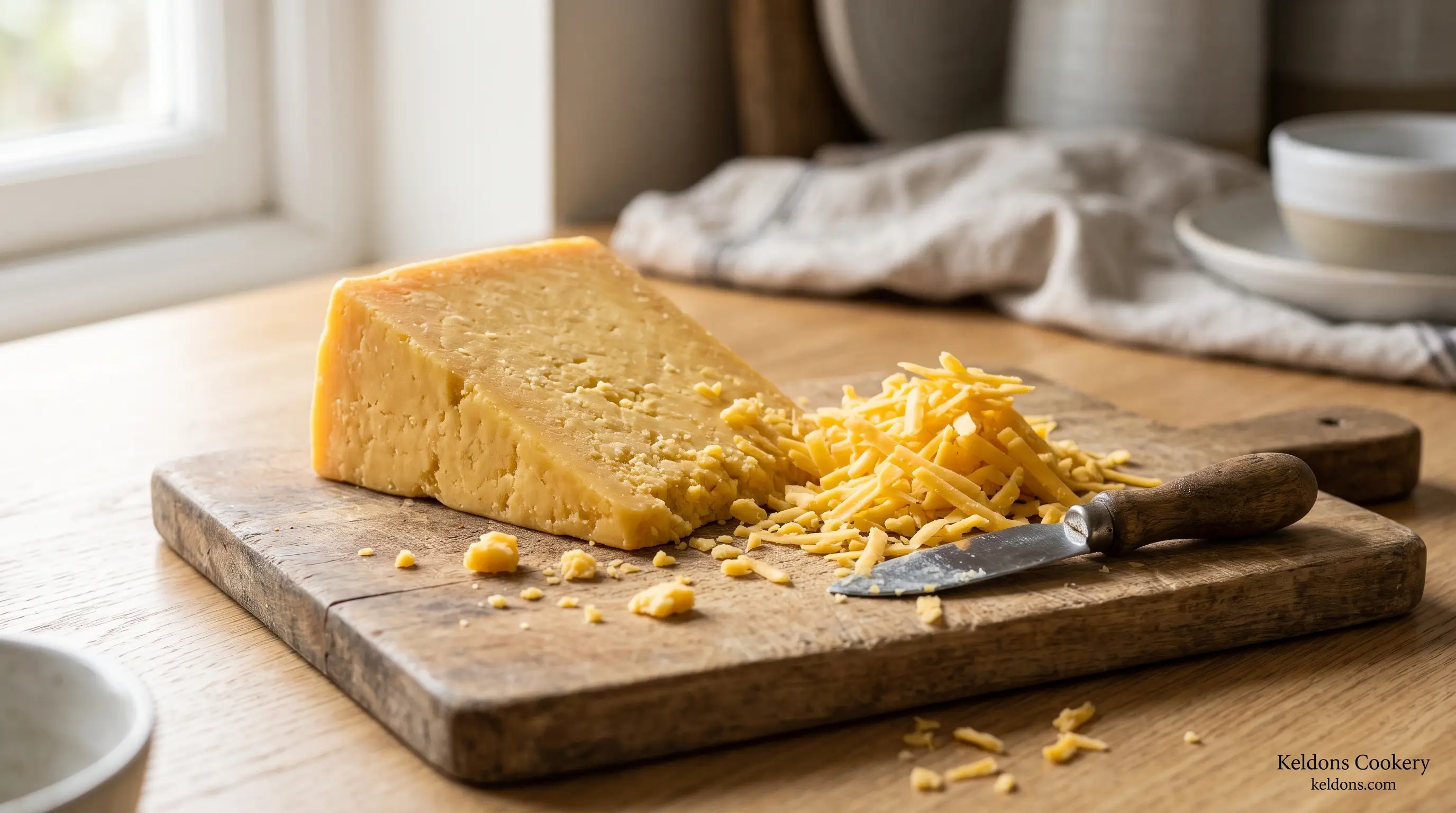
- Grate Cold Blocks: Chill your cheese block inside the freezer for ten minutes before running across a box grater to glide through shreds smoothly without clumping.
- Starch Melt Shield: Toss freshly shredded shreds with a teaspoon of cornstarch before heating to bind the emulsion and prevent oily pooling in stovetop sauces.
- Low Heat Whisking: Remove your saucepan from direct heat before folding in cheese, letting residual warmth melt it gently to guarantee a perfectly glossy texture.
Advertisement
Longevity
- Shelf Life: Wrap leftover blocks in breathable wax parchment paper and seal in a loose plastic bag chilled at 40°F (4°C) to prevent mold growth for four weeks.
- Freezer Life: Shred and freeze portions in heavy-duty freezer bags for up to four months, dropping frozen handfuls directly into bubbling soups and baked casseroles.
Savvy Savings
- Money Saver: Buy whole un-shredded blocks instead of pre-bagged varieties to avoid paying for anti-caking wood pulp additives while saving serious grocery cash.
- Other Uses: Save firm leftover rinds in the freezer to drop into simmering marinara pots or vegetable soups, imparting deep savory richness as they gently steep.
Advertisement
Health Benefits
- Nutritional Highlights: Delivers bioavailable dairy calcium alongside vitamin A, zinc, and complete animal protein to reinforce strong bones and lean muscle mass.
- Body Benefits: Natural fermentation breaks down dairy lactose significantly, making aged cheddars remarkably easy to digest for many lactose-sensitive individuals.
Advertisement
Brie-lieve It, This is Cheddar
Life can get plenty chaotic, but a warm, gooey layer of sharp cheddar makes everything infinitely better. It turns plain sandwich bread into an artisanal toasted lunch and rescues simple weeknight skillet pasta without needing any fancy culinary tricks. Grate it straight from the block, melt it over low heat, and let that golden, tangy comfort melt away all your daily kitchen stresses.Advertisement

Advertisement
Advertisement
Handy Tip
Don't let your coffee beans lose their aroma. Keep them fresh by storing them in an airtight container. This blocks moisture and air, which can degrade the beans and diminish their rich flavor. With this hack, every cup of coffee you brew will taste freshly roasted.
Featured Offering
Tomato Bread Soup
Recipe of: Canada

Filed Under: Fruit
Prep Method: Stove Top
Made with: 10 Ingredients
 / 3225
Advertisement
Keldons Cookery © 1998 - 2026 All rights Reserved | Secured with SSL
Homemade Goodness. Cook what you eat. Love what you cook!