Bulgur
Nutritional Values
Grind Sizes & Kitchen Selection
- Fine Grind (#1): Very small, sand-like cracked grains that soften completely in cold water or lemon juice within thirty minutes, making them ideal for raw herb salads like classic tabbouleh.
- Medium Grind (#2): Slightly larger kernels suited for quick stovetop pilafs, grain bowls, and stuffed peppers, absorbing seasoned broths in roughly twelve minutes without turning mushy.
- Coarse Grind (#3 & #4): Hearty, cracked wheat pieces resembling rice grains that hold firm structure in slow-simmered stews, meatless chili, and rustic breakfast porridge bowls.
No-Cook Soaking & Stovetop Methods
- Cold Water Soaking: Cover fine bulgur with cool water or fresh citrus juice and rest until tender, then press firmly in a fine-mesh sieve so excess moisture never dilutes salad dressings.
- Boiling Water Steep: Pour boiling water or hot broth over medium bulgur in a covered bowl for twenty minutes, fluffing gently with a fork once all liquid absorbs for zero-pot cleanup.
- Quick Stovetop Simmer: Toast medium or coarse grains briefly in olive oil or butter before adding two parts liquid, simmering gently for twelve to fifteen minutes until tender and nutty.
Advertisement
Flavor Pairings & Culinary Roles
- Fresh Herbs & Citrus: Pair hydrated fine bulgur with generous handfuls of flat-leaf parsley, mint, basil, scallions, bright lemon juice, and fruity extra-virgin olive oil for crisp contrast.
- Warm Middle Eastern Spices: Season warm pilafs with ground allspice, cumin, cinnamon, toasted pine nuts, and caramelized onions to highlight the wheat's natural toasted, earthy sweetness.
- Hearty Plant-Based Binder: Fold cooked bulgur into black bean patties, lentil loaves, or stuffed grape leaves where its chewy texture mimics ground meat while adding wholesome whole-grain fiber.
Whole-Grain Pantry Substitutes
- Cooked Quinoa: Swap equal amounts of cooled cooked quinoa when you need a strictly gluten-free grain alternative that delivers a similar light, fluffy bite in cold salads and bowls.
- Couscous Pearls: Substitute regular or whole-wheat couscous for rapid five-minute preparation, keeping in mind that couscous is steamed semolina pasta rather than intact whole wheat.
- Cracked Freekeh: Trade medium bulgur for roasted green wheat freekeh in warm pilafs and soups when you want a deeper, slightly smoky flavor and a firmer, chewier grain texture.
Advertisement
Pantry & Freezer Storage Habits
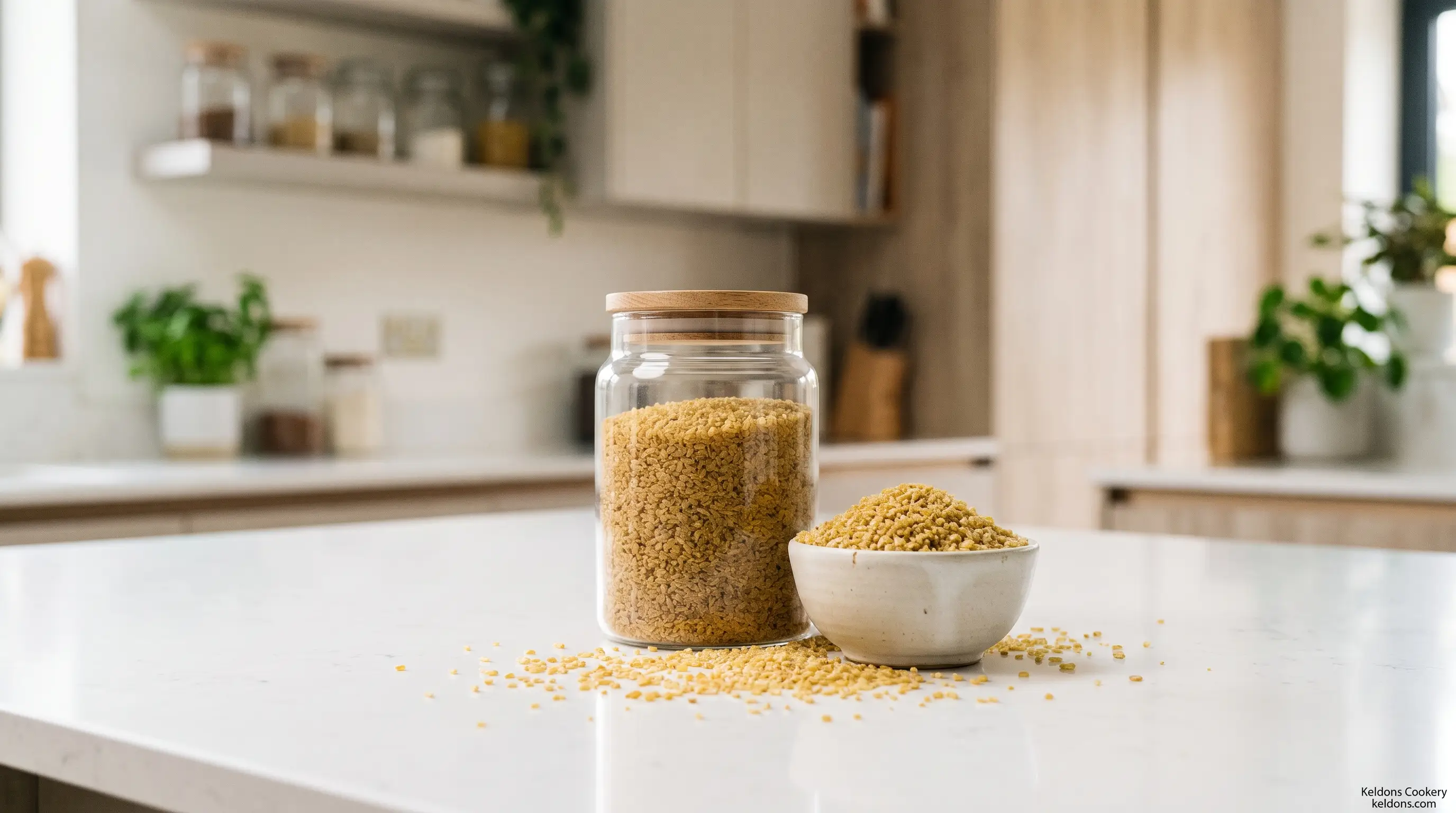
- Airtight Pantry Jar: Transfer opened bags of dry bulgur into a tightly sealed glass jar stored in a cool, dark cupboard where it stays fresh and flavorful for six to eight months.
- Freezer Shelf Extension: Store bulk bags of whole-grain bulgur in the freezer for up to one year to protect its natural wheat germ oils from turning bitter in warm, humid kitchens.
- Cooked Grain Chilling: Refrigerate leftover hydrated or cooked bulgur in a covered container for up to four days, tossing with a splash of olive oil or water to loosen chilled grains.
Advertisement
Wheat For It
Bulgur is the ultimate kitchen shortcut disguised as a wholesome ancient grain. Because the hard steaming work is already done before it ever reaches your pantry, you can whip up a crisp herb salad or a warm spiced pilaf faster than waiting for a pot of brown rice to boil. Keep a jar of fine and medium grinds on hand, and you will always have a nutty, fiber-packed foundation ready to soak up bright lemon dressings, savory broths, and garden herbs without breaking a sweat.Advertisement
Advertisement
Advertisement
Handy Tip
Revitalize your stainless steel appliances with a simple, eco-friendly solution: a paste made from cream of tartar and water. This mixture acts as a gentle, effective cleaner, bringing back the shine without harsh chemicals. This paste can help keep your kitchen looking sleek.
Featured Offering
Wild Game Rattlesnake And Bean Chili
Recipe of: United States

Filed Under: Wild Game
Prep Method: Stove Top
Base: Rattlesnake
Made with: 11 Ingredients
Advertisement
Keldons Cookery © 1998 - 2026 All rights Reserved | Secured with SSL
Homemade Goodness. Cook what you eat. Love what you cook!