Prickly Pears
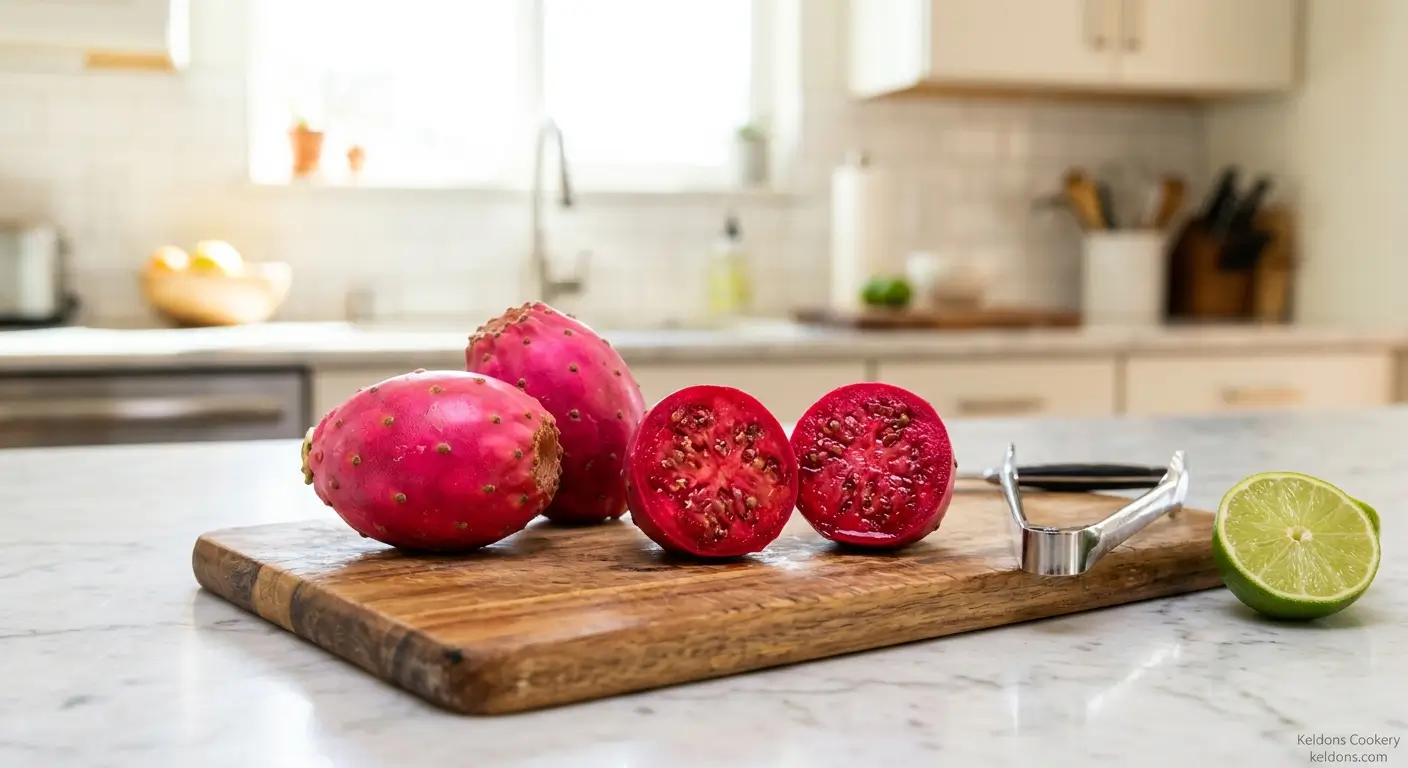
Nutritional Values
In a Pinch Substitutions:
- Fresh Watermelon: Swap in an equal portion of blended watermelon juice to deliver a remarkably similar sweet, refreshing flavor and a matching vibrant pink visual presentation profile.
- Kiwi Fruit Base: Substitute fresh peeled kiwi slices to match that pleasantly seedy, juicy tropical texture and subtle melon-like sweetness in your morning breakfast fruit bowls.
- Dragon Fruit Blend: Use chopped pink dragon fruit cubes to effortlessly mimic the stunning, high-impact neon color palette when your local cactus varieties are out of season.
Tricks and Hacks
- The Tongs Technique: Always spear your raw fruits firmly with metal kitchen tongs rather than using bare fingers to completely avoid getting stung by the microscopic thorns.
- Open Flame Flash: Pass your whole raw fruits quickly over an open stove flame using tongs to instantly incinerate the tiny, stubborn prickles before peeling away the thick skin.
- Seed Strainer: Press your blended raw cactus pulp firmly through a fine mesh strainer with a rubber spatula to easily separate the hard, pebble-like seeds from the smooth syrup.
Advertisement
Longevity
- Shelf Life: Keep whole raw fruits stored loosely on your kitchen counter at room temperature, where they will stay perfectly firm and ready for the knife for up to five days.
- Freezer Life: Freeze your strained, pureed fruit juices inside an airtight container or a heavy-duty storage bag to preserve that bright tropical sweetness for up to one full year.
Savvy Savings
- Money Saver: Check out local Mexican or international supermarkets during the peak summer months rather than high-end gourmet boutique shops to buy large boxes at rock-bottom prices.
- Other Uses: Simmer your leftover seed pods with water and honey to create a quick, vibrant pink glaze for brushing onto homemade pan-seared pork chops or roasted poultry dishes.
Advertisement
Health Benefits
- Nutritional Highlights: This unique desert fruit is loaded with essential vitamin C, vital magnesium, and rich betalain plant pigments, which offer a great source of natural antioxidants.
- Body Benefits: Enjoying the fresh juice regularly helps support healthy cellular hydration levels and naturally works to soothe inflammation throughout your daily digestive routine.
Advertisement
A Sharp Eye For Sweetness
Do not let a few tiny prickles stop you from enjoying one of the most vibrant, rewarding fruits the desert has to offer. Just handle them with care, flash them over the flame, and let your blender do the heavy straining. Once you see that gorgeous neon juice swirling into your summer margaritas, you will realize that excellent home cooking is easily worth a little extra effort, and you will prick-ly fall completely in love with this spectacular cactus treasure.Advertisement
Advertisement
Advertisement
Handy Tip
Speed up the browning of your tomatoes on the grill by sprinkling them with a pinch of sugar before grilling. This small trick not only helps them brown faster but also enhances their natural sweetness, giving you beautifully caramelized tomatoes in no time.
Featured Offering
Tahini Sauce
Recipe of: Egypt

Filed Under: Seeds
Prep Method: Blender
Base: Information
Made with: 8 Ingredients
Advertisement
Keldons Cookery © 1998 - 2026 All rights Reserved | Secured with SSL
Homemade Goodness. Cook what you eat. Love what you cook!