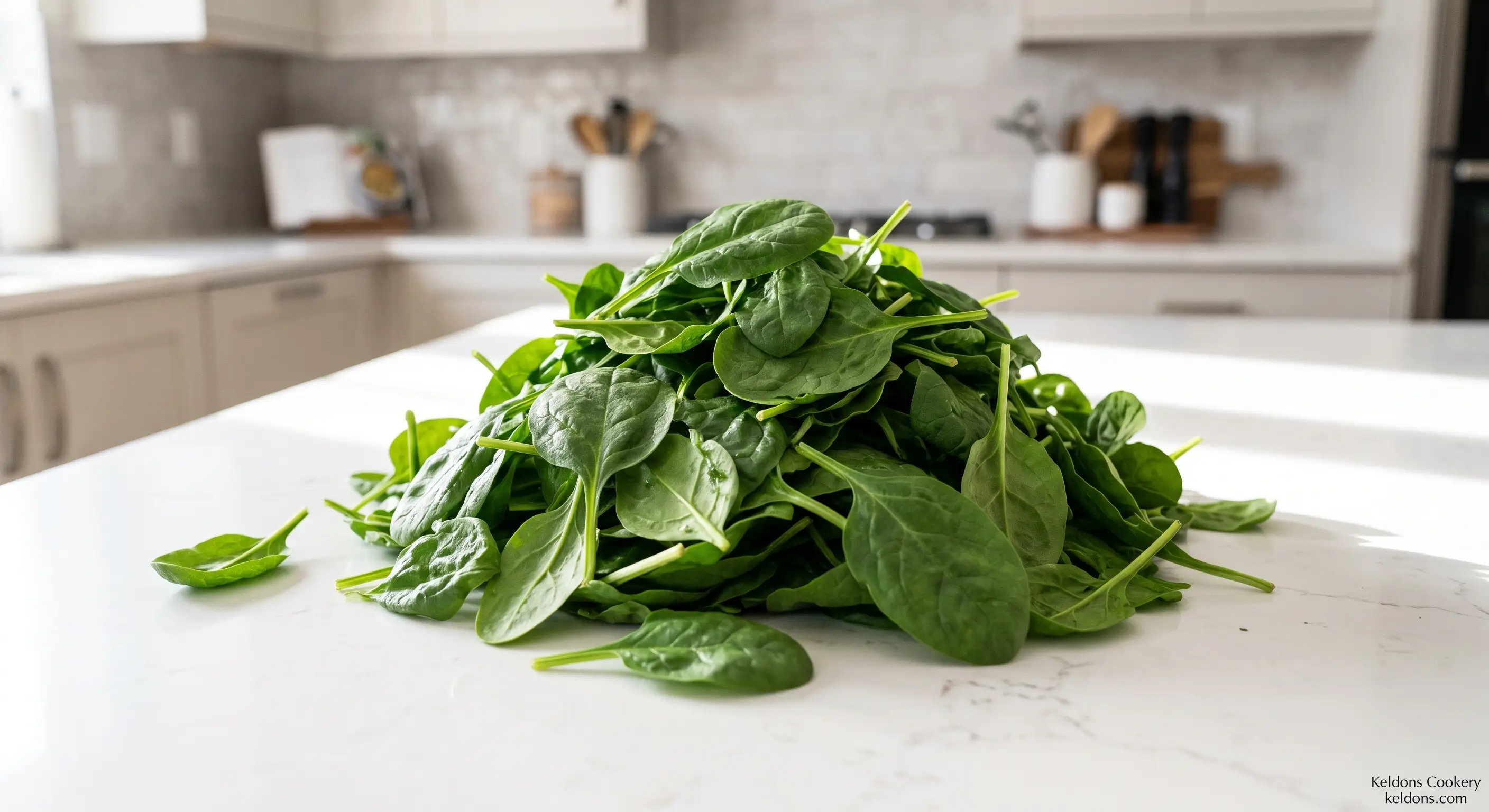
Spinach Leaves
Nutritional Values
Baby vs. Mature Leaf Varieties
- Tender Baby Spinach: Harvested early while the leaves are small and delicate, baby spinach features thin, edible stems and mild sweetness that work effortlessly in raw salads, wraps, and quick green smoothies.
- Flat-Leaf Mature Spinach: Grown longer for broader, smoother spades with thicker stems, flat-leaf spinach holds up wonderfully to sautéing, steaming, and braising while remaining super easy to rinse clean of grit.
- Crinkly Savoy Spinach: Recognizable by its deeply curled, textured dark green leaves, savoy spinach delivers a crisp bite and robust earthiness, though its crinkled folds trap field soil and need thorough washing.
Raw & Cooked Kitchen Uses
- Quick Skillet Wilting: Toss fresh leaves into a hot pan with olive oil and sliced garlic for just sixty seconds until bright emerald and tender, seasoning simply with flaky sea salt and fresh lemon juice.
- No-Cook Salad Base: Pair crisp raw baby spinach with strawberries, toasted pecans, crumbled goat cheese, and tangy balsamic vinaigrette for an effortless lunch salad that resists wilting faster than lettuce.
- Stealth Smoothie Booster: Blend a generous handful of raw spinach leaves into fruit smoothies with banana, mango, and yogurt to add vibrant green color and iron without altering the sweet tropical fruit flavor.
Advertisement
Washing & Grit Removal Tips
- Cold Water Basin Soak: Submerge bunched spinach leaves in a large bowl of cold water and swish gently with your hands so heavy sand sinks straight to the bottom before you lift the clean greens out from above.
- Trim Tough Mature Stems: Fold large mature spinach leaves in half lengthwise and strip away thick, fibrous center ribs before cooking so every bite turns uniformly silky rather than stringy in soups or sautés.
- Salad Spinner Drying: Spin washed leaves completely dry before storing or tossing with vinaigrette, because lingering surface water dilutes salad dressings and makes sautéed greens steam instead of sear.
Managing Cooking Shrinkage
- Expect Dramatic Volume Loss: Fresh spinach contains over ninety percent water, meaning a towering mound of raw leaves shrinks down to nearly one-quarter of its original volume after just two minutes over stove heat.
- Cook in Staged Batches: Add raw greens to your skillet in two or three handfuls, using kitchen tongs to fold each batch into the warm oil as it collapses so the pan never overflows onto your stovetop burners.
- Squeeze Out Excess Liquid: Press cooked spinach firmly inside a clean kitchen towel or fine-mesh strainer before mixing it into spanakopita, lasagna, or creamy dips so excess water never makes your filling soggy.
Crisper Drawer Storage Hacks
- Paper Towel Moisture Trap: Slip a dry paper towel inside your plastic spinach clamshell or produce bag to absorb excess refrigerator condensation, which is the leading cause of premature sliminess and leaf decay.
- Keep Unwashed Until Use: Wait to rinse bunched spinach until right before cooking or serving, as extra surface moisture accelerates bacterial breakdown and shortens fridge shelf life by several days in the drawer.
- Blanch & Freeze Surplus: Plunge extra leaves into boiling water for thirty seconds, shock in ice water, squeeze dry into compact portions, and freeze in zip-top bags for up to six months of easy soup and pasta add-ins.
Advertisement
Inspect fresh spinach leaves before buying or cooking by checking for deep, vibrant emerald-green color across the entire leaf surface. Look closely at the stems and leaf tips to make sure there are no yellowing edges, dark water-soaked spots, or bruised mushy patches inside the bag or bunch. Feel a few leaves between your fingers, fresh spinach should feel crisp, cool, and springy rather than limp, wet, or sticky. Like we always say at Keldons Cookery, crisp and perky belongs in the pan; limp and slimy belongs in the can.
Advertisement
Un-be-leaf-ably Easy Greens
Spinach leaves are famous for performing the greatest disappearing act in home cooking, you toss an entire mountain of fresh greens into your skillet, blink twice, and suddenly have enough for two polite forkfuls. Still, nothing beats how fast they bring color, vitamins, and earthy balance to pasta, eggs, and weeknight dinners. Just buy twice as much as you think you need, and you will finally have enough for seconds.Advertisement
Advertisement
Advertisement
Handy Tip
If your honey has crystallized or is too thick, place the honey container in a bowl of warm water for a few minutes to loosen it up without losing its natural properties. This gentle method returns honey to its smooth texture, making it easy to pour or spread and enjoy.
Featured Offering
Roasted Kalua Pork
Recipe of: United States

Filed Under: Pork
Prep Method: Oven
Made with: 4 Ingredients
Advertisement
Keldons Cookery © 1998 - 2026 All rights Reserved | Secured with SSL
Homemade Goodness. Cook what you eat. Love what you cook!