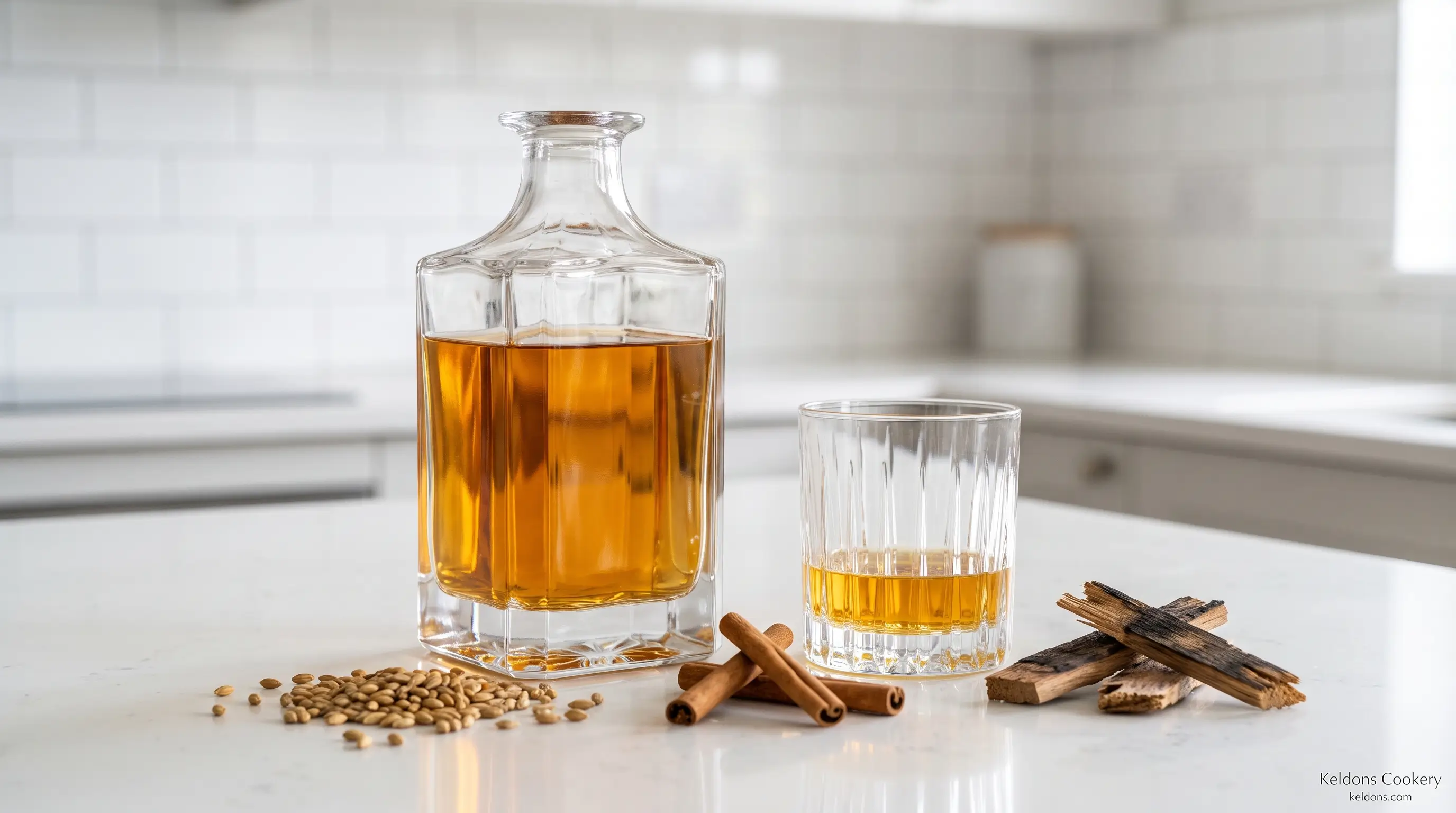
Scotch Whisky
Nutritional Values
In a Pinch Substitutions
- Bourbon Whiskey: Delivers sweet notes of vanilla and caramel that stand in beautifully across skillet pan deglazes and buttery dessert sauces.
- Rye Whiskey: Provides a bold peppery spice profile that mirrors unpeated malts across hearty winter stews and marinades for roasted red meats.
- Smoked Black Tea: Non-alcoholic brewed Lapsang Souchong supplies deep campfire aromatics that mimic peated whisky inside slow-simmered braises.
Cook Smarter, Not Harder
- Off-Heat Deglaze: Slide the hot skillet off the flame before pouring to prevent sudden flare-ups while capturing savory browned meat fond smoothly.
- Slow Butter Emulsion: Swirl cold butter cubes into reduced simmered spirits to produce a velvety, restaurant-style glaze for roasted duck or pork.
- Dessert Syrup Splash: Stir a single tablespoon into warm maple syrup or fruit compotes off the stove to preserve delicate toasted barley notes.
Advertisement
Longevity
- Upright Stash Rule: Keep bottles stored standing upright in a cool pantry so high-proof alcohol avoids degrading the natural tree cork seal.
- Dark Cupboard Guard: Shield open glass bottles from sunlight to preserve delicate barrel tannins and prevent oxidation over several enjoyable years.
Protecting Your Wallet
- Blended Malt Value: Save expensive single malts for the glass and use dependable blended bottles for hot marinades and cooking pan reductions.
- Last Drops Glaze: Rinse nearly empty liquor bottles with warm stock or fruit juice to extract every fragrant drop for tonight's skillet dinner.
Advertisement
Fuel Factor
- Ellagic Acid Wealth: Carries natural wood-derived polyphenols that deliver antioxidant protection to help shield healthy everyday cellular pathways.
- Zero Sugar Profile: Contains zero carbohydrates or dietary sugars, providing a clean aromatic flavor base for sugar-conscious cooking and sipping.
Advertisement
Whisky Business That Pays Off Big At The Stove
Never assume this highland legend belongs locked away inside an executive liquor cabinet. A modest pour swirled into a bubbling pan sauce lifts modest pan-seared pork into five-star luxury, softens rich braises, and perfumes your home with sweet oak wood smoke. Keep a bottle handy, deglaze with style, and let your kitchen sizzle with confidence. Grab a bottle today and pour some spirited charm into your pans.Advertisement
Advertisement
Advertisement
Handy Tip
Next time you're grilling, use a bunch of rosemary sprigs tied together as your basting brush. It's a helpful tip that gives your food a hint of rosemary flavor and makes your backyard smell wonderful, too. Tie them up, dip in oil, and brush on your meats or veggies.
Featured Offering
Moroccan Lamb Harira Soup
Recipe of: Morocco

Filed Under: Ovine
Prep Method: Stove Top
Made with: 18 Ingredients
Advertisement
Keldons Cookery © 1998 - 2026 All rights Reserved | Secured with SSL
Homemade Goodness. Cook what you eat. Love what you cook!