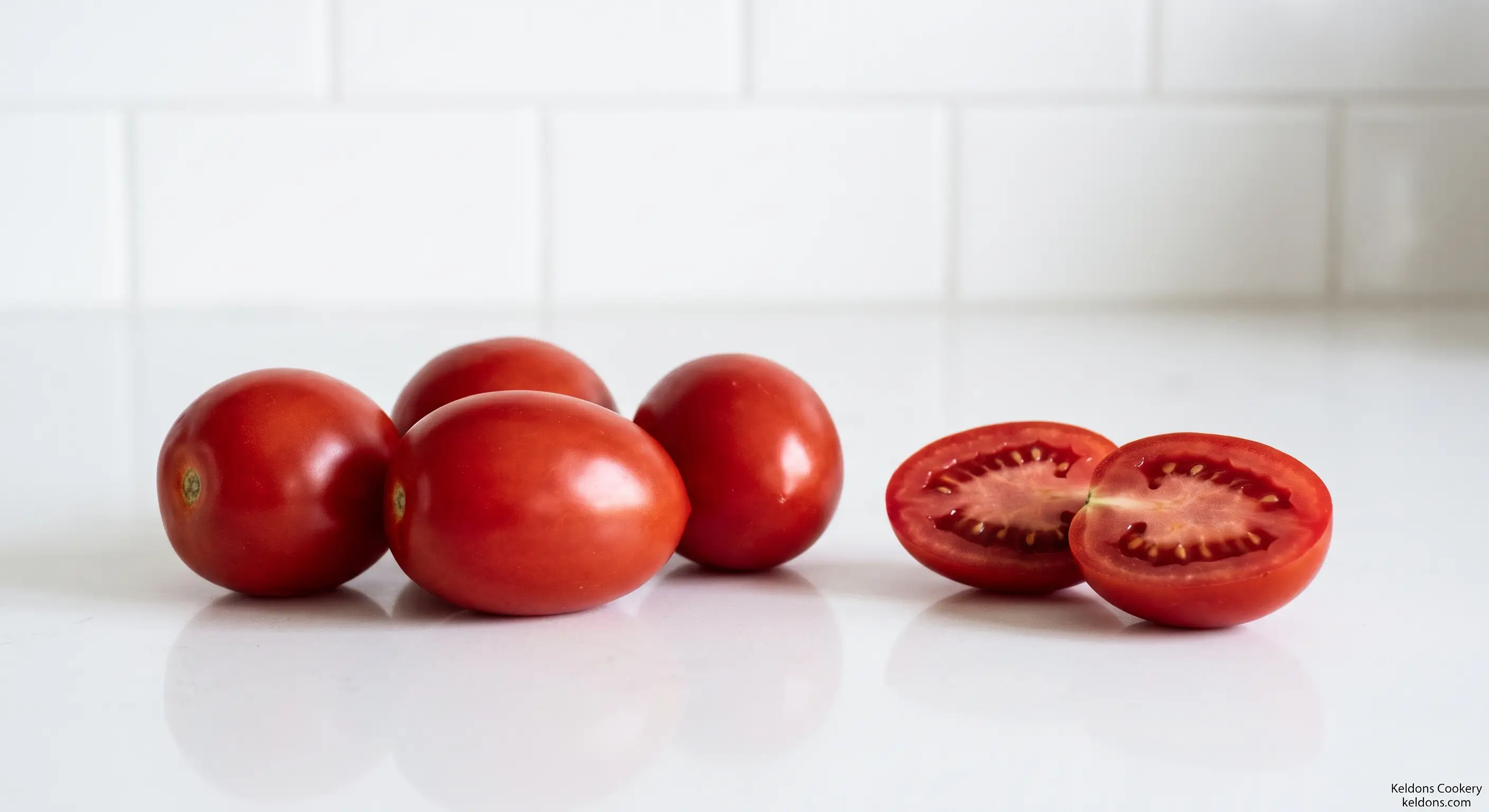
Plum Tomatoes
Nutritional Values
Close Cousins & Stand-Ins
- San Marzano Tomatoes: Offer an elongated shape, thinner skins, and sweeter, less acidic flesh, standing in as the ultimate Italian gold-standard upgrade for slow-simmered Sunday marinara sauces.
- Canned Whole Plum Tomatoes: Provide vine-ripened sweetness and dense meatiness year-round, easily outperforming pale winter supermarket fresh tomatoes in cooked soups, braises, and pasta sauces.
- Cored Beefsteak Tomatoes: Work well in fresh bruschetta or chunky salsas when you scoop out their watery seed gel pockets first and simmer the remaining firm outer walls for extra cooking minutes.
- Halved Cherry Tomatoes: Deliver concentrated natural sugars and vibrant acidity when blistered quickly in olive oil, making an effortless weeknight stand-in for pan-roasted pasta sauces.
Prep & Sauce-Making Moves
- Thirty-Second Boiling Peel: Score a shallow X on each blossom end, dunk fruits in boiling water for thirty seconds, and plunge into ice water so tough skins slip right off effortlessly in seconds.
- Pinch Out Seed Pockets: Slice tomatoes lengthwise and scoop out stray seeds with your thumb before dicing to keep fresh pico de gallo and bruschetta crisp instead of soggy and watery.
- High-Heat Sheet Pan Roast: Halve tomatoes cut-side up with garlic, olive oil, and thyme at 425°F for thirty-five minutes to caramelize natural sugars into rich, concentrated sauce flavor.
- Baking Soda Acid Tamer: Stir a tiny quarter-teaspoon pinch of baking soda into overly sharp simmered tomato sauce to neutralize excess acidity gently without masking bright fruitiness with sugar.
Advertisement
Popular Plum Varieties
- Classic Roma Tomatoes: Represent the most widely available supermarket paste tomato, prized for firm, uniform oval fruits that dice cleanly for salsas and simmer into thick, reliable sauces.
- Amish Paste Heirlooms: Grow noticeably larger and heartier than standard Romas, offering juicy, rich old-fashioned tomato flavor ideal for canning whole or roasting into chunky ragus.
- True San Marzano DOP: Cultivated in volcanic soil near Mount Vesuvius, these slender pointed fruits boast dense flesh, very few seeds, and a balanced sweet-savory profile loved by pizzaiolos.
- Juliet Mini Plum Tomatoes: Hang in sweet grape-like clusters on garden vines, delivering crack-resistant skins and bright, rich tomato taste perfect for whole pan-roasting or fresh salads.
Countertop & Pantry Storage
- Stem-Side Down Countertop: Store unripe or firm whole tomatoes stem-scar down at room temperature out of direct sunlight to prevent moisture loss and let natural ripening enzymes develop full sweetness.
- Never Chill Unripe Fruit: Keep whole tomatoes out of your refrigerator until fully dead-ripe, because cold temperatures below 55°F permanently halt flavor compounds and turn crisp flesh mealy.
- Fridge Pause for Peak Fruit: Move fully ripe, soft tomatoes into the fridge for up to three days to pause over-ripening, then bring them back to room temperature thirty minutes before slicing.
- Whole Freezer Sauce Stash: Wash and freeze surplus ripe plum tomatoes whole in zip-top bags; as they thaw on the counter, their skins slip right off straight into your waiting soup pot.
Advertisement
Lycopene & Nutritional Lift
- Heat-Activated Lycopene: Simmering plum tomatoes with a splash of olive oil breaks down plant cell walls, dramatically increasing your body's absorption of heart-protective lycopene antioxidants.
- Potassium & Vitamin C: Supply a generous dose of blood-pressure-supporting potassium alongside immune-boosting vitamin C and vitamin A in a naturally low-calorie, fat-free whole fruit.
- Gentle Gut-Friendly Fiber: Provide a balanced blend of soluble and insoluble fiber within their dense outer walls to support smooth everyday digestion without weighing down light meals.
- Natural Savory Umami: Packed with free natural glutamates that deepen savory richness in soups, beans, and lean proteins, letting home cooks build bold flavor with less added salt.
Advertisement
Sauce Bosses Love a Good Plum Deal
Never settle for watery, pale winter tomatoes when dense, meaty plum tomatoes are practically built for turning weeknight dinners into Italian trattoria feasts. Score their skins for a thirty-second boiling bath, roast them hot with garlic and olive oil, or stash whole ripe ones in your freezer for future Sunday sauces. Keep them off the cold fridge shelf until peak ripeness, and watch every pot simmer into velvety perfection.Advertisement
Quick Picks
Advertisement
Advertisement
Handy Tip
Speed up your potato baking process with a simple kitchen hack: soak them in salt water for 20 minutes prior to baking. This not only speeds up cooking time but also enhances flavor, giving you perfectly seasoned, fluffy potatoes faster.
Featured Offering
Lemon Air Freshener Spray
Recipe of: United States

Filed Under: Make Your Own
Prep Method: Mix
Made with: 4 Ingredients
Advertisement
Keldons Cookery © 1998 - 2026 All rights Reserved | Secured with SSL
Homemade Goodness. Cook what you eat. Love what you cook!