Asparagus
Nutritional Values
Green, White & Purple Varieties
- Classic Green Stalks: Grown in full sunlight so chlorophyll develops naturally, vibrant green spears offer grassy, earthy flavor and stand up well to high-heat roasting, grilling, and pan-searing.
- Delicate White Spears: Cultivated under thick mounds of soil to block sunlight, pale ivory stalks taste milder and slightly sweeter, though their thicker outer skin requires peeling before cooking.
- Sweet Purple Varieties: Rich in natural anthocyanin antioxidants, deep violet spears contain slightly more natural sugar than green stalks, making them tender enough to shave raw into crisp salads.
Trimming & Prep Basics
- Snap or Slice Woody Ends: Bend one spear near the base until it snaps naturally to find where tough fibers end, then line up the remaining bunch and slice off the woody bottoms all at once.
- Peeling Thick Stalks: Use a Y-shaped vegetable peeler on extra-thick spears to lightly shave away the tough lower skin, helping thick stalks cook evenly alongside their delicate flower tips.
- Rinse Grit from Tips: Swish spears briskly in a bowl of cold water before patting them dry, as tiny grains of sandy soil often hide inside the tightly closed, scaly floral tips.
Advertisement
Quick High-Heat Cooking Methods
- Sheet-Pan Roasting: Toss dry spears with olive oil, salt, and pepper, then roast at 425°F for ten to twelve minutes until the stalks turn tender and the tips become delightfully crispy.
- Charred Grill Spears: Lay oiled stalks crosswise over medium-high grill grates for five to seven minutes, turning once so smoky char marks develop without the spears falling through the bars.
- Skillet Blister & Steam: Sear spears in a hot cast-iron pan with butter for three minutes, then add a splash of water and cover briefly to lock in bright green color and crisp-tender snap.
Choosing Pencil vs. Thick Stalks
- Slender Pencil Spears: Thin stalks cook in just three to five minutes, making them ideal for quick stir-fries, pasta tosses, egg frittatas, and delicate vegetable tarts where fast heat shines.
- Plump Jumbo Stalks: Thick spears hold plenty of internal moisture and resist turning mushy, which makes them superior for high-heat grilling, broiling, or wrapping in prosciutto bundles.
- Uniform Bunch Sizing: Pick bundles where every spear has roughly the same thickness so thin stalks never burn or turn limp before thicker ones finish cooking through in the pan.
Crisp Refrigerator Storage
- Upright Water Jar Method: Trim half an inch off the stem bottoms and stand the bunch upright in a jar with an inch of cold water, loosely tenting the tips with a plastic bag in the fridge.
- Damp Paper Towel Wrap: If refrigerator shelf height is tight, wrap the cut stem ends in a damp paper towel and place the spears inside a perforated produce bag in the crisper drawer.
- Use Within Four Days: Cook fresh asparagus within three to four days of purchase, as its natural sugars rapidly convert into tough, woody starch the longer the stalks sit after harvest.
Advertisement
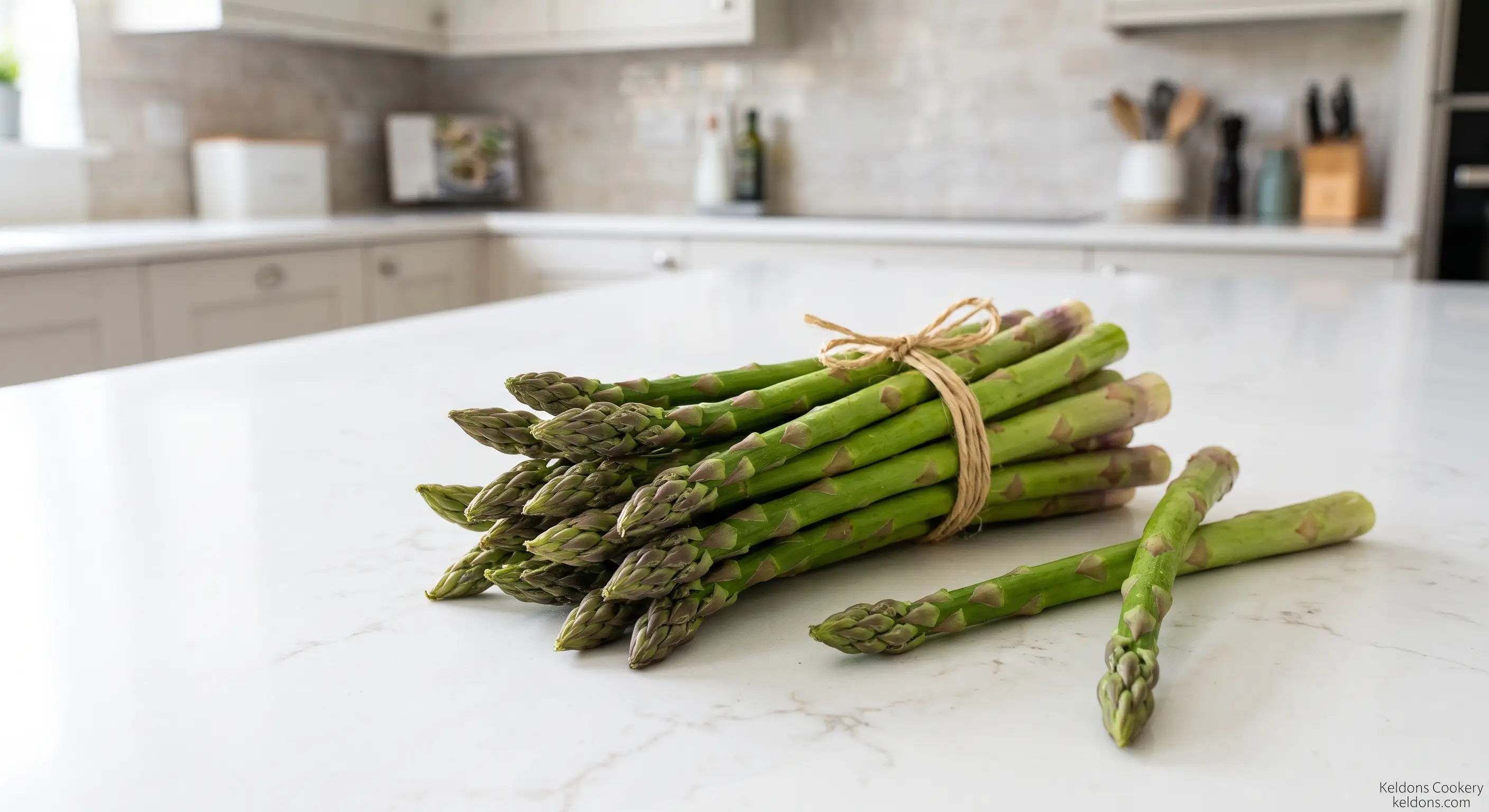
Inspect fresh asparagus spears at the market by checking the tips first; they should be tightly closed, firm, and compact rather than open, mushy, or wet. Look at the stalks for smooth, plump, bright green skin free from deep vertical wrinkles, which signal dehydration and tough, woody fibers. Squeeze the middle of a spear gently, fresh stalks feel rigid and crisp, snapping cleanly when bent instead of bending like rubber. Like we always say at Keldons Cookery, vibrant color and firm skin tell no lies: if it yields to a gentle press, it's at its best; if it's squishy, it's history.
Advertisement
Spear-it of Spring Cooking
Asparagus spears are the ultimate low-effort side dish that somehow makes any weeknight chicken breast or steak look like you spent hours prepping. They roast in ten minutes, love a squeeze of fresh lemon, and pair effortlessly with melted butter or shaved Parmesan. Just don't be alarmed when your bathroom visit later reminds you loud and clear what you ate for dinner tonight.Advertisement
Quick Picks
Advertisement
Advertisement
Handy Tip
Elevate your grilling game by adding a smoky hickory flavor to your barbecue. Before you start grilling, soak a handful of hickory chips in water for about an hour. Then, sprinkle them onto your barbecue coals. Infuse your meats and veggies with a rich, smoky flavor.
Featured Offering
Quick Black Pepper Pasta
Recipe of: Italy

Filed Under: Grain
Prep Method: Food Processor
Made with: 3 Ingredients
Advertisement
Keldons Cookery © 1998 - 2026 All rights Reserved | Secured with SSL
Homemade Goodness. Cook what you eat. Love what you cook!