Tea Bag
Nutritional Values
Brisk Tannins & Botanical Notes
- Black & Oolong Depth: Oxidized tea leaves release bold, malty tannins and warm dried-fruit notes that stand up to heavy cream, rich caramel sauces, and savory smoked meat rubs without fading away.
- Green & Herbal Brightness: Unoxidized green teas and floral herbal sachets deliver delicate grassy sweetness, citrus peel, or soothing chamomile notes ideal for light summer syrups and delicate poached pears.
Water Heat & Steep Timing
- Match Heat to Leaf: Steep black and herbal tea bags in full rolling boiling water for three to five minutes, while delicate green and white tea bags need cooler water around 175°F to avoid bitter astringency.
- Never Squeeze the Bag: Lift spent tea bags gently with a spoon rather than pressing them against the mug, since squeezing forces harsh, bitter tannins out of the fine leaves and clouds your brew.
Advertisement
Creative Cooking & Baking Uses
- Infused Milk & Baked Goods: Steep Earl Grey, chai, or peppermint tea bags directly in warm milk or melted butter before baking shortbread cookies, pound cakes, pastry creams, and rich chocolate ganache.
- Savory Brines & Grains: Drop smoked Lapsang Souchong or black tea bags into simmering chicken brines, pork marinades, or pots of cooking rice and quinoa to weave subtle earthy complexity into weeknight meals.
Pouch Shapes & Leaf Grades
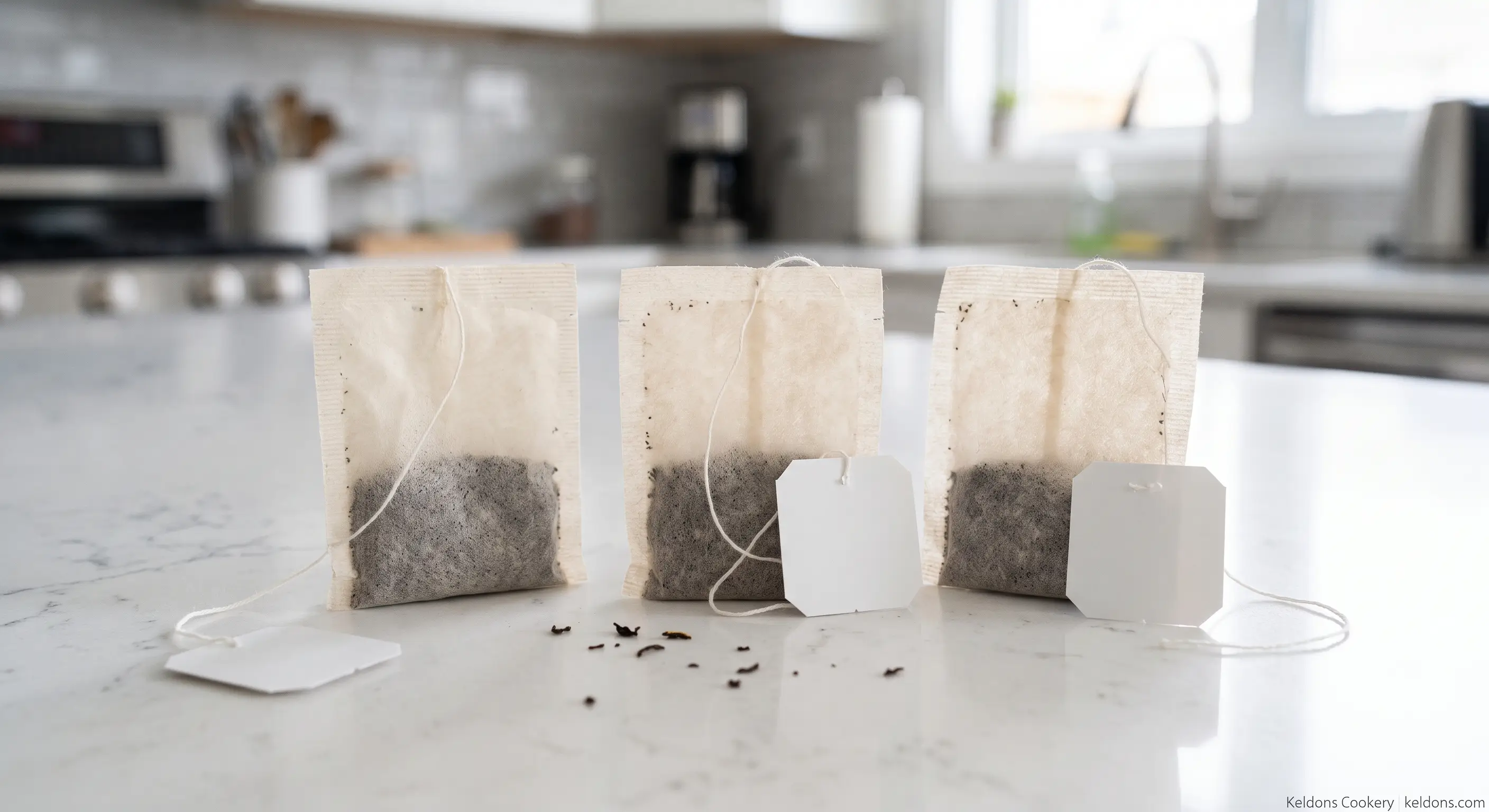
- Classic Flat Paper Pouches: Filled with fine broken leaves called fannings that infuse rapidly in two to three minutes, delivering dark color and brisk, reliable strength for everyday hot cups and iced tea pitchers.
- Roomy Pyramid Sachets: Mesh pyramid bags give larger, rolled whole tea leaves plenty of room to unfurl in hot water, releasing smoother, more nuanced aromatics with noticeably less bitterness.
Advertisement
Pantry Care & Odor Protection
- Airtight Tin Storage: Transfer unwrapped tea bags into an airtight metal tin or dark glass jar away from stove steam and strong spices, since dry tea leaves absorb onion and garlic odors like a sponge.
- Peak Aroma Window: Keep tea bags in a cool, dark pantry cupboard and enjoy within six to twelve months so volatile essential oils stay bright rather than tasting flat or papery.
Advertisement
Steeped in Everyday Kitchen Magic
Tea bags do way more than rescue sleepy mornings, they are tiny, pre-measured flavor bombs waiting to transform plain simmered fruit, Sunday poultry brines, and buttery shortbread cookies into something unforgettable. Just treat them gently when you lift them from the pot, keep them sealed away from your garlic powder, and let them steep at the right temperature. Keep a few varieties tucked in your cupboard, and big flavor is always in the bag.Advertisement
Advertisement
Advertisement
Handy Tip
Don't throw away those apple cores. They can be repurposed to create a delightful apple-infused water. Just slice up a few apples, cores included, and add them to a pitcher of ice water, in no time at all, you'll have a refreshing, flavorful drink to enjoy.
Featured Offering
Chocolate Peanut Butter Balls
Recipe of: United States

Filed Under: Make Your Own
Prep Method: Stove Top
Made with: 9 Ingredients
Advertisement
Keldons Cookery © 1998 - 2026 All rights Reserved | Secured with SSL
Homemade Goodness. Cook what you eat. Love what you cook!