Brisket
Nutritional Values
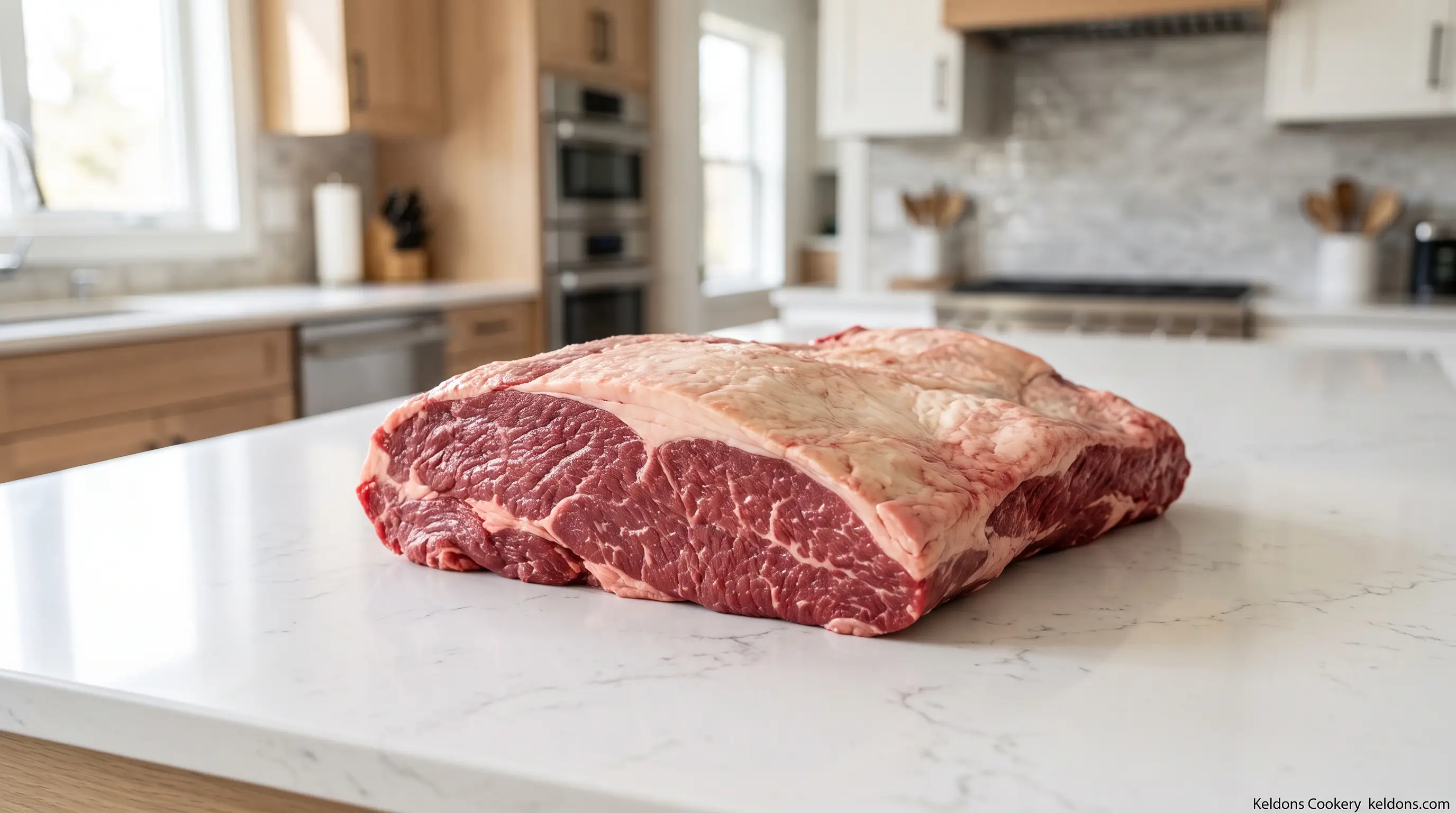
Understanding the Two Distinct Muscle Sections
- The Flat Cut: Also called the first cut, this leaner rectangular muscle lies beneath the point, offering uniform thickness that yields neat, tidy slices for serving on platters or sandwiches.
- The Point Cut: Known as the deckle or second cut, this thicker, triangular section sits atop the flat and carries heavy internal marbling that delivers rich, juicy shredded or chopped meat.
- The Whole Packer: Buying an untrimmed packer brisket gives you both connected muscles separated by a thick seam of hard fat, letting you smoke the entire slab together for maximum moisture.
Flavor Profile & Richness in the Kitchen
- Deep Beefy Character: Because these chest muscles work constantly throughout the animal's life, they develop a bold, savory, minerally beef flavor that stands up effortlessly to heavy smoke and spice.
- Collagen Transformation: Raw brisket is famously tough, but sustained heat above one hundred sixty degrees slowly dissolves stubborn connective tissues into velvety gelatin that coats every tender fiber.
- Versatile Seasoning Canvas: A simple blend of coarse kosher salt and cracked black pepper highlights its natural richness, while sweet brown sugar rubs, garlic, and tangy vinegar mops add delicious depth.
Advertisement
Smart Butcher & Grocery Selection Tips
- Check Quality Grades: Look for USDA Prime or upper-tier Choice labels whenever possible, as higher intramuscular marbling keeps the lean flat portion from drying out during long hours in the heat.
- Test the Bend: Pick up the vacuum-sealed package from the center and feel how easily it flexes; a floppy, pliable slab signals softer fat and less rigid connective tissue than a stiff board.
- Inspect the Fat Cap: Choose a roast with an even, creamy-white layer of exterior fat across the surface, avoiding cuts where aggressive butcher trimming has exposed bare, dry patches of red meat.
Low-and-Slow Cooking Methods That Work
- Wood-Fired Smoking: Cooking over indirect oak or hickory smoke at low temperatures builds a dark, flavorful crust while gradually rendering internal fat over twelve to sixteen patient hours.
- Oven Braising: Searing the meat in a heavy Dutch oven before simmering partially submerged in beef broth, onions, and aromatics creates fork-tender slices swimming in a rich pan gravy.
- Curing for Corned Beef: Soaking the flat cut in a seasoned saltwater and pickling spice brine transforms fresh beef into classic corned beef, which can later be smoked into savory pastrami.
Advertisement
Trimming, Resting & Slicing Secrets
- Trim Cold Straight from Fridge: Cold beef fat stays firm and slices cleanly with a sharp boning knife, allowing you to sculpt the fat cap down to a uniform quarter-inch thickness without gouging meat.
- Never Skip the Rest: Wrap the hot cooked roast in butcher paper or foil and let it rest for at least one full hour so redistributed juices settle back into the muscle fibers instead of flooding out.
- Slice Against the Grain: Locate the direction of the long muscle strands before cutting, then angle your knife perpendicular across those fibers, remembering that the point grain runs differently than the flat.
Advertisement
No Bones About It, Worth the Wait
Brisket refuses to be rushed, demanding patience, low heat, and a sharp knife before it finally surrenders its tough reputation. Treat this hardworking cut with a little time and respect, and it will reward your dinner table with rich, smoky, fork-tender slices that make every hour by the oven or smoker feel like a stroke of culinary genius. Whether braised for Sunday supper or smoked for backyard guests, it always steals the show.Advertisement
Quick Picks
Advertisement
Advertisement
Handy Tip
Brining chicken in saltwater before cooking can significantly enhance its juiciness and flavor. This simple hack involves soaking the chicken in a saltwater solution, which helps the meat retain moisture and stay succulent throughout the cooking process.
Featured Offering
Buttery Rice Pilaf
Recipe of: Canada

Filed Under: Grain
Prep Method: Stove Top
Made with: 5 Ingredients
Advertisement
Keldons Cookery © 1998 - 2026 All rights Reserved | Secured with SSL
Homemade Goodness. Cook what you eat. Love what you cook!