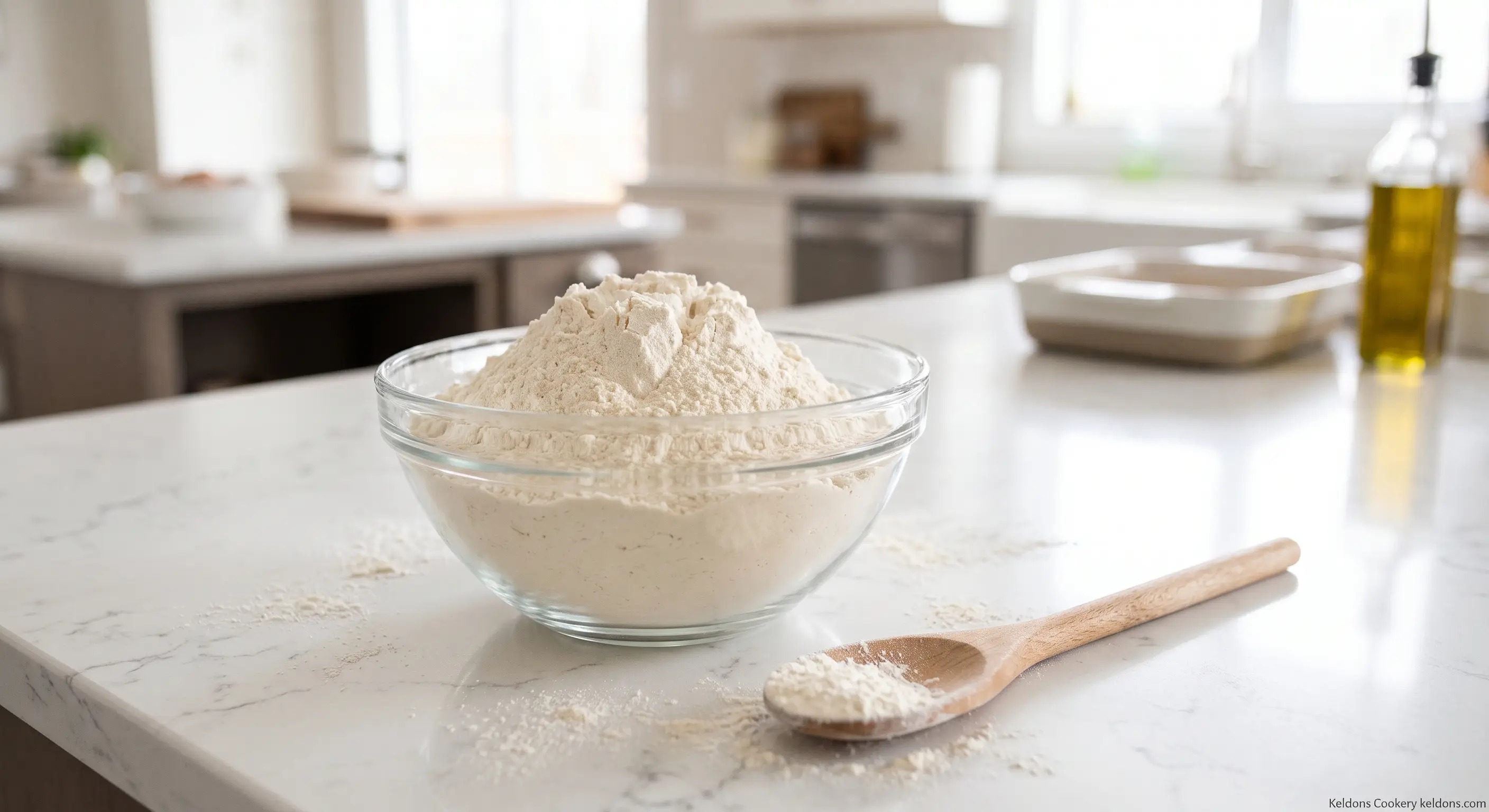
Bread Flour
Nutritional Values
Pantry Stand-Ins When the Bag Runs Dry
- All-Purpose Flour: Swap cup for cup in a pinch, though your baked loaf will turn out slightly softer with a tender crumb and less of that signature bakery chew.
- Vital Wheat Gluten Boost: Whisk one and a half teaspoons of vital wheat gluten into each cup of regular all-purpose flour to mimic high-protein bread flour elasticity.
- Whole Wheat Blend: Mix half bread flour with half white whole wheat flour for hearty flavor, adding an extra tablespoon of warm water so the dough stays supple.
Gluten-Building Kitchen Cheat Codes
- Autolyse Rest: Mix just the flour and water together twenty minutes before adding yeast or salt so the proteins hydrate fully and knead twice as fast.
- Extra Hydration: Add one to two extra tablespoons of liquid per cup compared to standard recipes because thirsty high-protein wheat absorbs much more moisture.
- Windowpane Check: Stretch a walnut-sized piece of kneaded dough gently between your fingers until light shines through without tearing to confirm peak gluten strength.
Advertisement
Keeping Your Stash Fresh and Bug-Free
- Airtight Canister: Transfer opened paper bags immediately into a sealed glass or plastic container to block out pantry moisture, stray odors, and curious flour moths.
- Freezer Vault: Stash extra bags in the freezer for up to a full year, letting the measured flour warm to room temperature before mixing with active yeast.
- Cool Dark Shelf: Store unbleached loaves-in-waiting away from warm ovens and sunny windows so natural wheat oils stay sweet instead of turning bitter and stale.
Smart Baker Savings and Rookie Traps
- Skip Tender Cakes: Never use bread flour for sponge cakes, biscuits, or flaky pie crusts unless you want tough, rubbery pastries instead of delicate melt-in-your-mouth layers.
- Bulk Warehouse Bags: Buy twenty-five pound sacks at restaurant supply stores if you bake weekly, cutting your per-pound cost in half compared to tiny grocery bags.
- Scoop Without Packing: Fluff the flour with a spoon and level off your measuring cup with a flat knife so you never accidentally pack in heavy extra grams that dry out dough.
Advertisement
Whole-Grain Fuel and Body Perks
- Sustained Energy: Complex carbohydrates digest steadily alongside extra wheat protein, keeping you full longer after morning toast than sugary breakfast pastries.
- Enriched Vitamins: Most commercial bags come fortified with iron, folic acid, and essential B vitamins that help your body turn everyday meals into steady cellular energy.
- Hearty Protein Lift: Packing roughly four grams of plant-based protein per quarter cup, it adds sneaky staying power to homemade pizza nights and crusty dinner rolls.
Advertisement
The Yeast You Can Do for Better Loaves
Baking great bread at home is not rocket science, even when your first sourdough looks more like a Frisbee than a bakery masterpiece. Armed with high-protein bread flour, a little patience, and a warm kitchen counter, you have everything needed to turn humble pantry dust into golden, crusty glory. Give your dough time to rise, trust your hands, and enjoy the unbeatable smell of fresh toast taking over your house. Any way you slice it, homemade always wins.Advertisement
Advertisement
Advertisement
Handy Tip
Peel eggs effortlessly with this simple hack: start by adding eggs to boiling water. Once cooked, immediately transfer them to an ice bath. This process not only allows for easy peeling but also yields perfectly cooked eggs, saving time and frustration.
Featured Offering
Beef Stroganoff
Recipe of: Canada

Filed Under: Beef
Prep Method: Stove Top
Made with: 8 Ingredients
Advertisement
Keldons Cookery © 1998 - 2026 All rights Reserved | Secured with SSL
Homemade Goodness. Cook what you eat. Love what you cook!