Sweet Potatoes
Nutritional Values
Natural Sugars & Flesh Varieties
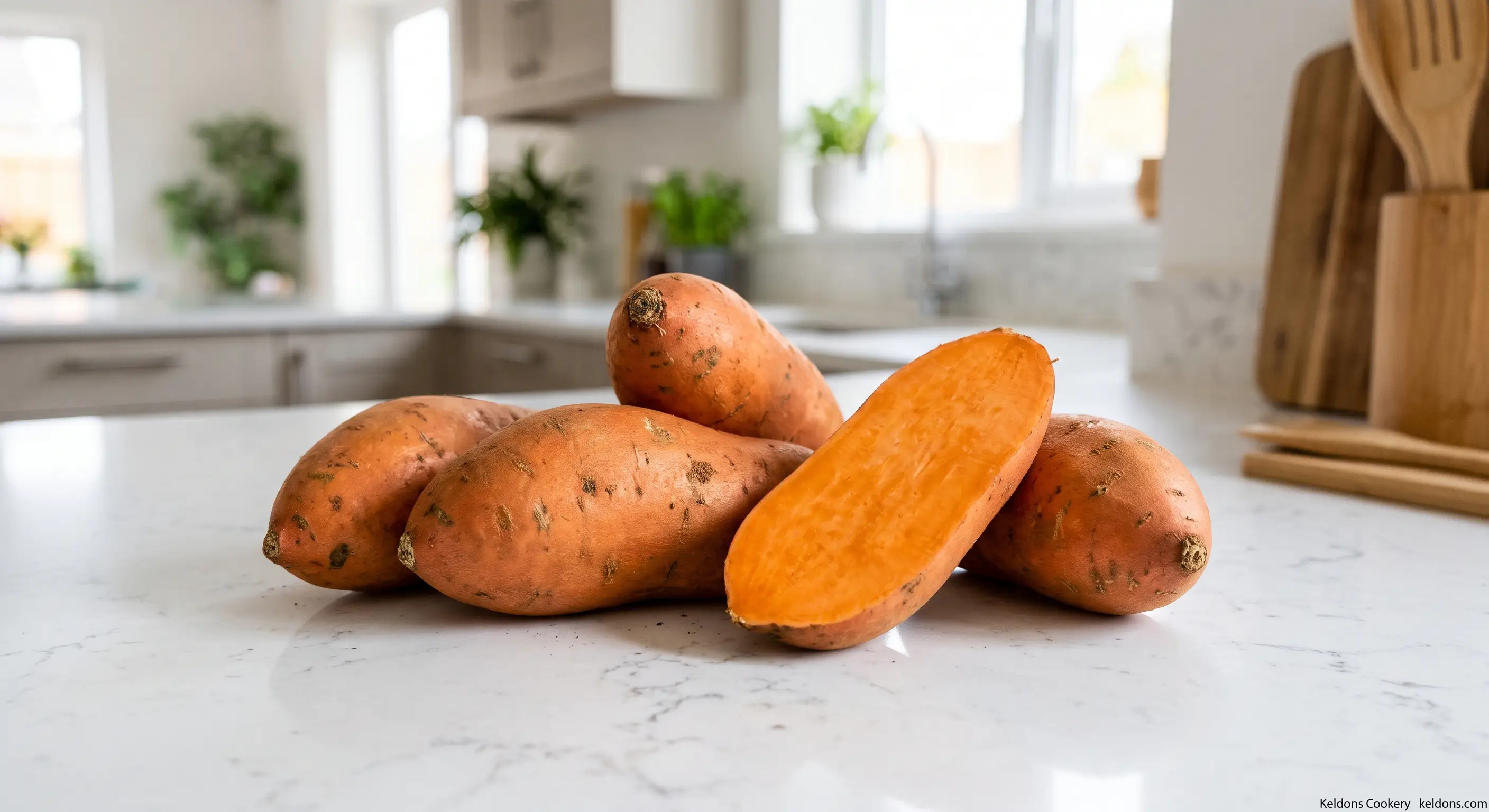
- Orange-Fleshed Moist Varieties: Copper-skinned Beauregard and Jewel sweet potatoes feature deep orange flesh that bakes into soft, sweet, velvety perfection ideal for silky purées, pies, and caramelized wedges.
- White & Purple Dry Varieties: Tan-skinned Hannah or purple-fleshed Stokes sweet potatoes hold firmer, drier starch structures that stay crisp and fluffy when cubed for stir-fries, hash browns, or oven-roasted fries.
- Slow-Heat Sugar Conversion: Cooking sweet potatoes gently between 135°F and 170°F activates natural amylase enzymes that break down starch into sweet maltose, boosting richness without adding extra table sugar.
Prepping, Peeling & Uniform Cutting
- Scrubbing Nutrient-Rich Skins: Scrub whole sweet potatoes under cool running water with a stiff vegetable brush so you can leave their fiber-rich, flavorful skins intact for rustic baked halves and crispy wedges.
- Safe Stabilization Cuts: Slice a thin sliver lengthwise off one side of a raw sweet potato so it sits flat and steady on your cutting board before dicing dense flesh into uniform three-quarter-inch cubes.
- Preventing Raw Browning: Submerge peeled and cut sweet potato chunks in a bowl of cold water if prepping ahead, preventing natural oxidation from turning exposed orange surfaces dull gray before cooking.
Advertisement
Roasting, Baking & Mashing Mastery
- High-Heat Caramelized Wedges: Toss cut wedges in neutral oil, sea salt, and smoked paprika, spreading them in a single uncrowded layer on a hot sheet pan at 425°F so edges blister into crisp, sweet caramelization.
- Whole Baked Oven Pillows: Pierce whole sweet potatoes several times with a fork and bake on a foil-lined tray at 400°F for forty-five to sixty minutes until natural syrupy juices bubble through the skin.
- Velvety Roasted Mash: Bake or steam chunks rather than boiling them in excess water so the flesh stays dry and concentrated, letting you whip in browned butter, maple syrup, or tangy crème fraîche smoothly.
Flavor Pairings & Savory Balance
- Warm Baking & Earthy Spices: Pair roasted sweet potatoes with cinnamon, nutmeg, ground ginger, cumin, or chipotle chili powder to bridge their natural honeyed sweetness with warm aromatic complexity.
- Cutting Sweetness With Acid: Finish sweet potato bowls, soups, or roasted trays with a squeeze of fresh lime juice, apple cider vinegar, or tangy feta cheese to keep rich natural sugars bright and balanced.
- Sweet Potatoes vs. True Yams: Though North American grocers often label orange sweet potatoes as yams, true African yams are starchy, rough-barked tubers with white flesh that cook much closer to russet potatoes.
Advertisement
Pantry Storage & Fridge Rules
- Cool Dark Pantry Basket: Store raw whole sweet potatoes in a cool, dark, well-ventilated pantry between 55°F and 60°F away from onions, where they stay firm and sweet for three to four weeks.
- Never Refrigerate Raw Roots: Avoid storing uncooked sweet potatoes in the refrigerator, as cold temperatures below 50°F trigger chilling injury that creates hard, woody cores and off-flavors during baking.
- Freezing Cooked Purée: Spoon cooled mashed or roasted sweet potato flesh into airtight freezer bags pressed flat, keeping ready-to-thaw purée on hand for smoothies, muffins, and soups for up to six months.
Advertisement
Sweet Dreams Are Made of These Roots
Sweet potatoes are the ultimate kitchen multitaskers, effortlessly jumping from crispy spiced oven fries on Tuesday night to velvety brown-butter mash on Sunday without breaking a sweat. Just keep them out of the fridge while raw, give them plenty of elbow room on a hot roasting pan, and balance their natural sweetness with a squeeze of lime or a pinch of smoky spice. Honestly, these vibrant orange roots are simply too sweet to ignore.Advertisement
Advertisement
Advertisement
Handy Tip
If your honey has crystallized or is too thick, place the honey container in a bowl of warm water for a few minutes to loosen it up without losing its natural properties. This gentle method returns honey to its smooth texture, making it easy to pour or spread and enjoy.
Featured Offering
Preserved Lemons #2
Recipe of: Morocco

Filed Under: Fruit
Prep Method: Aging
Made with: 8 Ingredients
Advertisement
Keldons Cookery © 1998 - 2026 All rights Reserved | Secured with SSL
Homemade Goodness. Cook what you eat. Love what you cook!