Persimmon
Nutritional Values
Crisp vs. Jelly-Soft Persimmon Varieties
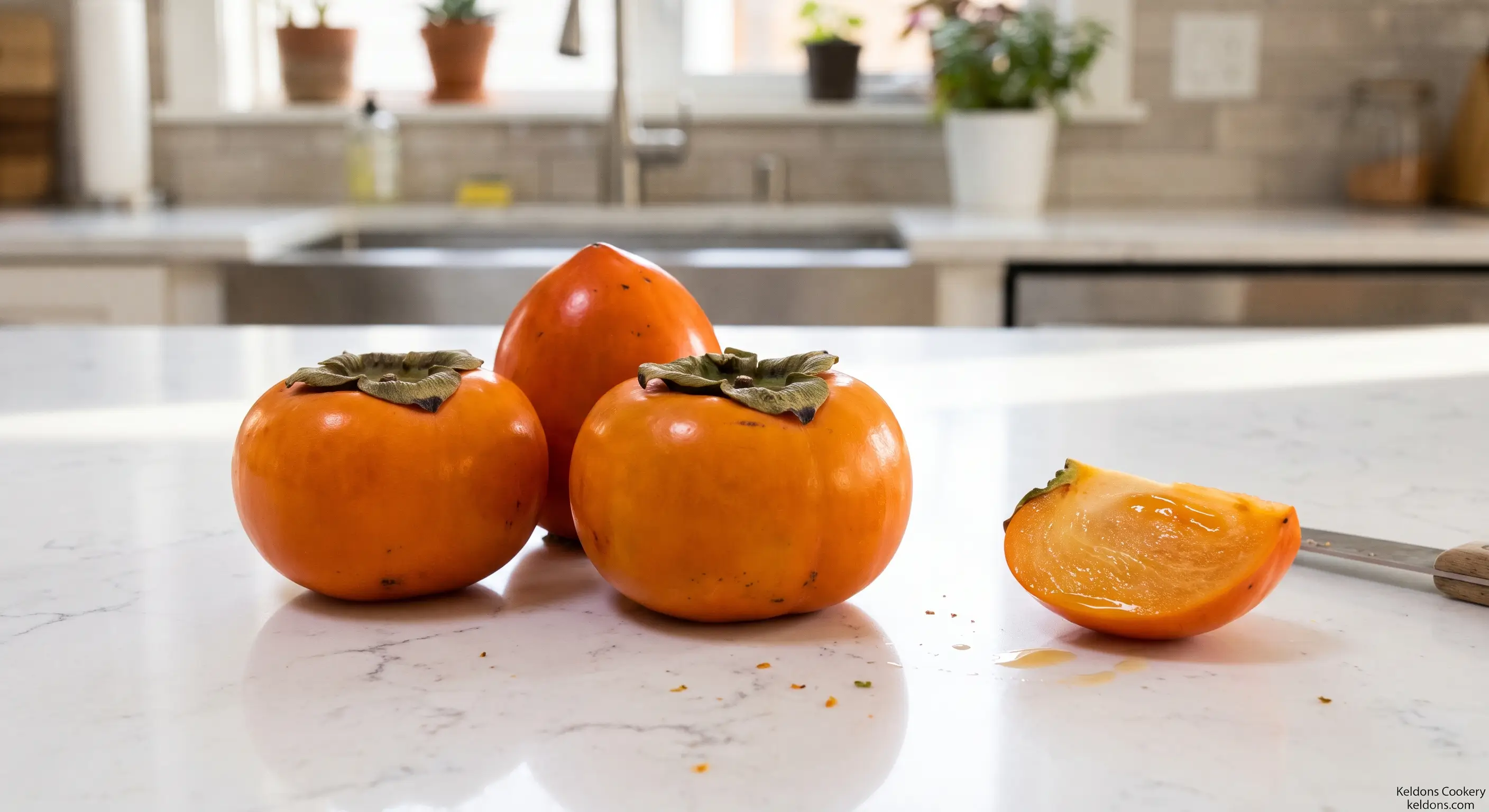
- Fuyu Persimmons (Non-Astringent): Shaped like a squat, slightly flattened tomato with a four-leaved green calyx, Fuyu fruit lacks bitter tannins and can be sliced and eaten crisp while still firm right off the counter.
- Hachiya Persimmons (Astringent): Acorn-shaped with a pointed bottom tip, Hachiya fruit contains mouth-puckering tannins when firm and must ripen until it feels like a water-filled balloon before scooping out the custard pulp.
- Jiro & Maru Varieties: Similar to Fuyu in their flat-bottomed, non-astringent nature, these sweet Asian cultivars offer crisp, juicy flesh that holds neat geometric slices on cheese boards and autumn fruit platters.
- American Native Persimmons: Smaller, wild-foraged North American fruits that drop from trees after autumn frosts, delivering intensely rich, spiced brown-sugar pulp ideal for traditional steamed puddings and quick breads.
Sweet & Savory Culinary Applications
- Crisp Autumn Salads: Thinly slice firm Fuyu persimmons into peppery arugula or baby spinach salads alongside toasted pecans, crumbled goat cheese, pomegranate seeds, and a bright apple cider vinaigrette.
- Spiced Baking & Puddings: Fold pureed, custard-ripe Hachiya pulp into spiced quick breads, muffins, steamed puddings, or pumpkin-style pies where its natural honey sweetness keeps batters remarkably moist.
- Charcuterie & Cheese Boards: Fan fresh persimmon wedges next to sharp aged cheddar, creamy brie, salty prosciutto, and crusty sourdough bread for an effortless seasonal appetizer with vibrant jewel-toned color.
- Roasted Meats & Chutneys: Simmer chopped persimmons with fresh ginger, shallots, apple cider vinegar, and warm cloves into a glossy chutney that pairs wonderfully with roasted pork loin, duck, or holiday turkey.
Advertisement
Simple Prep, Peeling & Ripening Tricks
- Pop Off the Leafy Calyx: Twist or slice off the tough, four-pointed green stem cap at the top of the fruit before slicing firm Fuyu varieties or halving soft Hachiya persimmons to spoon out the sweet interior.
- Eating Skin-On vs. Peeled: Fuyu persimmons have thin, tender skin that is completely edible once washed, whereas soft Hachiya skin turns thin and papery as it ripens, making it easiest to scoop out with a spoon.
- Paper Bag Ethylene Ripening: Speed up rock-hard astringent persimmons by sealing them inside a brown paper bag on the counter alongside a ripe banana or apple, which traps natural ethylene gas to soften the flesh faster.
- Avoiding Early Bites of Hachiya: Never bite into an unripe, firm Hachiya persimmon, as high soluble tannins instantly bind to proteins in your saliva and leave an intensely dry, chalky, mouth-puckering sensation.
Ripening & Cold Storage Best Practices
- Room-Temperature Counter Ripening: Arrange firm, unripe persimmons stem-side down in a single layer on your kitchen counter away from direct sunlight so they soften evenly without bruising under their own weight.
- Chilling Fully Ripe Fruit: Once Fuyu persimmons reach crisp-tender ripeness or Hachiya fruit turns completely jelly-soft, move them into the refrigerator crisper drawer to extend freshness for up to one full week.
- Freezing Pureed Pulp for Baking: Scoop ripe Hachiya flesh into a blender, puree until smooth with a squeeze of lemon juice to prevent browning, and freeze in measured portions for up to six months of winter baking.
- Drying Slices Into Hoshigaki: Peel whole astringent persimmons, tie strings around their stems, and hang them in a cool, breezy spot for several weeks until natural sugars crystallize on the outside like chewy candy.
Advertisement
Flavor-Matched Seasonal Substitutions
- Crisp Honeycrisp or Fuji Apples: When a salad or cheese board calls for firm Fuyu persimmon slices, swap in thinly sliced sweet-tart apples tossed with a touch of lemon juice for matching crunch and honeyed brightness.
- Ripe Bartlett or Anjou Pears: Juicy, slightly gritty ripe pears mimic both the floral sweetness and gentle spice notes of persimmons in baked tarts, savory pork glazes, and autumn green salads.
- Canned Pumpkin Puree: Replace pureed Hachiya persimmon pulp cup-for-cup with plain pumpkin puree in spiced muffins or quick breads, adding an extra tablespoon of brown sugar to match persimmon sweetness.
- Fresh Ripe Mangoes: In smoothies, chutneys, or fresh fruit salsas, diced ripe mango provides a remarkably similar deep orange color, lush tropical-honey sweetness, and velvety texture.
Advertisement
Don't Be a Pucker-Up Persimmon Rookie
Persimmons are one of autumn's greatest hidden gems once you learn the golden rule: eat the squat ones crisp and wait for the pointy ones to turn practically liquid. Respect that simple difference, and you will be rewarded with pure honey-spiced sweetness that elevates everything from morning oatmeal to roasted holiday meats. Keep a few ripening on your counter this fall and let nature handle the magic.Advertisement
Advertisement
Advertisement
Handy Tip
Speed up the ripening process of your Avocados by placing them in a paper bag with an apple or banana. The gas released by these fruits quickens the ripening, making your avocados ready to enjoy sooner rather than later. With this hack you won't have to wait long to eat your avocado.
Featured Offering
Lemon Sauce For Poultry
Recipe of: Canada

Filed Under: Poultry
Prep Method: Stove Top
Made with: 10 Ingredients
Advertisement
Keldons Cookery © 1998 - 2026 All rights Reserved | Secured with SSL
Homemade Goodness. Cook what you eat. Love what you cook!