Ice
Nutritional Values
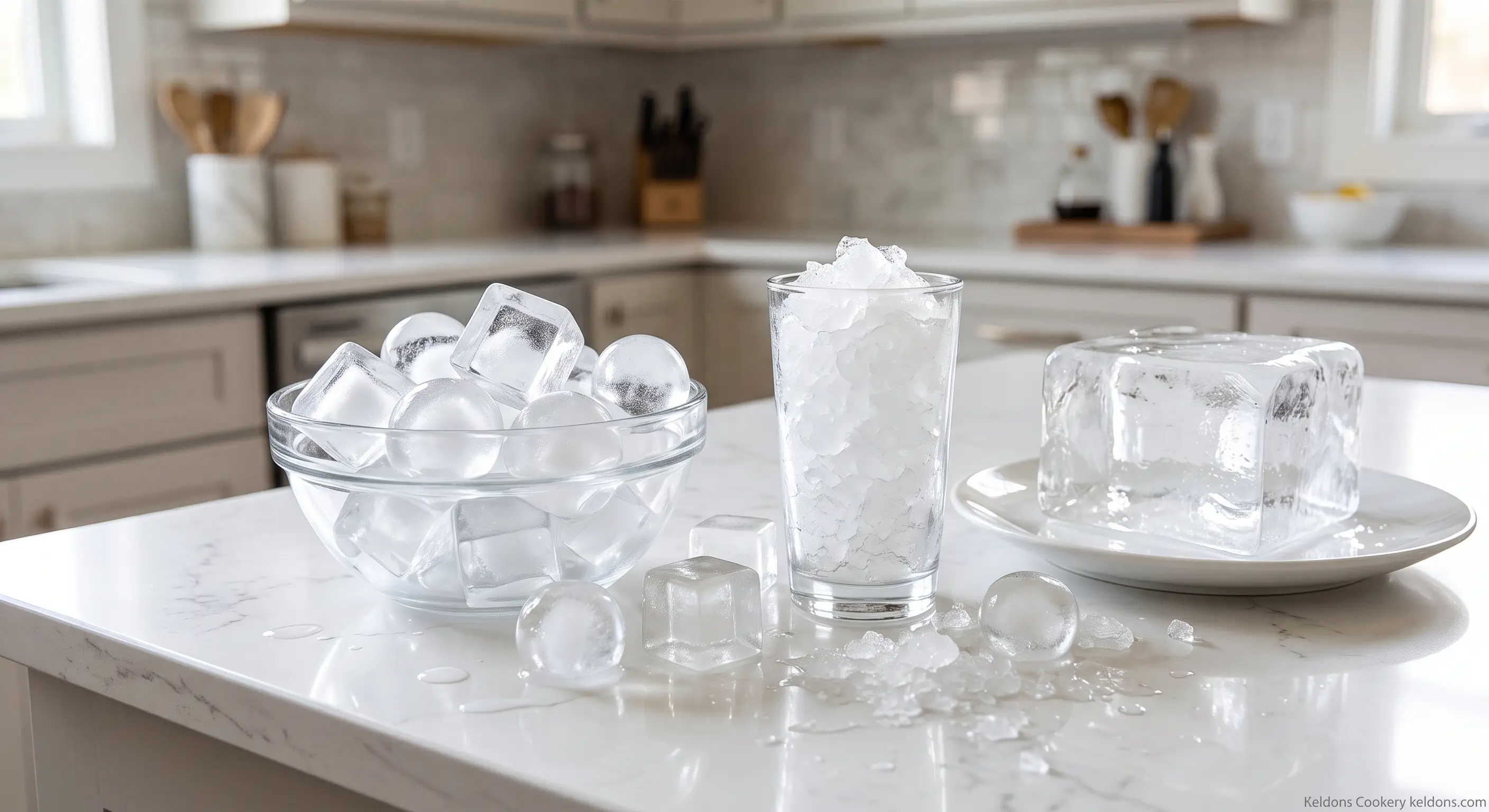
Cube Shapes & Melting Rates
- Large Slow-Melting Spheres: Oversized two-inch spheres and king cubes expose minimal surface area to liquid, chilling whiskey, negronis, and cold brew coffee thoroughly while melting slowly to prevent watery dilution.
- Standard Crescent & Square Cubes: Everyday freezer-tray and automatic ice-maker cubes balance surface contact and chill speed, making them versatile workhorses for iced tea, sodas, and kitchen ice baths.
- Crushed & Pebble Ice: Tiny, airy nuggets pack tightly around glassware and absorb syrups instantly, delivering fast frostiness ideal for mint juleps, tiki cocktails, iced lattes, and slushy blended drinks.
Essential Culinary Kitchen Uses
- Blanching Shock Baths: Plunge boiled green beans, broccoli, or asparagus straight into a bowl of ice water to halt carryover cooking immediately and lock in crisp-tender snap and bright emerald color.
- Flaky Pastry Dough Hydration: Drizzle ice-cold water by the tablespoon into flour and cold butter when mixing pie crust or biscuit dough so butter pockets stay solid and bake into tender, flaky layers.
- Rapid Stock & Custard Cooling: Nest a hot saucepan of chicken stock, pastry cream, or caramel inside a larger bowl packed with ice and water to bring food safely out of the bacterial danger zone in minutes.
Advertisement
Making Crystal-Clear Cubes at Home
- Directional Freezing Cooler Trick: Fill a small insulated lunch cooler with tap water and freeze it open-topped so ice freezes slowly from top to bottom, pushing trapped air bubbles and minerals to the bottom layer.
- Start with Filtered Water: Use filtered or bottled spring water in silicone trays to strip out chlorine, dissolved minerals, and cloudiness that make tap-water cubes taste flat or turn milky white inside.
- Boil & Cool Water First: Briefly boil filtered water and let it cool completely before filling trays to drive out dissolved oxygen gases, producing noticeably denser, clearer cubes that melt slower in glasses.
Salad Crisping & Seafood Prep
- Reviving Limp Leafy Greens: Soak wilted lettuce leaves, celery stalks, or fresh herbs in an icy water bath for fifteen minutes so cold moisture rehydrates plant cells and restores crisp, snappy crunch.
- Chilled Shrimp & Oyster Platters: Nest serving platters of cooked peel-and-eat shrimp, raw oysters, or ceviche bowls directly over a bed of crushed ice to keep delicate seafood safely chilled during parties.
- Emulsifying Meatballs & Sausages: Pulse a spoonful of finely crushed ice into ground meat mixtures when making homemade sausages or meatballs to keep proteins cold and emulsified for juicy, bouncy texture.
Freezer Storage & Odor Prevention
- Airtight Lidded Ice Bins: Transfer harvested cubes into sealed freezer bags or lidded silicone trays so ice never absorbs stray odors from frozen fish, garlic bread, or open leftovers nearby.
- Rotate Old Ice Monthly: Dump and rinse your freezer ice bin once a month because older cubes gradually sublimate, shrink, fuse into solid glaciers, and pick up stale freezer-burn flavors over time.
- Wet Cubes Briefly Before Pouring: Let freezer-fresh cubes sit on the counter for one minute until slightly glossy so pouring warm room-temperature drinks over them never cracks the ice into cloudy shards.
Advertisement
Inspect ice before dropping it into drinks or cooking baths by checking its clarity, surface texture, and aroma first; fresh ice looks crisp, dry, and glossy with clean edges rather than shrunken, pitted, or frosted over with white freezer crystals. Scoop a few cubes into your hand and give them a quick sniff, clean ice smells completely neutral like fresh mountain air, never stale, fishy, or onion-scented from neighboring freezer items. If cubes taste flat or metallic, dump the batch and sanitize the bin. Like we always say at Keldons Cookery, crystal-clear and odor-free makes every sip shine; stale freezer cubes ruin the vibe every time.
Advertisement
Coolest Ingredient in the Kitchen
Ice is the rare kitchen staple that costs practically nothing, has zero calories, and still manages to save dinner when your blanched vegetables are seconds away from turning mushy. Whether it is chilling Friday night cocktails, keeping pie dough butter cold, or rescuing wilted salad greens, a solid stash of clean cubes earns its freezer space every single day. Just keep it away from that open package of frozen salmon so your lemonade tastes like lemons.Advertisement
Advertisement
Advertisement
Handy Tip
Peel eggs effortlessly with this simple hack: start by adding eggs to boiling water. Once cooked, immediately transfer them to an ice bath. This process not only allows for easy peeling but also yields perfectly cooked eggs, saving time and frustration.
Featured Offering
White Pork Sausage
Recipe of: Belgium

Filed Under: Pork
Prep Method: Stove Top
Made with: 21 Ingredients
Advertisement
Keldons Cookery © 1998 - 2026 All rights Reserved | Secured with SSL
Homemade Goodness. Cook what you eat. Love what you cook!