Confectioners' Sugar
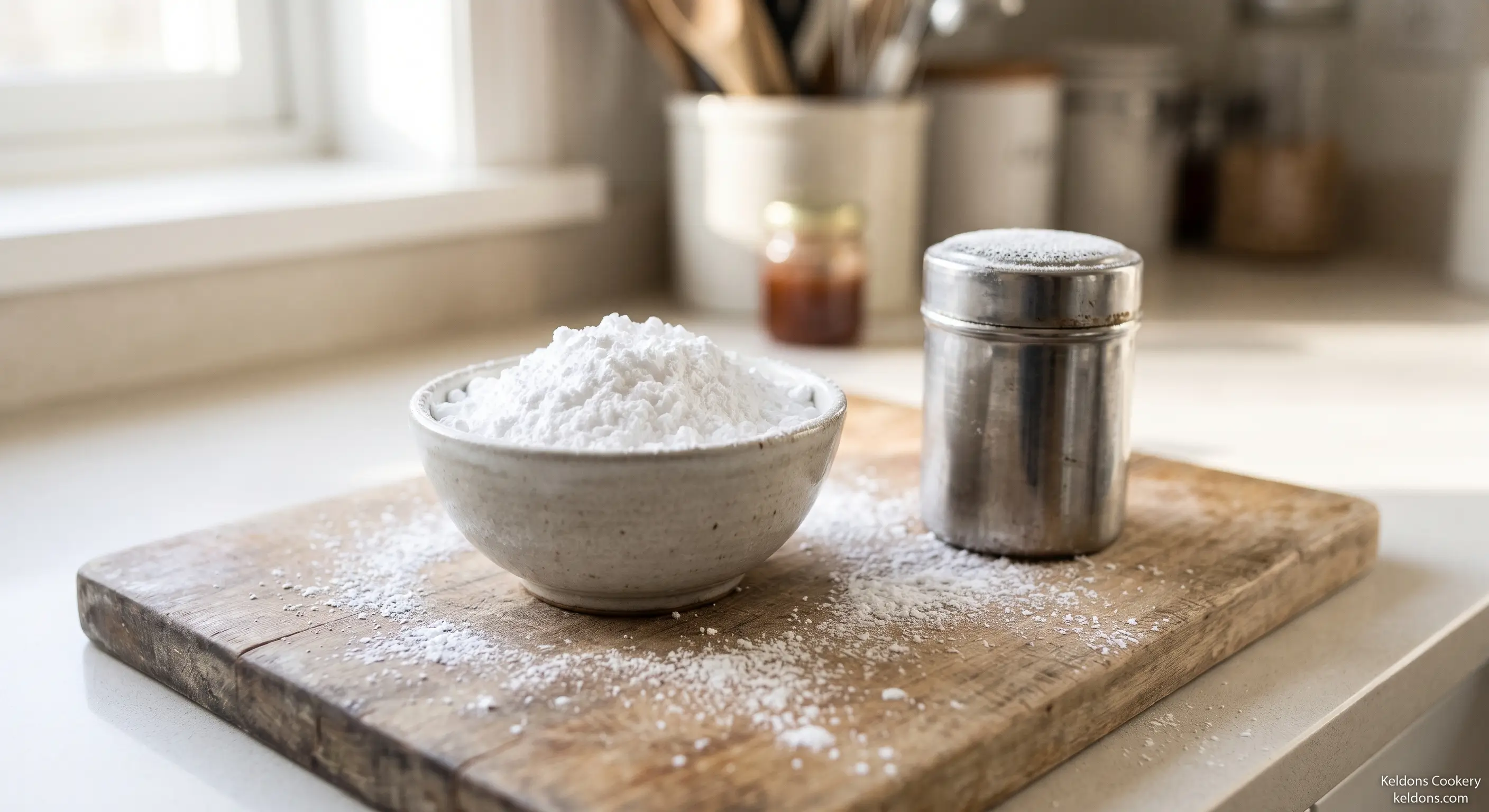
Nutritional Values
What Makes It Different From Granulated Sugar
- Microscopic Crystal Size: Industrial mills grind standard white sugar into a dust-like powder labeled 10X, allowing the crystals to melt immediately on your tongue or blend seamlessly into cold butter and cream.
- Built-In Anti-Caking Starch: Manufacturers mix roughly three percent cornstarch into the ground sugar so the tiny particles do not absorb ambient kitchen humidity and fuse back together into a solid, unusable brick.
- Thickening Power in Icings: That small percentage of cornstarch acts as a subtle stabilizer when whisked with milk, citrus juice, or melted butter, giving poured glazes enough body to cling cleanly to cakes.
Best Culinary Uses in the Home Kitchen
- Silky Frostings and Buttercreams: Whipping powdered sugar into softened butter or cream cheese creates an airy, cloud-like spread without the crunchy graininess that regular granulated sugar leaves behind in cold mixtures.
- Quick Pourable Glazes: Stirring a splash of warm milk, vanilla extract, or fresh lemon juice into sifted sugar produces an instant glossy drizzle ideal for warm cinnamon rolls, bundt cakes, and sugar cookies.
- Crisp and Tender Shortbreads: Swapping granulated sugar for confectioners' sugar in shortbread or meltaway cookie dough yields a finer crumb that dissolves delicately in your mouth with zero sandy crunch.
Advertisement
Smart Measuring and Sifting Techniques
- Spoon and Level Method: Fluff the sugar with a fork first, lightly spoon it into your measuring cup until overflowing, and sweep the excess off with a flat knife so you do not accidentally pack in extra weight.
- Sifting Before Mixing: Pressing powdered sugar through a fine-mesh wire sieve breaks up tiny shipping clumps right before you add liquid, guaranteeing a velvety glaze free of stubborn white lumps.
- Dusting for Garnish: Tapping a small fine-mesh strainer loaded with a spoonful of sugar gently over cooled brownies, waffles, or French toast delivers an even, professional snowfall finish in seconds.
Substitutions and DIY Pantry Workarounds
- Blender Homemade Powdered Sugar: Pulse one cup of regular granulated white sugar with one tablespoon of cornstarch in a high-speed blender for sixty seconds until a light, fluffy cloud of fine powder forms inside.
- Corn-Free Arrowroot Swap: Bakers avoiding corn can grind plain granulated sugar with an equal measure of arrowroot powder or tapioca starch, achieving the exact same smooth texture and anti-clumping protection.
- Why Granulated Fails Cold: Never substitute unground granulated sugar directly into cold frostings or royal icing, because the large crystals require oven heat to melt and will leave your frosting unpleasantly gritty.
Advertisement
Proper Storage to Prevent Hard Lumps
- Airtight Container Transfer: Move opened plastic bags into a rigid canister with a tight silicone gasket seal, blocking humid kitchen air from turning the ultra-fine powder into hard pebbles over time.
- Cool and Dry Pantry Shelf: Store your sealed container away from dishwashers, boiling pots, and sunny windows, since steam and temperature swings quickly trigger moisture clumping inside the sugar.
- Rescuing Clumped Sugar: If humidity sneaks into your container and forms hard chunks, toss the lumps into a food processor or press them through a fine strainer to restore their soft, powdery texture.
Advertisement
Don't Let Your Baking Plans Powder Out
Confectioners' sugar proves that the smallest details make the biggest difference on your dessert plate. By grinding everyday sugar into an airy cloud and pairing it with just enough cornstarch to keep things flowing, this baking staple turns simple butter, milk, and cocoa into bakery-worthy frostings and glossy glazes in minutes. Keep a sealed canister dry on your pantry shelf, give it a quick sift before mixing, and enjoy smooth, lump-free sweetness every single time you bake.Advertisement
Advertisement
Advertisement
Handy Tip
Elevate your grilling game by adding a smoky hickory flavor to your barbecue. Before you start grilling, soak a handful of hickory chips in water for about an hour. Then, sprinkle them onto your barbecue coals. Infuse your meats and veggies with a rich, smoky flavor.
Featured Offering
Sweet And Sour Cucumber Salad
Recipe of: Thailand

Filed Under: Vegetable
Prep Method: Mix
Made with: 8 Ingredients
Advertisement
Keldons Cookery © 1998 - 2026 All rights Reserved | Secured with SSL
Homemade Goodness. Cook what you eat. Love what you cook!