Rice Noodles
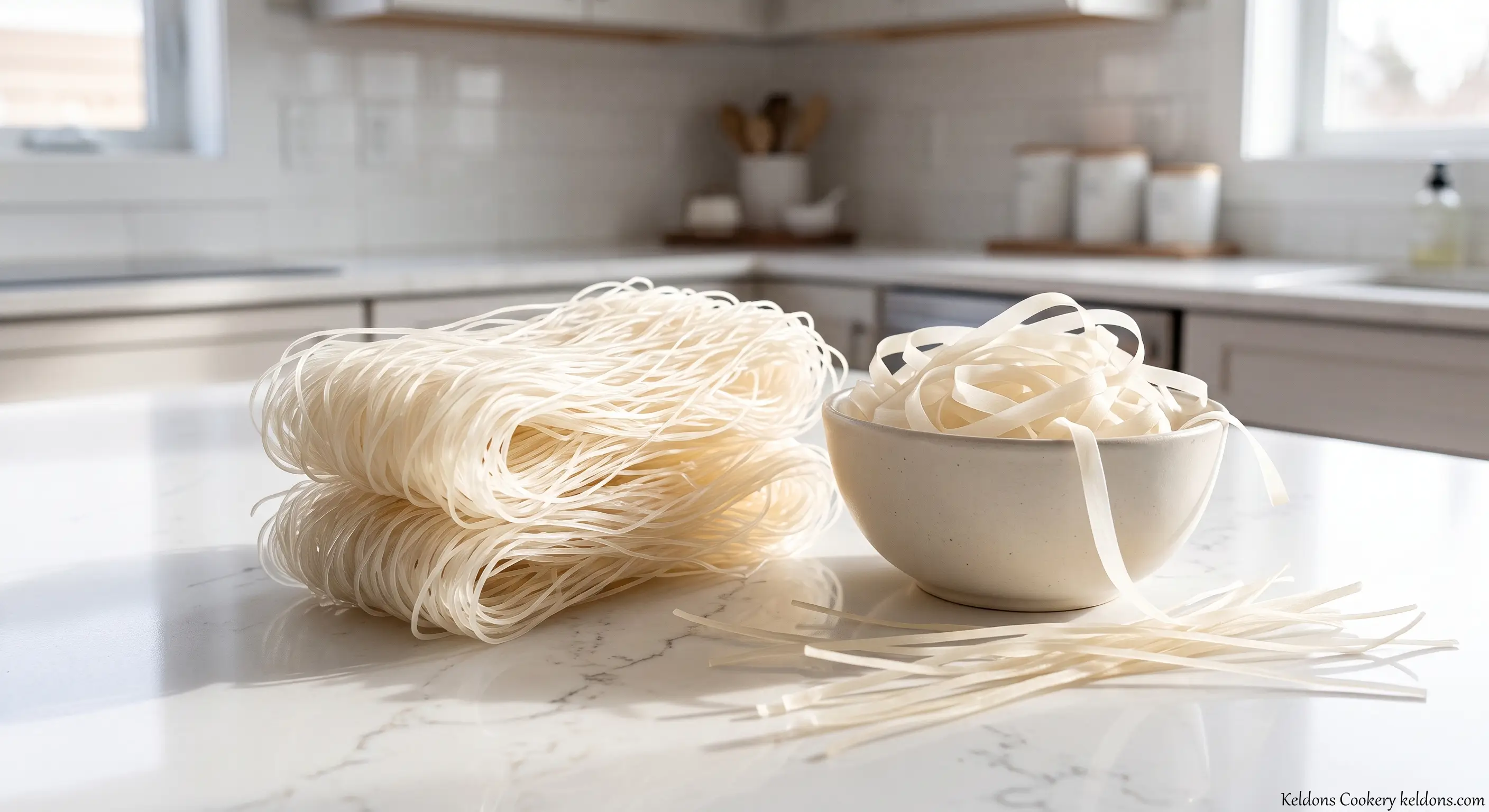
Nutritional Values
Close Cousins & Stand-Ins
- Glass Noodles: Made from mung bean starch, these slippery strands deliver identical chewy spring in cold salads, hot hotpots, and quick stir-fry pans.
- Soba Noodles: Provide hearty, slurpable texture for Japanese noodle bowls and broths, though earthy buckwheat brings nutty flavor instead of clean rice neutral taste.
- Fettuccine Pasta: Flat wheat noodles stand in reliably across saucy stir-fries when your pantry runs out of Asian noodles, though they contain standard wheat gluten.
Kitchen Cheat Codes
- Warm Water Soak: Soak dried noodles in warm tap water for twenty minutes until pliable instead of boiling on the stove to prevent mushy, broken strands in hot woks.
- Cold Water Rinse: Flush drained noodles under cold running water immediately after soaking to wash away excess surface starch and stop post-drain sticking completely.
- Oil Toss Armor: Toss drained, rinsed noodles with a quick teaspoon of toasted sesame oil to keep individual strands separate and slick before hitting the hot wok skillet.
Advertisement
Staying Alive: Shelf & Stash
- Pantry Haven: Keep dry unopened cellophane noodle packages in a cool, dark cupboard away from humid stovetops to guarantee peak texture and freshness for up to three years.
- Chilled Leftovers: Stash drained cooked noodles inside an airtight container in your refrigerator for four days, tossing with a splash of water before reheating to untangle.
Protecting Your Wallet
- Asian Market Value: Grab bulk multi-packs from local Asian supermarkets to score authentic imported rice noodles for a tiny fraction of boutique grocery store prices.
- Soup Scrap Saver: Drop snapped broken dry noodle shards from the bottom of the bag directly into bubbling chicken broths for instant, effortless comfort dumplings.
Advertisement
Fuel Factor
- Gluten-Free Fuel: Made entirely from milled rice and water, offering clean, easily digestible complex carbohydrates that provide steady energy without wheat sensitivities.
- Naturally Low Fat: Delivers almost zero dietary fat and very low sodium per serving, making it an ideal light foundation for vegetable-packed stir-fries and clean caldos.
Advertisement
Use Your Noodle And Stir Things Up
Never let these delicate translucent ribbons intimidate you into ordering takeout when dinner cravings hit. With a simple warm water soak, a splash of sesame oil, and a blazing hot skillet, you have the ultimate canvas for crisp vegetables, tender proteins, and sweet savory sauces. Skip the boiling pot, toss with confidence, and let the wok sizzle. Grab a package today and give your weeknight dinners some serious slurp.Advertisement
Quick Picks

 / 3639 / 2880 / 3102 / 2213
Advertisement
Advertisement
Handy Tip
To make sure your eggs are fresh and safe to eat, use a simple water test. Submerge your egg in a bowl of water: fresh eggs will sink to the bottom, while older, less fresh eggs float. This easy hack helps you determine quickly an egg's freshness before use.
Featured Offering
Basic Chicken Stock
Recipe of: Canada

Filed Under: Poultry
Prep Method: Stove Top
Made with: 11 Ingredients
/ 1335Advertisement
Keldons Cookery © 1998 - 2026 All rights Reserved | Secured with SSL
Homemade Goodness. Cook what you eat. Love what you cook!