Pickling Cucumbers
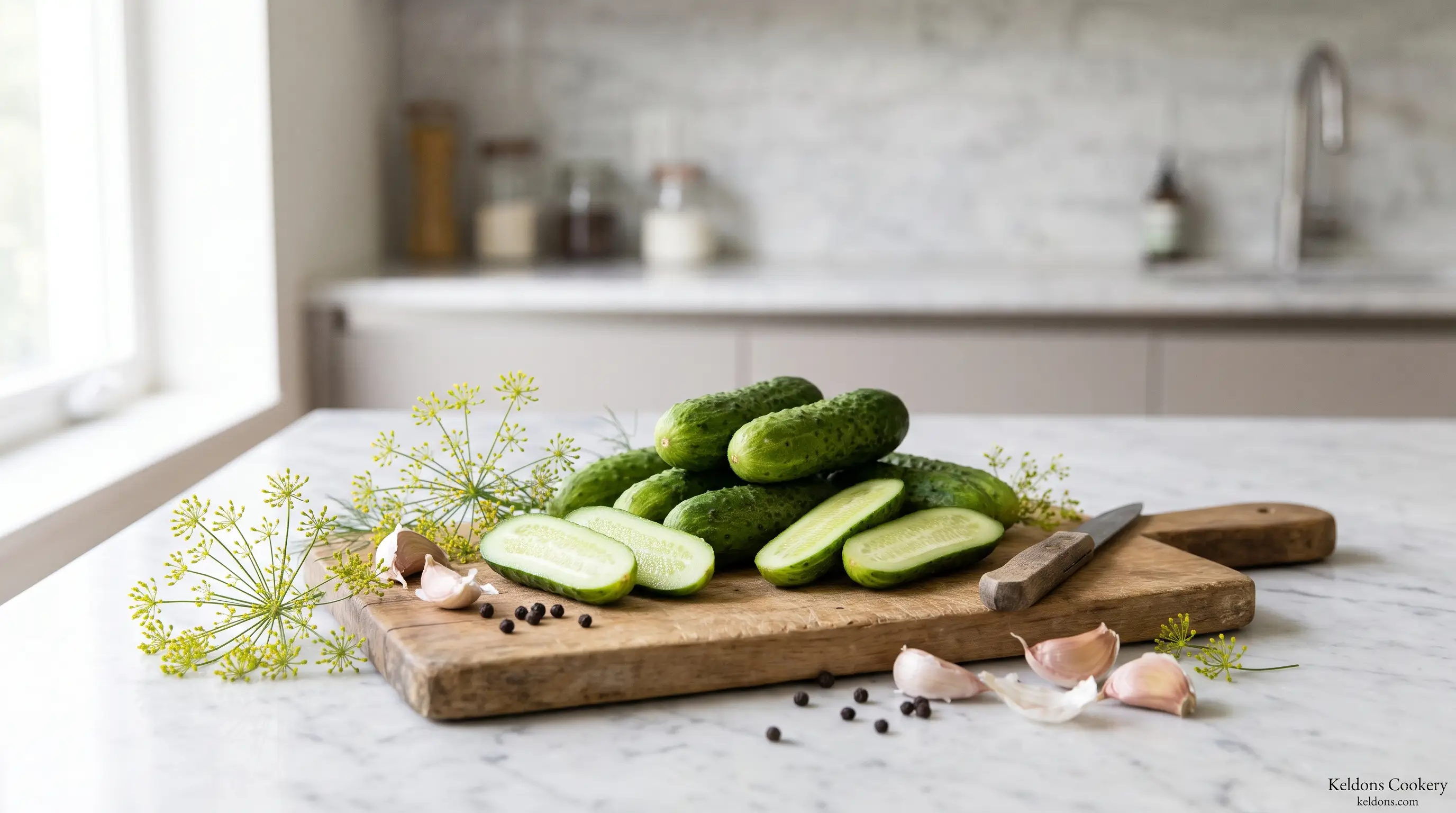
Nutritional Values
In a Pinch Substitutions:
- Kirby Cucumbers: The quintessential pickling variety; their bumpy, unwaxed skin and firm flesh provide the exact same bite and brine absorption in all hot-water canning recipes.
- Persian Cucumbers: Small, thin-skinned, and low in moisture; while lacking bumpy ridges, they stay delightfully crunchy in quick refrigerator pickles, fresh relish, and cold brines.
- English Cucumbers: A viable raw substitute with tender skin and small seeds; scoop out watery center pulp before slicing to prevent soggy textures in quick, vinegar-based salads.
Tricks and Hacks
- Blossom End Trim: Always slice off one-sixteenth of an inch from the blossom tip; this removes natural softening enzymes that would otherwise turn your crisp spears limp and mushy.
- Ice Water Soak: Submerge freshly picked cucumbers in an icy cold water bath for two full hours prior to jar processing to tighten cell walls and guarantee a loud, satisfying snap.
- Tannin Boost: Tuck a clean grape leaf, oak leaf, or black tea bag into the bottom of each jar; natural plant tannins reinforce pectin chains to keep pickled spears ultra-crisp.
Advertisement
Longevity
- Shelf Life: Keep unwashed cucumbers in a loose paper bag tucked inside the crisper drawer for up to one week; moisture accelerates decay, so keep them dry until pickling day.
- Freezer Life: Do not freeze raw whole cucumbers; however, sliced freezer pickles packed in sugar and vinegar maintain pleasant, crunchy texture in airtight jars for nine months.
Savvy Savings
- Money Saver: Buy farm-fresh bushels in peak midsummer at local farmers markets when prices plunge; processing large batches at once cuts annual gourmet pickle costs drastically.
- Other Uses: Dice overgrown or curvy specimens into quick sandwich relishes, blend them into chilled summer gazpacho, or muddle raw rounds with mint for refreshing sparkling coolers.
Advertisement
Health Benefits
- Nutritional Highlights: Delivers rich amounts of vitamin K, vitamin C, potassium, and antioxidant cucurbitacins while remaining naturally low in calories, sugar, and dietary carbohydrates.
- Body Benefits: Boasts a ninety-five percent water content to support deep cellular hydration, promotes joint health via silica compounds, and naturally aids kidney detoxification.
Advertisement
Kind of a Big Dill
Don’t get yourself into a sour pickle by settling for waterlogged slicing varieties when you crave serious crunch. Pickling cucumbers are engineered for crisp greatness, ready to absorb garlic, dill, and brine like absolute champs. Stock up your pantry shelves, keep your canning jars sterilized, and relish the satisfying snap that only a proper homegrown pickle can bring to the table.Advertisement
Quick Picks
 / 2828
 / 3001 / 2783 / 2580
Advertisement
Advertisement
Handy Tip
Forget the old wives' tale of throwing pasta against the wall to see if it's cooked. Not only does this make your kitchen walls difficult to clean, but it's also not the most reliable method to test pasta's doneness. There's a better way to make sure your pasta is perfectly cooked.
Featured Offering
Easy Shortbread #2
Recipe of: Scotland

Filed Under: Bakery
Prep Method: Oven
Made with: 4 Ingredients
/ 3276Advertisement
Keldons Cookery © 1998 - 2026 All rights Reserved | Secured with SSL
Homemade Goodness. Cook what you eat. Love what you cook!