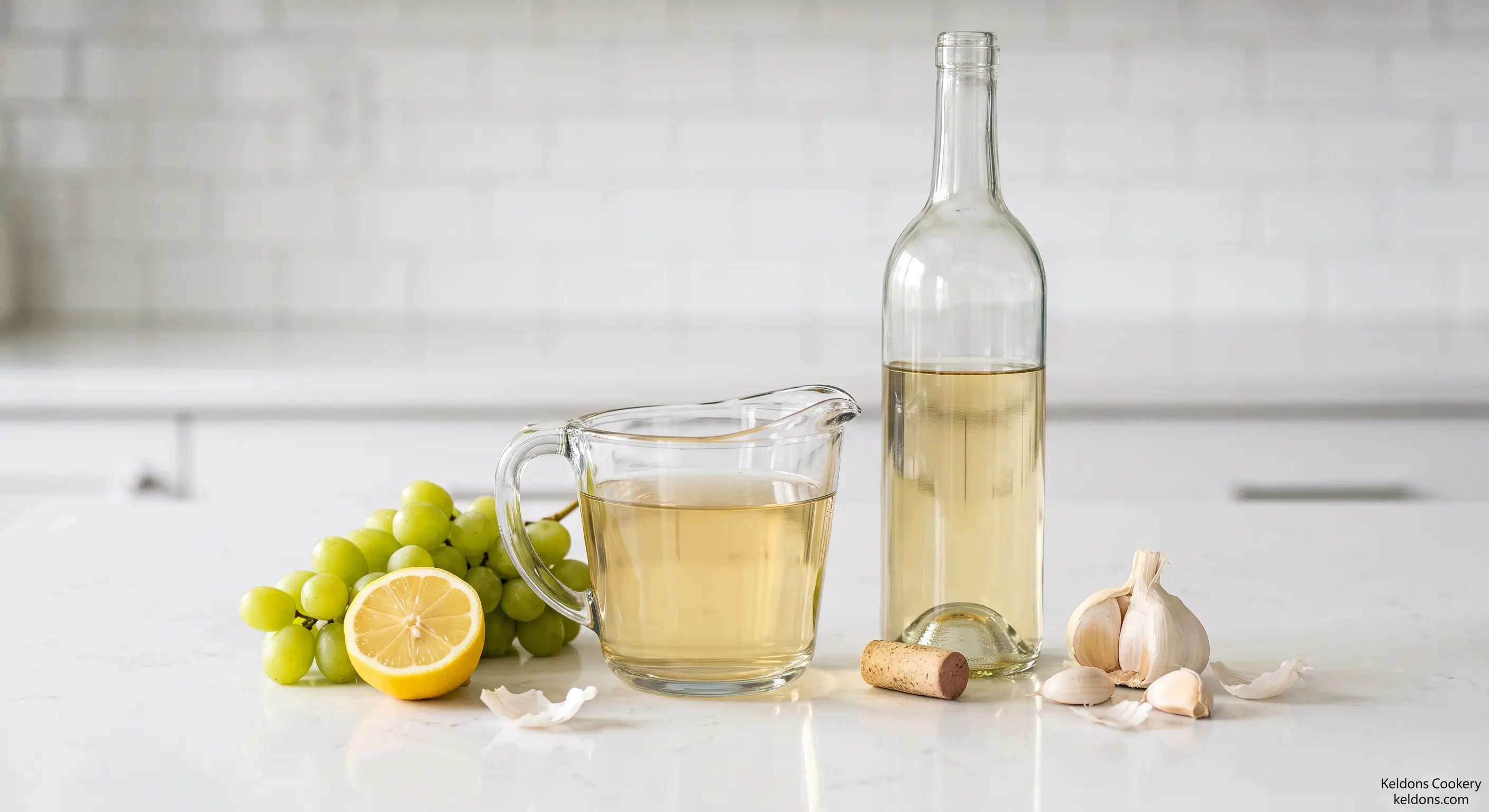
Dry White Wine
Nutritional Values
Smart Non-Alcoholic Swaps
- Chicken Broth & Lemon Juice: Combine one cup of unsalted chicken stock with one tablespoon of fresh lemon juice to mimic dry wine's savory body and bright acidity in pan sauces and risottos.
- White Wine Vinegar Dilution: Whisk one tablespoon of crisp white wine vinegar into one cup of water or vegetable broth to replicate sharp fermented grape tang without adding alcohol.
- Unsweetened White Grape Juice: Mix three parts unsweetened white grape juice with one part apple cider vinegar to mirror fruity wine aromatics in seafood glazes and braised poultry dishes.
- Dry Vermouth Bottle Backup: Keep a bottle of dry French vermouth in your fridge door; it delivers identical botanical acidity in pan sauces while staying fresh for months after opening.
Skillet & Deglazing Moves
- Never Buy Cooking Wine: Skip supermarket "cooking wines" loaded with heavy salt and harsh preservatives; always cook with a drinkable, affordable dry bottle you would enjoy sipping.
- Scrape the Golden Fond: Pour wine into a hot skillet right after searing chicken or mushrooms, scraping up browned flavor bits with a wooden spoon as the liquid bubbles briskly.
- Reduce by Half First: Simmer poured wine until reduced by at least half before adding cream or broth so raw alcohol evaporates cleanly and leaves pure concentrated grape acidity.
- Avoid Heavy Oak Aging: Steer clear of heavily oaked, buttery Chardonnays for reduction sauces, because concentrating oak tannins turns delicate pan sauces noticeably bitter.
Advertisement
Top Bottles for the Stove
- Crisp Pinot Grigio: Offers clean, neutral citrus and green apple notes with high acidity, making it the ultimate all-purpose workhorse for garlic shrimp, chicken piccata, and mussels.
- Zesty Sauvignon Blanc: Brings lively herbal, grapefruit, and grassy brightness that cuts effortlessly through rich cream sauces, goat cheese pastas, and pan-seared spring vegetables.
- Unoaked Chardonnay: Delivers fuller body and subtle pear fruitiness without heavy wood tannins, standing up beautifully to creamy mushroom risottos and roasted pork tenderloin.
- Dry Spanish Albariño: Supplies vibrant coastal minerality and stone-fruit aroma that pairs naturally with steamed clams, seafood paellas, and garlicky olive-oil pan sauces.
Cork, Fridge & Freezer Stash
- Recork in the Fridge: Seal leftover opened wine tightly with its cork or a vacuum pump and chill upright in the refrigerator to keep cooking brightness intact for up to five days.
- Decant Into Smaller Jars: Pour the last cup of an opened bottle into a small half-pint mason jar to minimize trapped oxygen and double its usable kitchen shelf life.
- Freeze Wine Ice Cubes: Freeze leftover dry white wine in standard ice cube trays—two cubes equal roughly one-quarter cup—for instant drop-in deglazing pucks anytime you cook.
- Keep Unopened Bottles Cool: Store unopened screw-cap or corked bottles horizontally in a cool, dark pantry away from sunny windows and warm oven vents to prevent premature oxidation.
Advertisement
Culinary & Flavor Benefits
- Fat-Cutting Tartaric Acid: Cuts right through heavy butter, olive oil, and rich cheeses on the palate, keeping creamy pasta sauces and braised meats lively rather than cloying.
- Alcohol-Soluble Aroma Boost: Unlocks fat- and alcohol-soluble flavor compounds trapped inside tomatoes, garlic, and herbs that plain water or broth simply cannot extract on their own.
- Zero-Fat Brightness: Adds restaurant-level depth, complexity, and glossy pan-sauce sheen without adding a single gram of saturated fat or heavy dairy calories.
- Natural Seafood Tenderizer: Gently firms delicate fish proteins while neutralizing strong marine aromas during fast five-minute shellfish steams and poached seafood preparations.
Advertisement
Stop Whining and Start Deglazing
Never let a half-empty bottle of crisp dry white wine turn into expensive salad vinegar on your counter when a quick splash can rescue almost any weeknight skillet. Pour it into sizzling garlic and browned chicken bits, let it bubble down by half, and watch ordinary pan drippings transform into glossy bistro magic. Freeze your leftovers in ice cube trays, skip the salty supermarket cooking wine, and let your dinner toast to better flavor.Advertisement
Advertisement
Advertisement
Handy Tip
When boiling rice, stir a little olive oil or cooking oil into the water. This simple hack prevents the grains from clumping and sticking together, making sure each grain of rice remains separate and fluffy. It's a small step but it makes a big difference.
Featured Offering
Lemon Curd
Recipe of: Canada

Filed Under: Fruit
Prep Method: Stove Top
Made with: 6 Ingredients
Advertisement
Keldons Cookery © 1998 - 2026 All rights Reserved | Secured with SSL
Homemade Goodness. Cook what you eat. Love what you cook!