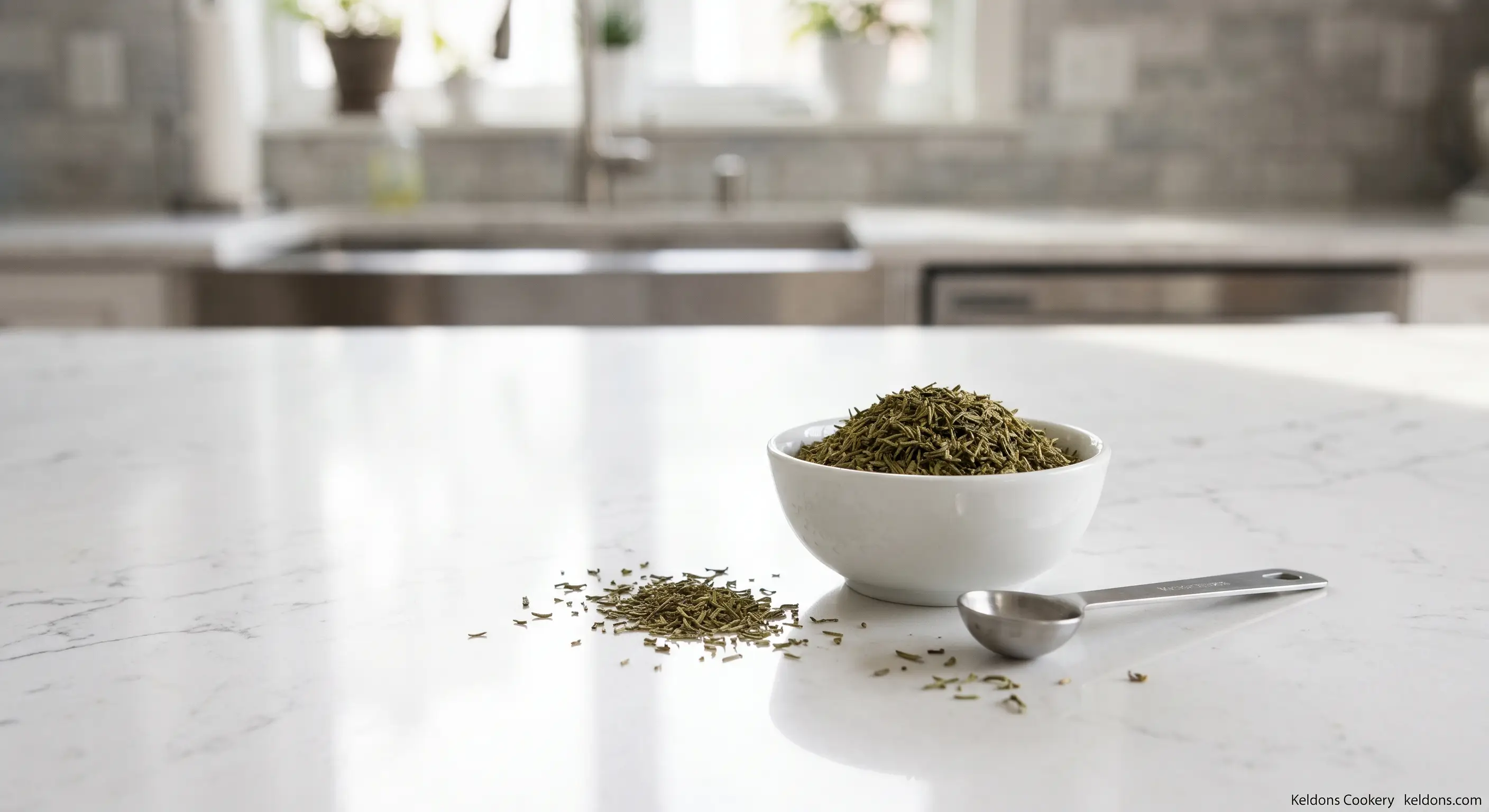
Dried Thyme
Nutritional Values
Close Cousins & Stand-Ins
- Dried Oregano or Marjoram: Swap dried marjoram cup-for-cup for sweet, floral woodland warmth, or use dried oregano in equal amounts when you want a slightly bolder, more peppery Mediterranean herbal punch.
- Fresh Thyme Sprigs: Use three teaspoons of fresh stripped thyme leaves, or four whole fresh sprigs tied together, to replace every one teaspoon of concentrated dried thyme in soups, pan sauces, and roasts.
- Herbes de Provence or Italian Seasoning: Substitute either classic dried herb blend one-for-one in roasted root vegetables, poultry rubs, or tomato stews since thyme is already a primary anchor in both mixtures.
- Dried Summer Savory: Replace dried thyme measure-for-measure with dried summer savory in bean soups, stuffing, and roasted meats for an almost identical peppery, pine-like herbal backbone.
Flavor Pairings That Pop
- Slow-Simmered Soups, Chowders & Stews: Toss dried thyme into beef bourguignon, chicken noodle soup, or New England clam chowder early in cooking so tough leaves soften and release deep, savory warmth.
- Roast Chicken, Turkey & Pork Rubs: Combine dried thyme with kosher salt, cracked black pepper, garlic powder, and lemon zest to season poultry skins and pork tenderloins before high-heat roasting.
- Sautéed Mushrooms & Caramelized Onions: Sprinkle a pinch over sliced cremini mushrooms or onions sautéing in butter to lift earthy forest notes with bright, aromatic herbal clarity.
- Creamy Pan Sauces & Holiday Stuffing: Whisk into white wine pan reductions or fold into savory herb bread stuffing alongside sage and rosemary for classic cold-weather comfort food.
Advertisement
Keep It Alive
- Dark, Cool Pantry Cabinet Storage: Keep dried thyme in a tightly sealed glass spice jar inside a cool, dark cupboard rather than on a sunny countertop or spice rack above a hot stove, which bleaches essential oils.
- Never Shake Directly Over Steaming Pots: Pour dried thyme into your palm or a dry measuring spoon before adding it to bubbling soups, as rising steam enters the jar and causes leaves to clump and lose aroma.
- Whole Leaves Outlast Ground Powder: Buy whole dried thyme leaves rather than finely ground thyme powder whenever possible, because intact leaves lock volatile aromatics inside until you crush them at the stove.
- Date Your Spice Jars With a Marker: Write the purchase month and year on the bottom of the jar so you know when to refresh your supply, dried thyme stays vibrant for one to two years in airtight glass.
Rookie Mistakes to Avoid
- Don't Skip Rubbing Leaves Between Your Palms: Always crush dried thyme leaves firmly between your thumb and fingers right before dropping them into the pan to fracture cell walls and release trapped aromatic oils.
- Never Use a 1-to-1 Ratio With Fresh Thyme: Drying concentrates essential oils threefold, so dumping a full tablespoon of dried thyme into a recipe calling for a tablespoon of fresh leaves will overwhelm your dish.
- Avoid Adding Whole Dried Leaves at the Last Second: Unlike delicate fresh herbs stirred in off the heat, dried thyme needs at least ten to fifteen minutes of moisture or gentle cooking to soften its woody texture.
- Watch Out for Stems in Budget Bags: Sift through inexpensive bulk dried thyme quickly with your fingertips to pick out sharp, woody twig fragments that will not soften during cooking.
Advertisement
Worth the Splurge?
- Bulk Spice Bins Beat Tiny Glass Jars: Buying dried thyme from high-turnover bulk spice bins or international grocery bags costs up to seventy percent less per ounce than pre-filled supermarket glass jars.
- Refill One Good Airtight Jar at Home: Invest once in a tight-sealing amber or clear glass spice jar and refill it with fresh bulk pouches every year to combine maximum aroma with rock-bottom pantry cost.
- Stretch Expensive Cuts With Herb-Garlic Compound Butter: Mash softened butter with dried thyme, minced garlic, and lemon juice to turn budget chicken thighs, baked potatoes, or crusty bread into steakhouse-worthy fare.
- Skip Pricey Pre-Mixed Poultry Seasoning Packets: Blending your own dried thyme, rubbed sage, rosemary, and black pepper from bulk jars saves money and avoids stale filler spices.
Advertisement
It Is Always Thyme for Great Flavor
Dried thyme is proof that good things really do come in tiny, unassuming packages. Unlike delicate fresh herbs that wilt in the crisper drawer before Friday rolls around, a good jar of dried thyme waits patiently in your cupboard ready to rescue Tuesday night soups, Sunday roasts, and sautéed mushrooms alike. Give those little leaves a good crush between your fingers to wake them up, and dinner will taste like you simmered it all afternoon.Advertisement
Quick Picks
Advertisement
Advertisement
Handy Tip
Brining chicken in saltwater before cooking can significantly enhance its juiciness and flavor. This simple hack involves soaking the chicken in a saltwater solution, which helps the meat retain moisture and stay succulent throughout the cooking process.
Featured Offering
Spicy Steamed Cockles
Recipe of: South Korea

Filed Under: Seafood
Prep Method: Stove Top
Made with: 7 Ingredients
Advertisement
Keldons Cookery © 1998 - 2026 All rights Reserved | Secured with SSL
Homemade Goodness. Cook what you eat. Love what you cook!