Dark Raisins
Nutritional Values
How Sun-Drying Shapes the Fruit
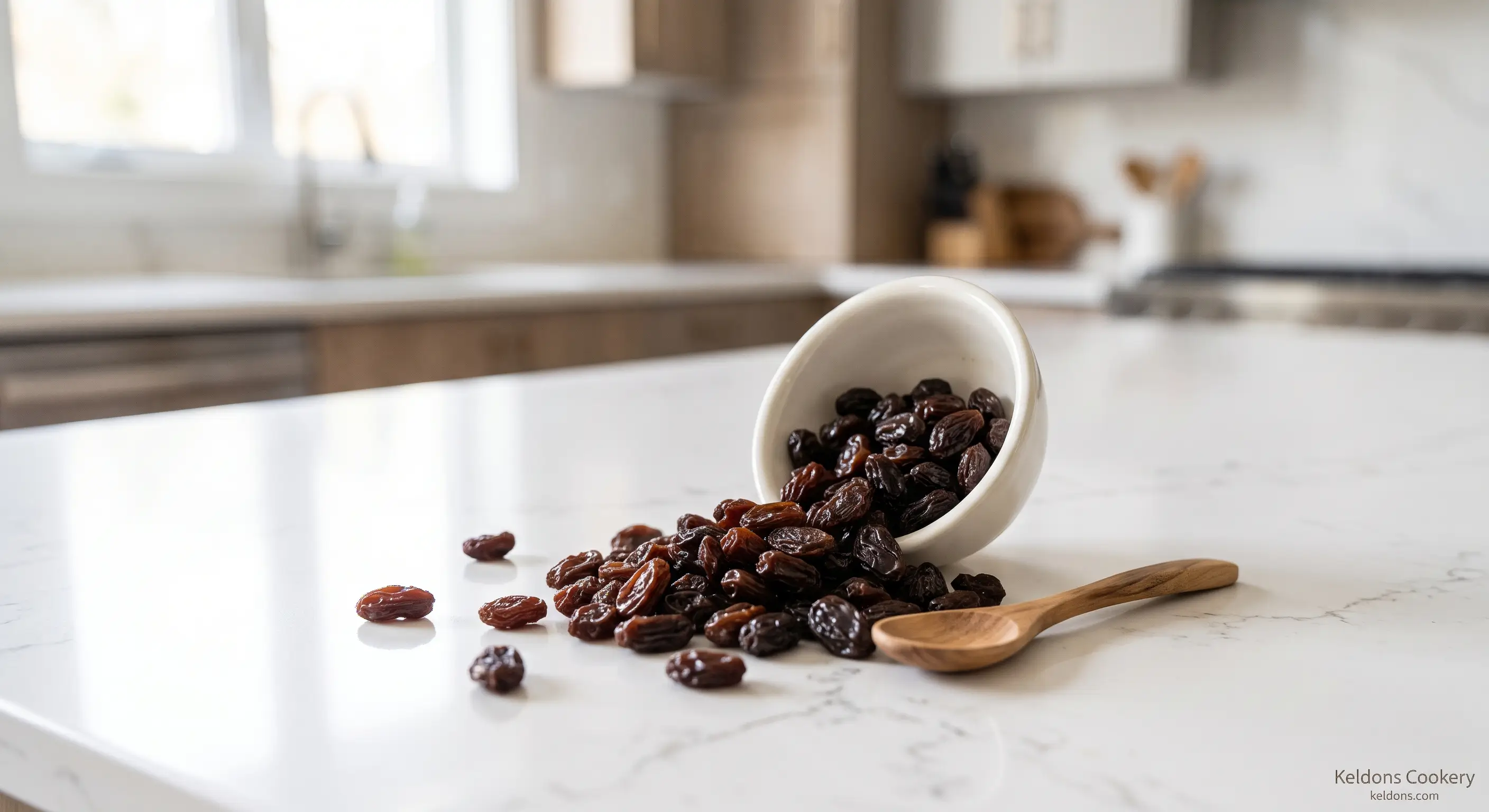
- Green Grapes Turn Dark: Despite their deep brown-black color, most dark raisins start out as pale green Thompson Seedless grapes whose natural sugars oxidize and caramelize under warm sunlight over three weeks.
- Concentrated Natural Sweetness: Removing nearly eighty percent of the fresh grape's water locks fructose and glucose inside the wrinkled skin, creating a rich, syrupy flavor far sweeter than fresh table grapes.
- Chewy Skin & Jammy Interior: Sun-curing toughens the outer grape skin slightly while keeping the inside dense and tender, giving baked goods and trail mixes a pleasant chew that holds its shape under heat.
Plumping Tricks for Juicy Results
- Warm Water Soak: Cover dry raisins with hot tap water for ten minutes before draining, which rehydrates shriveled skins and stops them from stealing moisture out of muffin, scone, or cookie batters.
- Tea or Juice Infusion: Steep dark raisins in warm Earl Grey tea, apple cider, or orange juice for fifteen minutes to infuse subtle floral or citrus notes into fruitcakes, breads, and morning porridge.
- Spirited Flavor Boost: Simmer raisins gently in dark rum, brandy, or sweet marsala wine until plump and glossy, creating an instant, aromatic topping for vanilla ice cream, bread pudding, or roasted meats.
Advertisement
Sweet & Savory Kitchen Roles
- Classic Baked Comforts: Fold plumped dark raisins into spiced oatmeal cookies, cinnamon swirl bread, carrot cake, and Irish soda bread for pockets of caramelized sweetness in every warm bite.
- Savory Spiced Pilafs: Toss a handful into warm couscous, saffron rice, or Moroccan tagines alongside toasted almonds and warm cumin to balance rich meats and earthy spices with bright fruitiness.
- Crisp Slaws & Salads: Scatter raisins over shredded broccoli slaw, curried chicken salad, or bitter kale greens to offset tangy vinegar dressings and sharp aged cheeses with bursts of natural sugar.
Dried Grape Cousins Compared
- Golden Raisins Swap: Made from the same green grapes but treated with sulfur dioxide and dried indoors, golden raisins stay plump, bright amber, and slightly tangier than earthy, sun-dried dark raisins.
- Zante Currants Difference: These tiny, intense dried Black Corinth grapes pack a sharper, more tart punch and distribute more evenly through delicate scones and biscuits than larger, sweeter dark raisins.
- Sultanas & Thompson Raisins: Often sold interchangeably in grocery stores, true sultanas come from lighter, juicier oval grapes that dry faster and offer a softer, milder sweetness in cold cereals and bakes.
Advertisement
Smart Pantry Storage & Revival
- Airtight Container Rule: Transfer opened bags or cardboard boxes into a tightly sealed glass jar or zip-top bag, preventing dry pantry air from turning tender raisins into rock-hard pebbles within weeks.
- Cool Cupboard or Fridge: Keep sealed raisins in a cool, dark pantry for up to six months, or store them in the refrigerator for a full year to prevent natural sugars from crystallizing on the surface.
- Rescuing Hardened Raisins: Soften stiff, sugary raisins by sealing them in a bowl with a damp paper towel or apple wedge overnight, or microwave them with a splash of water for twenty seconds before using.
Advertisement
Raisin the Bar on Pantry Staples
Do not let their wrinkled appearance fool you, dark raisins are tiny flavor powerhouses waiting to rescue bland breakfasts, flat salads, and boring cookie jars. Keep them sealed tight against dry air, give them a quick warm soak before baking, and toss them freely into both sweet treats and savory grain bowls. When dinner guests ask what makes your spiced rice or oatmeal cookies taste so rich, you will have plenty of good reasons to smile.Advertisement
Advertisement
Advertisement
Handy Tip
Elevate your grilling game by adding a smoky hickory flavor to your barbecue. Before you start grilling, soak a handful of hickory chips in water for about an hour. Then, sprinkle them onto your barbecue coals. Infuse your meats and veggies with a rich, smoky flavor.
Featured Offering
Chocolate Peanut Butter Balls
Recipe of: United States

Filed Under: Make Your Own
Prep Method: Stove Top
Made with: 9 Ingredients
Advertisement
Keldons Cookery © 1998 - 2026 All rights Reserved | Secured with SSL
Homemade Goodness. Cook what you eat. Love what you cook!