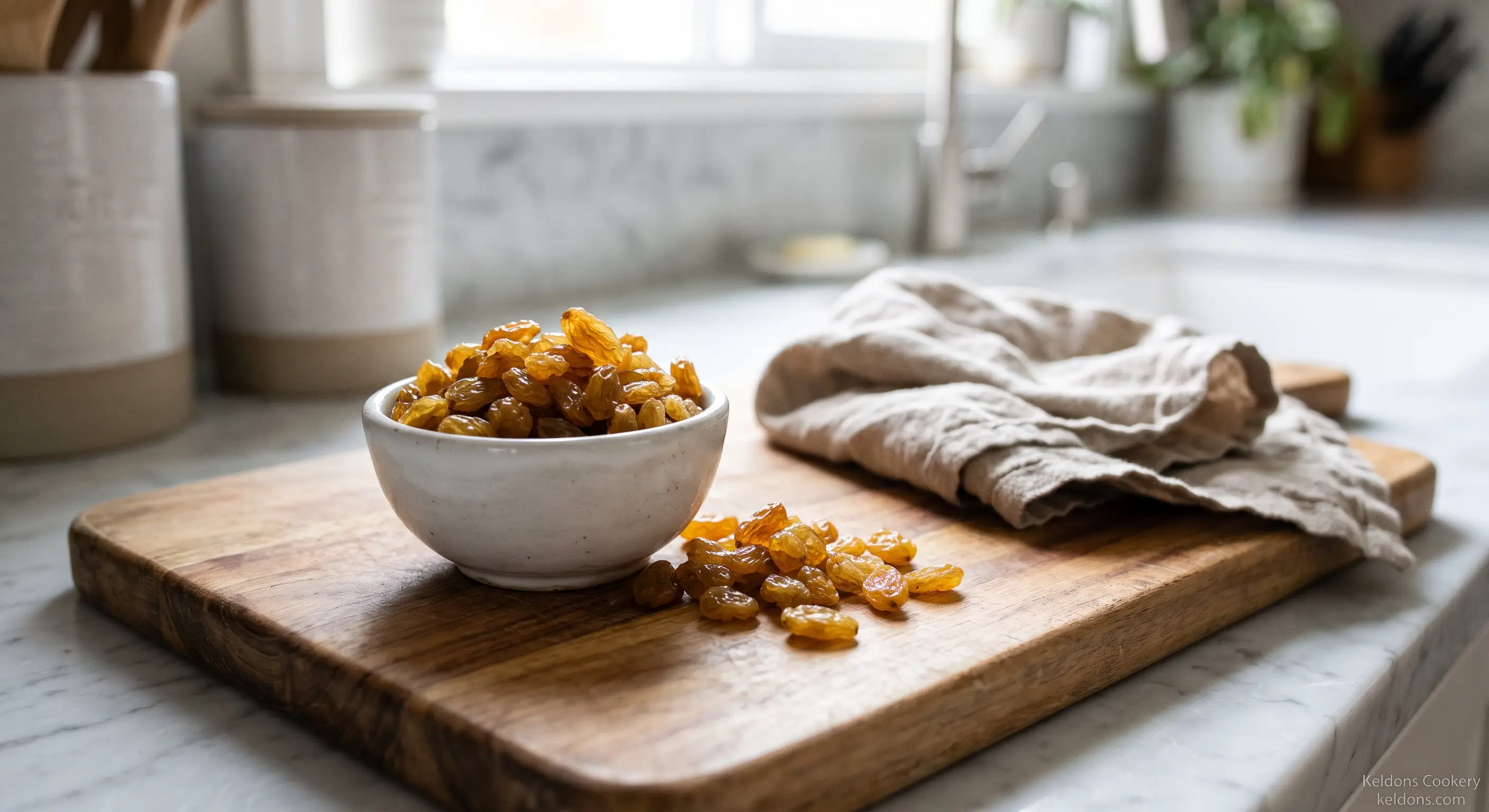
Sultanas
Nutritional Values
Sultanas Versus Raisins and Currants
- Oil-Dipped Rapid Drying Process: Coating fresh green grapes in a mild food-grade oil and potassium carbonate mist lets moisture escape rapidly, yielding plumper, lighter-colored fruit than slow sun-dried dark raisins.
- Sweeter and Juicier Texture: Because faster drying locks in extra natural grape moisture, sultanas feel noticeably softer and taste brighter and more honeyed than chewy, deeply caramelized dark Thompson raisins.
- Distinction From Zante Currants: Unlike tiny, tart Zante currants made from miniature Black Corinth grapes, sultanas are full-sized seedless grapes that deliver juicy bursts of gentle, floral sweetness in every bite.
Best Sweet and Savory Culinary Uses
- British Cakes and Holiday Bakes: Fold sultanas into Christmas pudding, Dundee cake, spotted dick, and buttery scones so every slice stays moist with tender pockets of honey-toned fruit that never turn leathery.
- Spiced Rice Pilafs and Biryanis: Stir a handful into fragrant basmati rice, lamb biryani, or Moroccan couscous alongside toasted cashews and warm cardamom to add gentle sweetness against rich, aromatic spices.
- Homemade Chutneys and Relishes: Simmer sultanas with tart cooking apples, cider vinegar, ginger, and brown sugar to create a glossy, chunky condiment ideal for aged cheddar boards and cold roasted meats.
Advertisement
Plumping and Prep Techniques Before Baking
- Warm Black Tea or Juice Soak: Steep sultanas in hot brewed Earl Grey tea, apple juice, or warm water for ten minutes, then drain thoroughly so they stay plump in the oven without stealing batter moisture.
- Dark Rum or Brandy Infusion: Soak them overnight in dark rum, sherry, or orange liqueur before folding into festive fruitcakes and stollen for deep aromatic warmth and melt-in-your-mouth tenderness.
- Light Flour Coating Trick: Toss drained sultanas with one tablespoon of your recipe flour before stirring into cake batter so the plump fruits stay suspended evenly rather than sinking to the bottom.
Smart Pantry Substitutions When Out
- North American Golden Raisins: Swap United States golden raisins at an exact one-to-one ratio, as they come from the exact same green grape variety and share nearly identical size, color, and bright flavor.
- Standard Dark Raisins: Substitute regular dark raisins one-for-one in muffins, cookies, and oatmeal when you want similar chewy body, giving them a five-minute warm water soak first to match sultana softness.
- Chopped Dried Apricots or Figs: Dice soft dried apricots into raisin-sized pieces for savory grain bowls and holiday breads when you want that same sunny amber color and tender, juicy chew.
Advertisement
Storage Tips to Keep Sultanas Soft
- Airtight Glass Jar Transfer: Move opened packages into a tight-sealing glass jar or press all air out of a heavy resealable bag so pantry air cannot dry out the thin skins into hard pellets.
- Cool Cupboard or Fridge Shelf: Store sealed sultanas in a cool, dark pantry for up to six months, or tuck them into the refrigerator for a full year to prevent natural grape sugars from crystallizing.
- Reviving Older Dry Fruit: If stored sultanas feel stiff or show harmless white sugar crystals on the outside, rinse them in warm water for five minutes and pat dry to restore their soft, juicy texture.
Advertisement
Reign Supreme With Sultanas in Your Pantry
Sultanas prove why a classic ingredient earns royal status in kitchens around the world. Plumper, juicier, and brighter than standard dark raisins, these golden-brown gems bring effortless honeyed sweetness to everything from Sunday afternoon scones to spiced weeknight rice pilafs. Keep an airtight jar tucked away in your cupboard, give them a quick warm soak before baking, and let them rule your sweet and savory recipes alike.Advertisement
Advertisement
Advertisement
Handy Tip
Don't throw your pickle juice away. It's great for making salad dressings, marinating meat, or even as a quirky addition to cocktails. This flavorful liquid can add a tangy twist to your dishes and drinks, providing both flavor and health benefits.
Featured Offering
All Dressed Spaghetti
Recipe of: Canada

Filed Under: Grain
Prep Method: Stove Top
Made with: 10 Ingredients
Advertisement
Keldons Cookery © 1998 - 2026 All rights Reserved | Secured with SSL
Homemade Goodness. Cook what you eat. Love what you cook!