Nopales
Nutritional Values
In a Pinch Substitutions:
- Green Bell Peppers: Swap in an equal portion of sliced green bell peppers to achieve a remarkably similar crisp texture and a bright green visual presentation in your sizzling fajita pans.
- Fresh Green Beans: Substitute chopped fresh green beans to perfectly mimic the pleasant, earthy vegetal flavor profile and firm bite in your slow-simmered weekend chilis or vegetable soups.
- Okra Slices: Use sliced okra pods if your recipe relies on the natural thick, gelatinous juices to body up a traditional rustic stew when fresh cactus paddles are completely unavailable.
Tricks and Hacks
- The Salt Sweat: Toss your raw diced pieces with a generous handful of coarse salt and let them sit for thirty minutes to smoothly draw out and wash away the sticky, viscous sap.
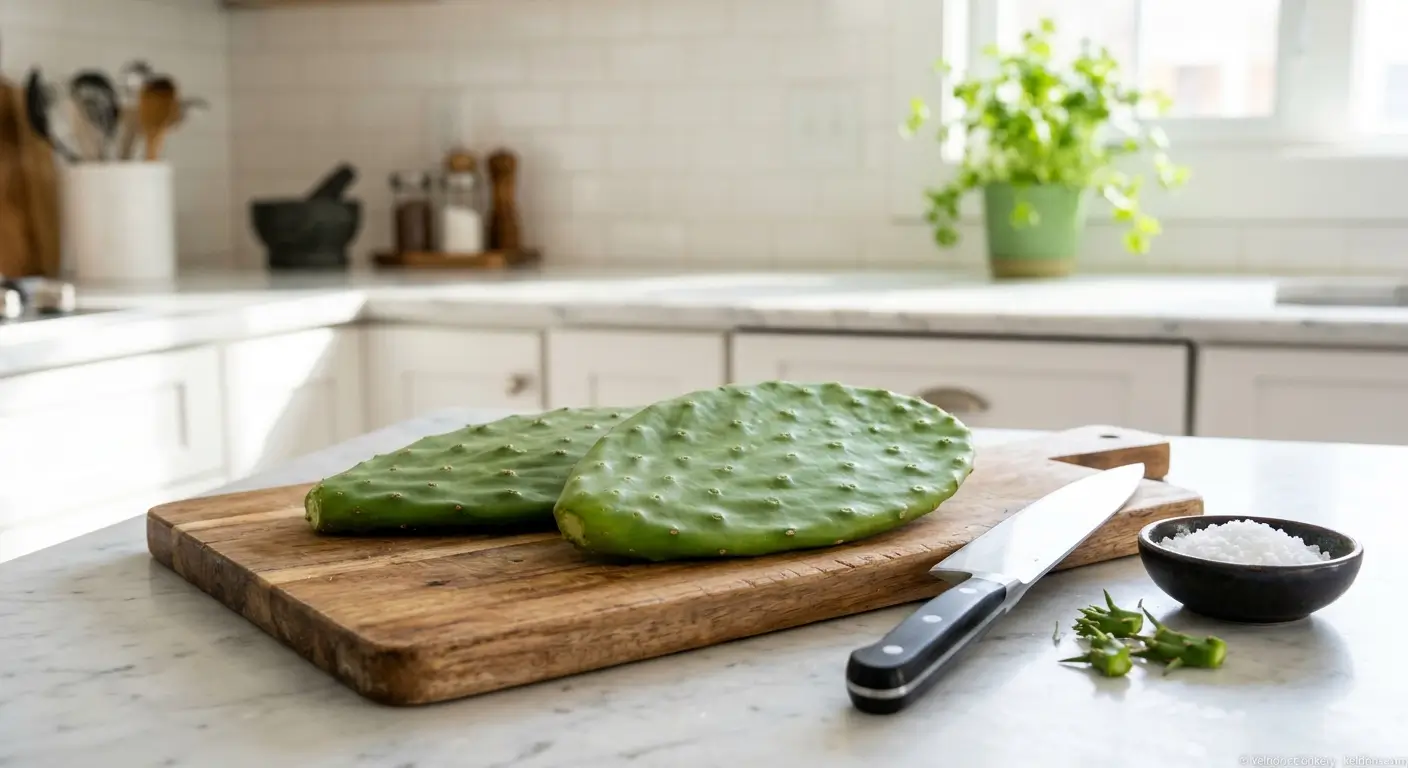
- Peeling Protection: Lay the paddle flat on your board and use a sharp chef's knife angled nearly flat to scrape away the raised thorn bumps cleanly without slicing into the meat.
- Baking Soda Boil: Add a tiny quarter-teaspoon of baking soda to your boiling pot water to completely lock in that brilliant emerald green color and rapidly dissolve away excess sap.
Advertisement
Longevity
- Shelf Life: Wrap your raw unpeeled paddles tightly in a damp paper towel and store them inside the vegetable crisper drawer, where they will stay crisp and juicy for up to two weeks.
- Freezer Life: Blanch your cleaned diced pieces in boiling water for two minutes before cooling and freezing them inside a heavy-duty storage bag, preserving their quality for up to nine months.
Savvy Savings
- Money Saver: Purchase whole, un-trimmed paddles at international markets rather than pre-diced jars or cleaned supermarket packs to cut your baseline vegetable expenses down by nearly half.
- Other Uses: Press the raw, mucilaginous juices from trimmed scraps through a cloth to create a soothing, deeply hydrating gel for treating mild kitchen finger burns or dry summer skin.
Advertisement
Health Benefits
- Nutritional Highlights: This low-calorie cactus paddle is absolutely overflowing with essential vitamin C, vital calcium, and soluble dietary fibers while keeping its glycemic index incredibly low.
- Body Benefits: Absorbing these high levels of unique mucilage fiber smoothly assists with blood sugar regulation and works naturally to soothe and protect your stomach's delicate digestive lining.
Advertisement
A Sharp Way To Stick To Healthy Eating
Do not let a few intimidating needles keep you from adding this incredibly crisp, tangy Mexican staple to your weekly recipe rotation. Just scrape them clean with confidence, give them a quick salt sweat to handle the sap, and toss them on a scorching-hot grill. Once you taste that unique, zesty crunch alongside your morning eggs, you will realize that cooking with cactus is a spectacular choice, and you will definitely want to stick with it.Advertisement
Advertisement
Advertisement
Handy Tip
Speed up the browning of your tomatoes on the grill by sprinkling them with a pinch of sugar before grilling. This small trick not only helps them brown faster but also enhances their natural sweetness, giving you beautifully caramelized tomatoes in no time.
Featured Offering
Cognac And Anchovy Butter
Recipe of: France

Filed Under: Fish
Prep Method: Mix
Made with: 4 Ingredients
Advertisement
Keldons Cookery © 1998 - 2026 All rights Reserved | Secured with SSL
Homemade Goodness. Cook what you eat. Love what you cook!