Dry Yeast
Nutritional Values
Pantry Varieties Explained
- Active Dry Yeast: Coarser granules coated in dead yeast cells that require dissolving in warm water with a pinch of sugar before mixing into dry flour for reliable fermentation and steady rise.
- Instant Yeast: Finely milled, porous granules that absorb liquid rapidly and can be whisked straight into dry flour without prior proofing, cutting standard dough rising times nearly in half.
- Rapid-Rise Yeast: Specially formulated instant strain containing added dough conditioners like ascorbic acid to accelerate gas production, ideal for single-rise breads and bread machine recipes.
Awakening the Dormant Granules
- Ideal Liquid Temperature: Warm water or milk between 105°F and 115°F wakes dormant cells gently, whereas liquids hotter than 130°F scald and kill the living organisms before fermentation ever starts.
- Feeding the Culture: A small pinch of granulated sugar, honey, or warm malt syrup gives waking yeast immediate fuel to multiply, though flour starches eventually provide plenty of natural nourishment.
- Salt Placement Strategy: Direct contact between raw salt crystals and dry yeast draws out moisture and slows fermentation, so always whisk salt into the flour before adding hydrated yeast mixtures.
Advertisement
Everyday Kitchen Applications
- Artisan & Sandwich Loaves: Creates the chewy interior crumb and golden crust in country boules, braided brioche, and soft sandwich bread by building steady gas pockets during bulk fermentation.
- Flatbreads & Pizza Dough: Produces bubbly, blistered crusts in Neapolitan pizza, pillowy naan, and dimpled focaccia when given slow, cool fermentation periods that deepen savory wheat flavor.
- Enriched Sweet Pastries: Lifts heavy, butter-and-egg-rich doughs used for cinnamon rolls, sticky buns, doughnuts, and holiday babka where chemical baking powder would fail to support the weight.
Smart Swaps & Conversions
- Active Dry to Instant: Substitute instant yeast for active dry at a one-to-one ratio by weight or volume, simply skipping the separate blooming step and watching the dough since it rises slightly faster.
- Fresh Cake Yeast Swap: Replace one 0.6-ounce block of compressed fresh yeast with one standard 2.25-teaspoon packet of dry yeast, adjusting liquid warmth slightly to wake the dried granules properly.
- Sourdough Starter Trade: Swap one cup of active sourdough starter for one packet of dry yeast by adding half a cup of flour and half a cup of water to maintain the original dough hydration balance.
Advertisement
Storage & Shelf-Life Secrets
- Unopened Foil Packets: Keep sealed individual envelopes in a cool, dark pantry away from stove heat, where airtight foil barriers protect dormant granules from moisture for up to two full years.
- Opened Glass Jars: Transfer opened jars straight to the refrigerator door or freezer in an airtight container, stopping ambient humidity and warm kitchen air from prematurely exhausting the cells.
- Freezer Longevity Trick: Store bulk vacuum-sealed yeast bags in the freezer for multi-year freshness; the dry granules do not freeze solid and can be scooped straight into warm dough without thawing.
Advertisement
Rise and Shine, Dough-Nuts!
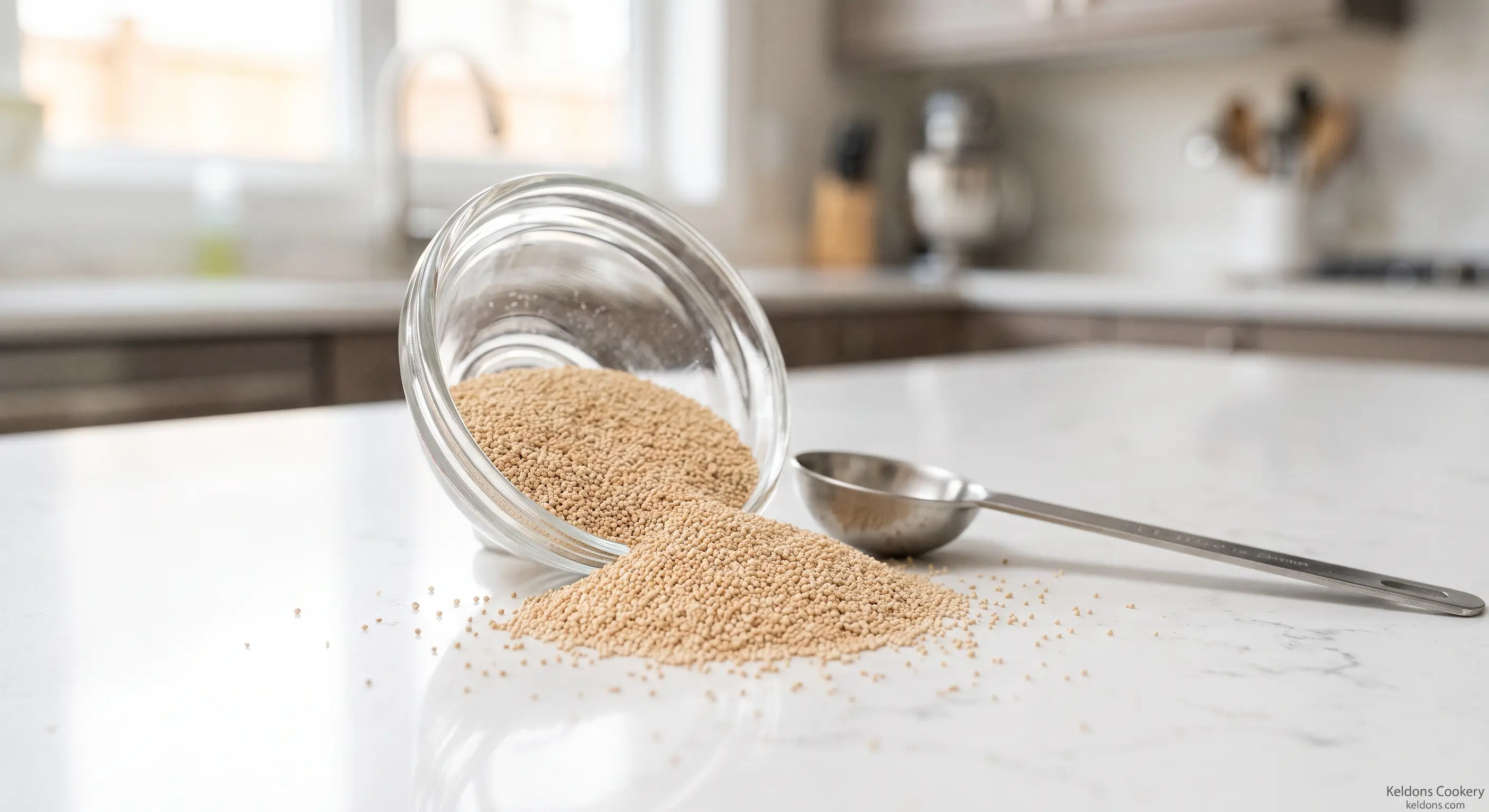
Tiny dehydrated granules might look like unassuming beige sand in a jar, yet they hold the biological muscle to turn flat paste into towering loaves. Treat these microscopic bakers kindly with warm water, keep them away from scorching heat, and store leftovers in the cold so they stay ready for action. When your dough doubles in size on schedule, you will know you did the yeast you could to earn that warm, crusty slice.Advertisement
Advertisement
Advertisement
Handy Tip
Speed up the ripening process of your Avocados by placing them in a paper bag with an apple or banana. The gas released by these fruits quickens the ripening, making your avocados ready to enjoy sooner rather than later. With this hack you won't have to wait long to eat your avocado.
Featured Offering
Sausage Cheddar Breakfast Bake
Recipe of: United States

Filed Under: Pork
Prep Method: Oven
Made with: 7 Ingredients
Advertisement
Keldons Cookery © 1998 - 2026 All rights Reserved | Secured with SSL
Homemade Goodness. Cook what you eat. Love what you cook!