Vegetable Stock
Nutritional Values
Close Cousins & Stand-Ins
- Dried Mushroom Dashi: Steep dried shiitake caps and a strip of kombu kelp in hot water for twenty minutes to create a deeply savory, umami-packed liquid that rivals long-simmered stock.
- Miso Paste & Water: Whisk one tablespoon of mellow white or yellow miso paste into one cup of warm water off the heat for instant savory depth in quick noodle soups and grain bowls.
- Chicken or Bone Broth: Swap in equal amounts of unsalted chicken stock whenever a recipe does not need to remain strictly vegetarian, adding rich gelatinous body to pan sauces and stews.
- Herb-Infused Water: Simmer plain water with a smashed garlic clove, bay leaf, splash of soy sauce, and pat of butter for fifteen minutes when your pantry runs completely dry of cartons.
Kitchen Cheat Codes
- Freezer Scrap Bag: Collect clean onion skins, carrot peels, celery tops, herb stems, and mushroom trimmings in a freezer bag until full, then simmer into free homemade liquid gold.
- Skip Bitter Brassicas: Keep broccoli, cabbage, Brussels sprouts, and turnip peels out of your stockpot, because prolonged simmering releases sharp sulfur compounds that turn broth bitter.
- Caramelize Before Simmering: Roast or brown chopped onions, carrots, and tomato paste in a splash of oil before adding cold water to build a rich amber color and deep roasted sweetness.
- Forty-Five Minute Cap: Simmer gentle vegetable aromatics for forty-five minutes rather than hours; overcooking soft plants breaks down sweet cell walls into muddy, flat-tasting water.
Advertisement
Vegetable Stock vs. Vegetable Broth
- Seasoning & Salt Levels: Culinary vegetable stock remains unseasoned or lightly salted for flexible cooking, while commercial vegetable broth arrives heavily salted and ready to sip on its own.
- Reduction Behavior: Unsalted stock reduces cleanly into glossy, concentrated pan sauces and glazes, whereas reducing salty store-bought broth quickly concentrates sodium to inedible levels.
- Ingredient Complexity: Stocks lean heavily on slow-extracted aromatic roots, skins, and stems, while broths often incorporate sweeter, finished vegetable juices and dried herb extracts.
- Best Recipe Applications: Choose unsalted stock for creamy risottos, braises, and reductions, and reach for well-seasoned broth when building quick weeknight noodle soups or sipping mugs.
Staying Alive: Shelf & Stash
- Unopened Pantry Cartons: Store shelf-stable aseptic cartons and cans in a cool, dark pantry cupboard until the printed best-by date, shaking well before pouring into your saucepan.
- Five-Day Fridge Window: Refrigerate opened cartons or cooled homemade jars in airtight containers and use within four to five days before natural sugars turn sour and cloudy.
- Ice Cube Portion Freeze: Freeze leftover stock in silicone muffin tins or ice cube trays, then pop frozen pucks into a labeled freezer bag for effortless deglazing and pan-sauce splashes.
- Leave Freezer Headspace: Leave at least one full inch of empty space at the top of plastic freezer containers or wide-mouth mason jars so expanding frozen liquid never cracks the vessel.
Advertisement
Why Your Body Smiles
- Low-Calorie Hydration: Delivers warm, comforting savory flavor and gentle electrolyte hydration with virtually zero fat and fewer than fifteen calories per full serving cup.
- Extracted Plant Minerals: Simmering whole vegetable skins, leafy tops, and herbs draws water-soluble potassium, magnesium, and trace antioxidants directly into your cooking liquid.
- Sodium Control Advantage: Cooking with homemade or unsalted stock lets you season soups, grains, and sauces precisely to taste instead of swallowing hidden processed salt loads.
- Pure Plant-Based Versatility: Offers a completely cholesterol-free, allergen-friendly foundation that makes hearty stews and grains welcoming for vegan, vegetarian, and omnivore tables alike.
Advertisement
Take Stock of Your Soup Pot
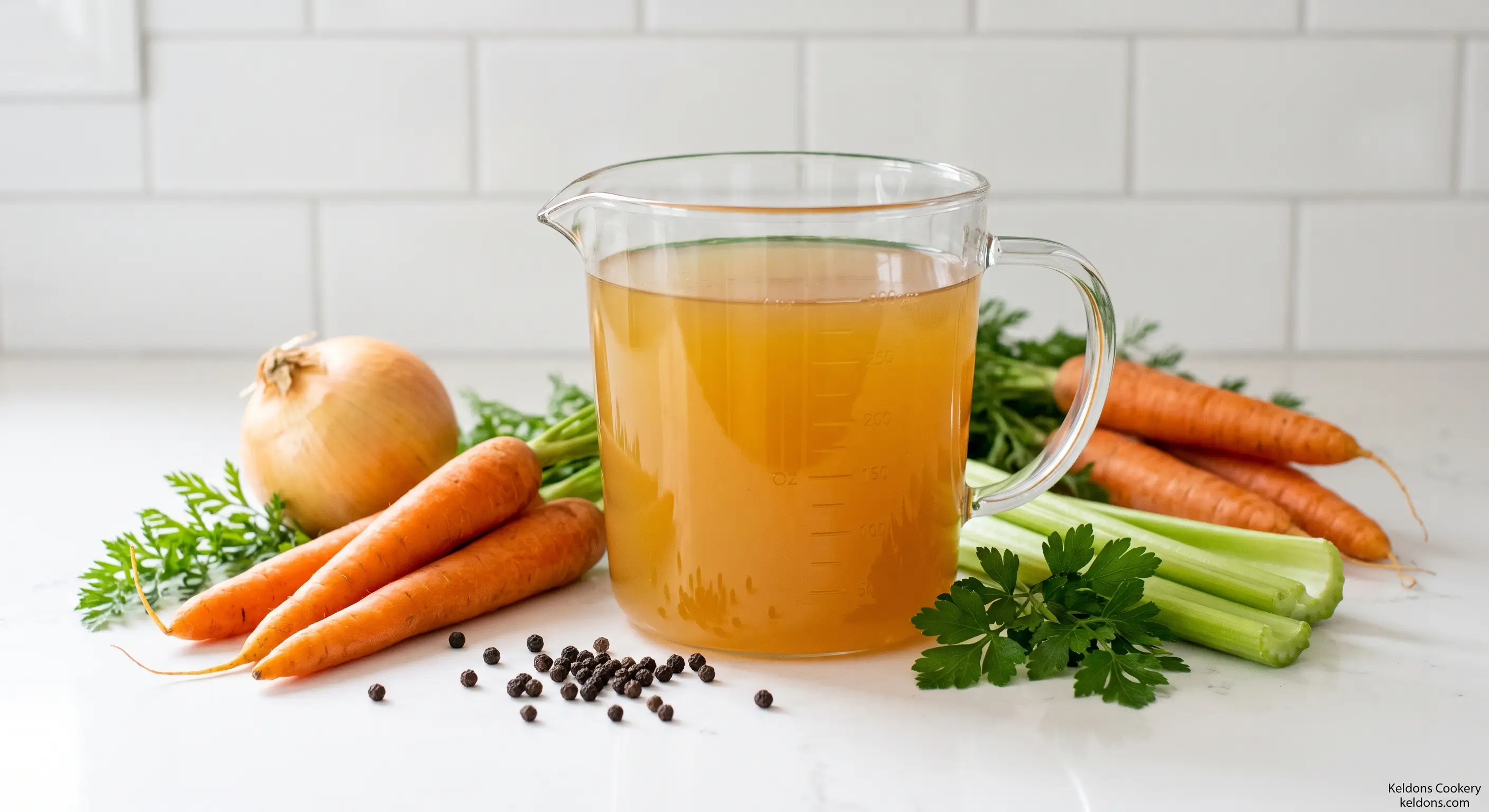
Never settle for boiling plain tap water when a splash of golden vegetable stock can turn dull rice, beans, or weeknight veggies into comfort food royalty. Whether you simmer your own batch from a freezer bag of onion skins and carrot tops or keep a few low-sodium cartons tucked in the pantry, this humble liquid does the heavy lifting behind the scenes. Stock up your shelves, freeze a few extra cubes, and give every pot a savory head start.Advertisement
Quick Picks
Advertisement
Advertisement
Handy Tip
When boiling rice, stir a little olive oil or cooking oil into the water. This simple hack prevents the grains from clumping and sticking together, making sure each grain of rice remains separate and fluffy. It's a small step but it makes a big difference.
Featured Offering
Star Fruit And Lemon Cake
Recipe of: German

Filed Under: Fruit
Prep Method: Oven
Made with: 13 Ingredients
Advertisement
Keldons Cookery © 1998 - 2026 All rights Reserved | Secured with SSL
Homemade Goodness. Cook what you eat. Love what you cook!