Sausages
Nutritional Values
In a Pinch Substitutions
- Seasoned Ground Pork or Turkey: Mix plain ground pork or dark-meat turkey with kosher salt, cracked black pepper, rubbed sage, fennel seeds, and garlic powder to replicate fresh bulk sausage in pasta or stuffing.
- Diced Smoked Bacon or Pancetta: Render chopped thick-cut bacon or Italian pancetta in a skillet to deliver comparable smoky, salty pork richness when a soup, bean stew, or breakfast hash calls for sausage.
- Plant-Based Sausage Links: Swap pea-protein or soy-based sausage links cup-for-cup in sheet-pan bakes, pasta sauces, or grilled buns for matching herb seasoning and snappy bite without animal meat.
- Spiced Seasoned Mushrooms: Brown finely chopped cremini or shiitake mushrooms with fennel seed, smoked paprika, and soy sauce to mimic hearty sausage crumbles in vegetarian ragus, pizza toppings, or lasagnas.
Fresh Raw vs. Smoked & Cured Categories
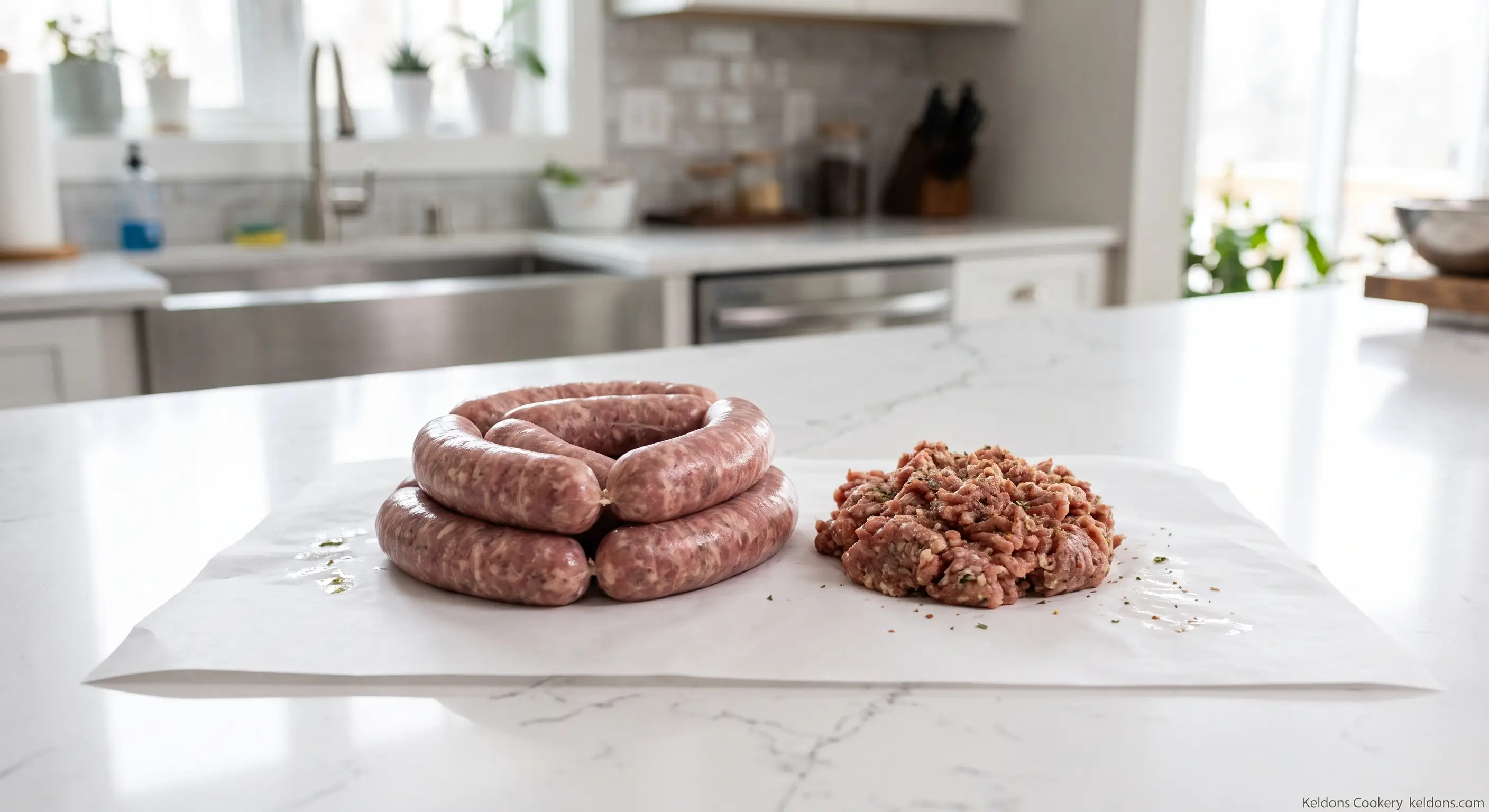
- Fresh Raw Links & Bulk Meat: Uncooked and un-cured, fresh sausages rely on raw meat, salt, and aromatics, meaning they must stay refrigerated and be cooked thoroughly to safe internal temperatures before eating.
- Pre-Cooked & Smoked Sausages: Hot-smoked or poached during production, these firm, flavorful links only need gentle reheating on the grill, in a skillet, or sliced into simmering soups to crisp their skins.
- Dry-Cured & Fermented Sausages: Air-dried for weeks with curing salts and lactic acid cultures, firm shelf-stable sausages slice cleanly for charcuterie boards and pizza toppings without any stove cooking required.
- Natural vs. Collagen Casings: Traditional hog or sheep casings give links an authentic, curved shape and crisp snap when bitten, while uniform collagen or skinless links cook straight and tender in busy kitchens.
Advertisement
Kitchen Cheat Codes
- Never Prick Raw Links With a Fork: Piercing sausage casings lets precious melted fat and savory juices gush straight into the pan, leaving you with dry, shriveled meat instead of a plump, juicy link.
- Simmer in Shallow Water Before Browning: Start raw links in a skillet with a quarter-inch of water covered over medium heat until plump and cooked through, then uncover and brown in their own rendered fat without bursting.
- Squeeze Out Meat for Fast Pasta Ragus: Slit raw casings lengthwise with a paring knife and peel away the skin so you can crumble seasoned sausage directly into hot olive oil for quick, restaurant-style pasta sauces.
- Keep Grill Heat Medium-Low: Cooking raw sausages over roaring flames scorches and splits the outside casing long before the center reaches safe temperature, so sear gently over indirect or medium heat.
Staying Alive: Shelf & Stash
- Use Fresh Raw Sausage Within Two Days: Store uncooked fresh links or bulk chubs on a rimmed plate on the bottom fridge shelf and cook or freeze them within one to two days of bringing them home from the market.
- Keep Vacuum-Sealed Smoked Links Chilled: Unopened vacuum-packed pre-cooked sausages keep happily in the refrigerator for up to two weeks, though once opened they should be wrapped tightly and eaten within four days.
- Freeze Links With Parchment Separators: Lay individual raw or cooked sausage links flat on a parchment-lined tray until frozen solid, then transfer to a freezer bag for up to three months so you can grab one link at a time.
- Refrigerate Cooked Leftovers Within Two Hours: Cool leftover grilled or pan-seared sausages promptly and seal them in an airtight container in the fridge, slicing them into fried rice, omelets, or soups within four days.
Advertisement
Savvy Savings
- Buy Bulk Sausage Chubs Over Links: Purchasing loose bulk sausage rolls without casings typically costs twenty to thirty percent less per pound than stuffed links and saves prep time for soups, casseroles, and sauces.
- Stretch One Pound Across Family Meals: Because sausage is already packed with salt, fat, and herbs, crumbling just half a pound into a big pot of beans, pasta, or potato soup flavors the entire meal without extra spices.
- Stock Up During Summer & Holiday Sales: Grocery meat counters discount bulk sausage packs around grilling holidays and winter festivities; buy extra packages and freeze them flat for effortless budget dinners later.
- Save Pan Drippings for Sautéing Veggies: After browning sausage in a skillet, use the leftover herb-and-spice-infused fat to sauté onions, bell peppers, kale, or potatoes instead of adding extra butter or olive oil.
Advertisement
The Best Wurst Decision for Dinner Tonight
Sausage is the ultimate kitchen shortcut because the butcher already did half your seasoning work before you even turned on the stove. Whether you brown crumbled links into a rich Sunday pasta sauce, simmer smoked coins into hearty bean soup, or grill plump links for a backyard cookout, sausage brings massive savory payoff with minimal effort. Keep your heat gentle, keep your fork away from those casings, and let dinner sizzle.Advertisement
Advertisement
Advertisement
Handy Tip
Speed up your potato baking process with a simple kitchen hack: soak them in salt water for 20 minutes prior to baking. This not only speeds up cooking time but also enhances flavor, giving you perfectly seasoned, fluffy potatoes faster.
Featured Offering
Baby Spinach And Warm Potato Salad
Recipe of: Italy

Filed Under: Vegetable
Prep Method: Stove Top
Made with: 10 Ingredients
Advertisement
Keldons Cookery © 1998 - 2026 All rights Reserved | Secured with SSL
Homemade Goodness. Cook what you eat. Love what you cook!