Puff Pastry
Nutritional Values
Laminated Steam Lift & Butter Layers
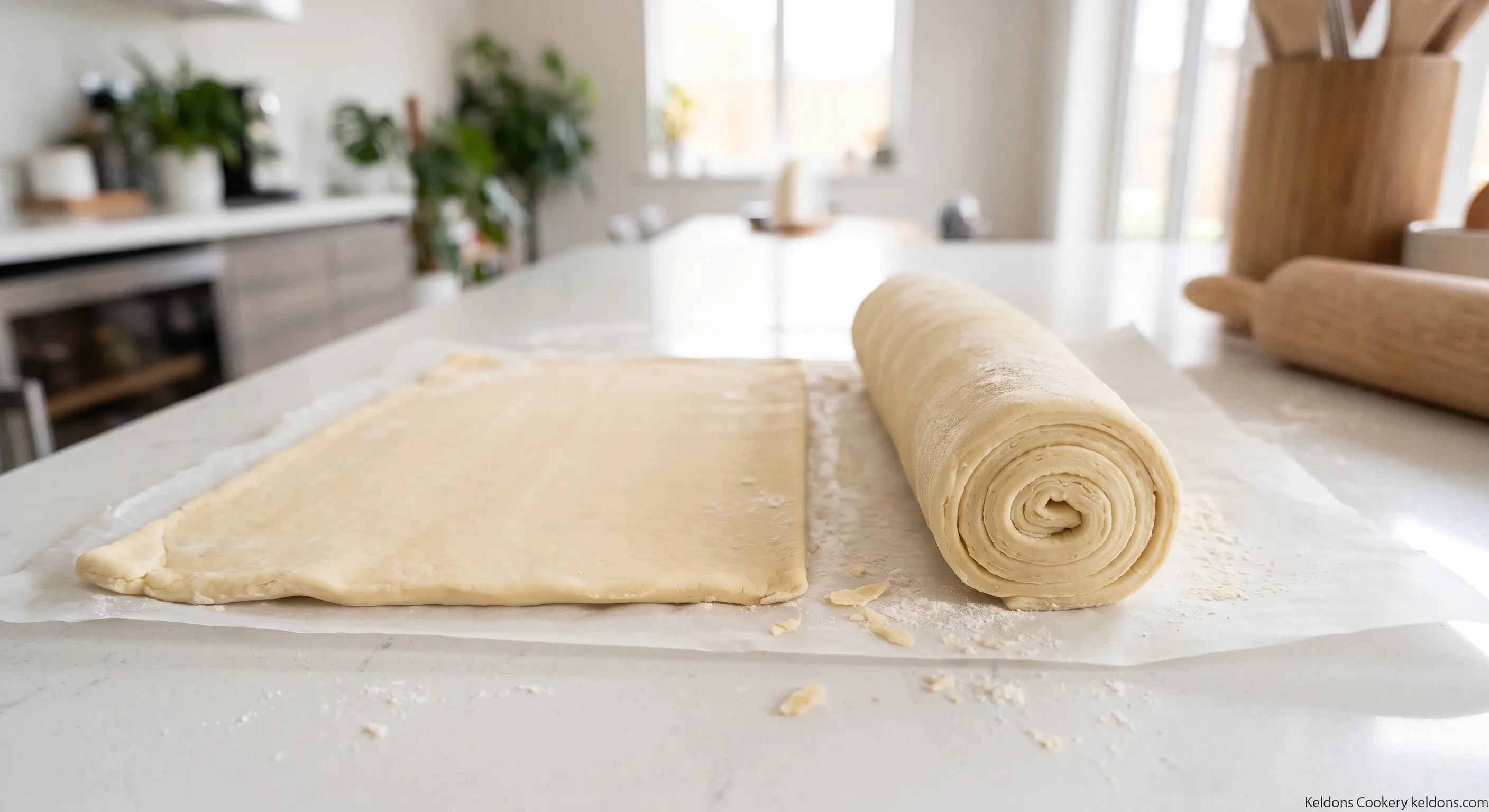
- Hundreds of Paper-Thin Layers: Traditional lamination folds cold butter into dough six times, creating up to 729 distinct alternating sheets of fat and flour that puff dramatically when exposed to high oven heat.
- All-Butter vs. Shortening Dough: Always check frozen carton labels for "all-butter" puff pastry rather than vegetable shortening blends, because real dairy butter delivers superior crispness and rich flavor without waxy residue.
- Cold Fat Steam Expansion: Keeping the butter solid right until the tray hits a 400°F oven ensures melted fat does not soak into the flour prematurely, maximizing dramatic vertical lift and crisp golden layers.
Thawing, Unfolding & Scoring Rules
- Slow Refrigerator Thawing: Thaw frozen puff pastry boxes in the refrigerator for three to four hours or overnight until pliable yet still ice-cold, preventing creases from cracking while keeping butter layers solid.
- Sharp Knife Clean Cuts: Trim puff pastry shapes straight down with a razor-sharp chef's knife or pizza wheel rather than sawing back and forth, avoiding pinched edges that glue layers shut and block rising.
- Docking & Border Scoring: Prick tart centers all over with a fork while leaving a half-inch uncut border, or score a shallow border frame so outer walls puff high around flat fruit or cheese fillings.
Advertisement
Sweet Tarts & Savory Showstoppers
- Rustic Fruit & Custard Galettes: Top a docked puff pastry sheet with sliced apples, berries, or pastry cream and brush edges with beaten egg wash for an effortless European bakery tart in twenty-five minutes.
- Savory En Croûte & Wellington: Wrap seared beef tenderloin, salmon fillets, or wheels of brie cheese inside chilled puff pastry sheets to lock in moisture beneath a shattering, golden-brown pastry crust.
- Quick Cheese Straws & Palmiers: Twist thin strips of pastry coated in grated Parmesan and cayenne, or roll sheets with cinnamon sugar and slice, for crisp, bite-sized party appetizers ready in fifteen minutes.
Egg Wash & Oven Temperature Tricks
- Careful Egg Wash Brushing: Brush beaten egg yolk thinned with a splash of milk strictly across the flat top surface without letting drips run down cut sides, which acts like glue and prevents edge puffing.
- Chilling Before Baking: Slide assembled tarts or turnovers into the fridge for fifteen minutes right before baking so softened butter firms back up and springs higher once it hits the hot oven rack.
- High-Heat Baking Window: Bake puff pastry at 400°F to 425°F on parchment-lined sheet pans, resisting the urge to open the oven door during the first fifteen minutes while steam builds maximum lift.
Advertisement
Freezer Storage & Scrap Re-Use
- Airtight Freezer Wrapping: Keep unopened or leftover puff pastry sheets tightly wrapped in plastic film and heavy foil inside the freezer at 0°F, where raw laminated dough stays fresh for up to six months.
- Never Refreeze Fully Warm Dough: Avoid refreezing puff pastry that has warmed completely to room temperature, as melted butter merges into the flour and destroys the delicate flaky layers on a second bake.
- Stacking Scraps Without Balling: Stack leftover trimmings flat on top of each other and roll gently rather than squishing them into a ball, preserving horizontal butter layers for mini crackers or cinnamon twists.
Advertisement
No Huffing and Puffing Over Puff Pastry
Puff pastry is the closest thing to legal kitchen magic—giving you hundreds of shattering, golden-butter layers without spending three days laminating dough on a marble slab. Just thaw it slowly in the fridge, slice cleanly with a sharp knife, keep that egg wash off the cut edges, and let a blazing-hot oven work its steam-powered wonders. Honestly, keeping a box stashed in your freezer is the easiest way to make any dinner guest think you graduated from French pastry school.Advertisement
Advertisement
Advertisement
Handy Tip
Don't throw away those apple cores. They can be repurposed to create a delightful apple-infused water. Just slice up a few apples, cores included, and add them to a pitcher of ice water, in no time at all, you'll have a refreshing, flavorful drink to enjoy.
Featured Offering
Roasted Spice Nuts
Recipe of: Canada

Filed Under: Nuts
Prep Method: Oven
Made with: 6 Ingredients
Advertisement
Keldons Cookery © 1998 - 2026 All rights Reserved | Secured with SSL
Homemade Goodness. Cook what you eat. Love what you cook!