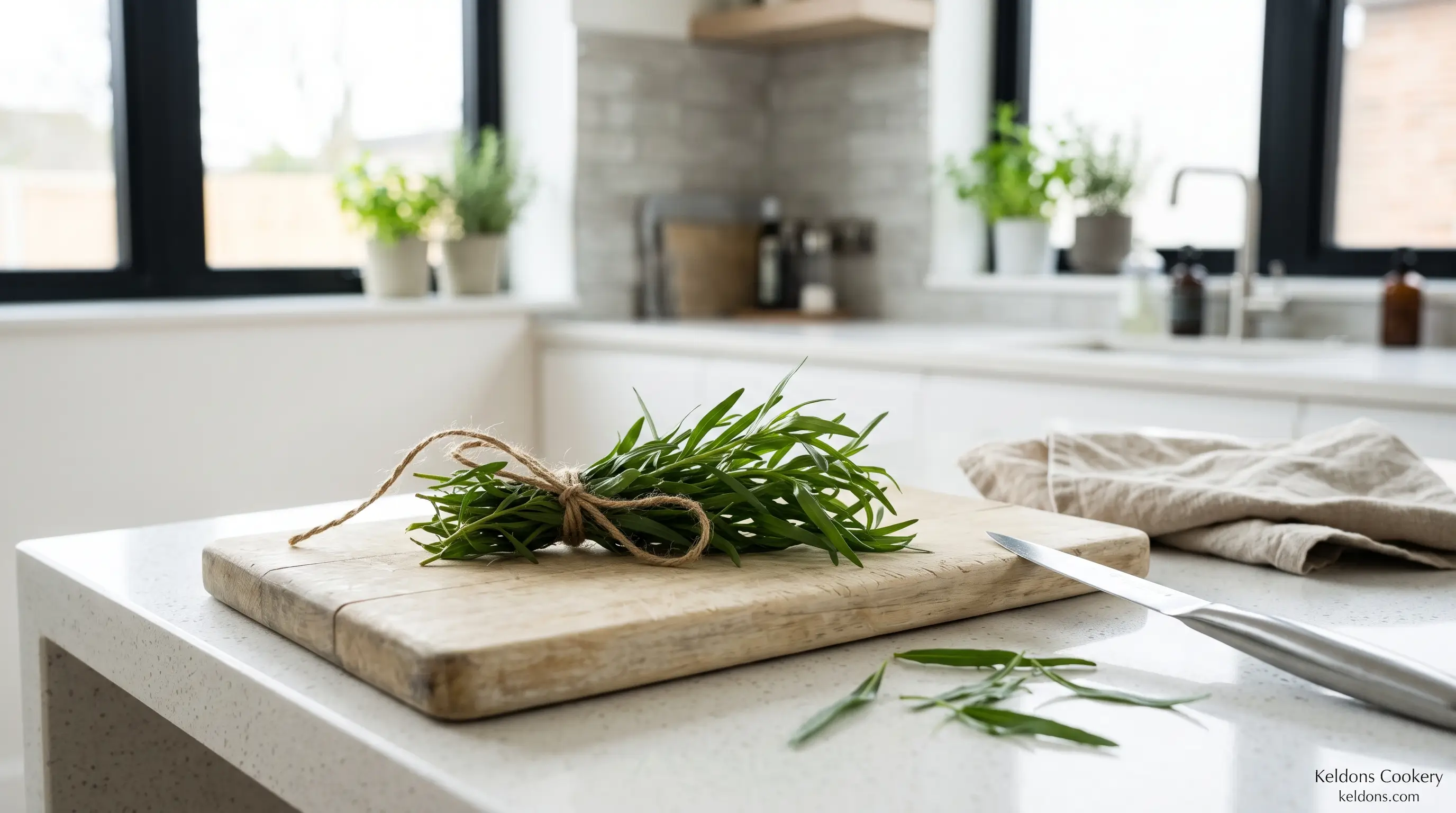
Tarragon
Nutritional Values
In a Pinch Substitutions:
- Fresh Chervil: Swap in an equal 1:1 ratio for egg dishes or French sauces; its delicate feathery fronds supply a comparable gentle anise warmth without overpowering other herbs.
- Fresh Fennel Fronds: Use cup-for-cup in poultry salads, dressings, or creamy dips to mimic that signature sweet licorice aroma and bright green herbal presence on the plate.
- Dried Tarragon Leaves: Replace one fresh sprig with one-third teaspoon dried leaves in warm sauces; dried herbs are far more concentrated, so add them sparingly during cooking.
Tricks and Hacks
- Late Addition Rule: Stir fresh leaves into warm dishes during the final few minutes of simmering to preserve delicate aromatic essential oils from dissipating under high heat.
- Infused Herb Vinegar: Steep gently bruised fresh leafy sprigs inside white wine vinegar bottles for two weeks to create a punchy, restaurant-style base for salad dressings.
- Delicate Knife Work: Slice leaves cleanly with an ultra-sharp blade rather than rocking the knife back and forth repeatedly, preventing cell bruising and dark edge discoloration.
Advertisement
Longevity
- Shelf Life: Wrap fresh sprigs in slightly damp paper towels and store in a loose plastic bag inside the crisper at 36°F to 38°F, where leaves stay plump and green for 10 to 14 days.
- Freezer Life: Chop leaves, fold into softened unsalted butter, and freeze into tightly wrapped logs for up to 6 months; slice off discs directly onto warm steaks and pan sauces.
Savvy Savings
- Money Saver: Plant a French tarragon nursery root in a well-draining garden pot to harvest endless aromatic leaves every summer, bypassing costly clamshell packages at retail shops.
- Other Uses: Blanch surplus stems and leaves quickly in salted boiling water before pureeing with olive oil and freezing into ice cube trays for instant homemade pan finishes.
Advertisement
Health Benefits
- Nutritional Highlights: Loaded with the bio-active phenylpropanoid compound estragole, vitamin A, vitamin C, potassium, and beneficial flavonoid antioxidants in every serving.
- Body Benefits: Acts as a traditional carminative by soothing everyday digestive upset, supporting natural insulin sensitivity, and easing mild stomach cramps after rich meals.
Advertisement
Here Today, Tarragon Tomorrow
Introducing fresh French tarragon into your weeknight cooking routine is the ultimate shortcut to effortlessly sophisticated bistro dining at home. Whether you whisk it into a buttery béarnaise, toss a few tender sprigs over a warm roasted chicken, or fold it into a velvety potato salad, this licorice-scented wonder never misses. Keep a bundle ready, treat the leaves with care, and savor the aromatic lift.Advertisement
Quick Picks
 / 2352 / 3419 / 2797 / 2691
Advertisement
Advertisement
Handy Tip
If your homemade mayonnaise separates, you can often fix it by whisking in a tablespoon of cold water. If that doesn't work, start with a new egg yolk in a bowl and gradually whisk in the broken mayonnaise. This simple hack can save your sauce and restore its creaminess.
Featured Offering
Red Snapper With Achiote Paste
Recipe of: Mexico

Filed Under: Fish
Prep Method: Oven
Made with: 9 Ingredients
 / 3026
Advertisement
Keldons Cookery © 1998 - 2026 All rights Reserved | Secured with SSL
Homemade Goodness. Cook what you eat. Love what you cook!