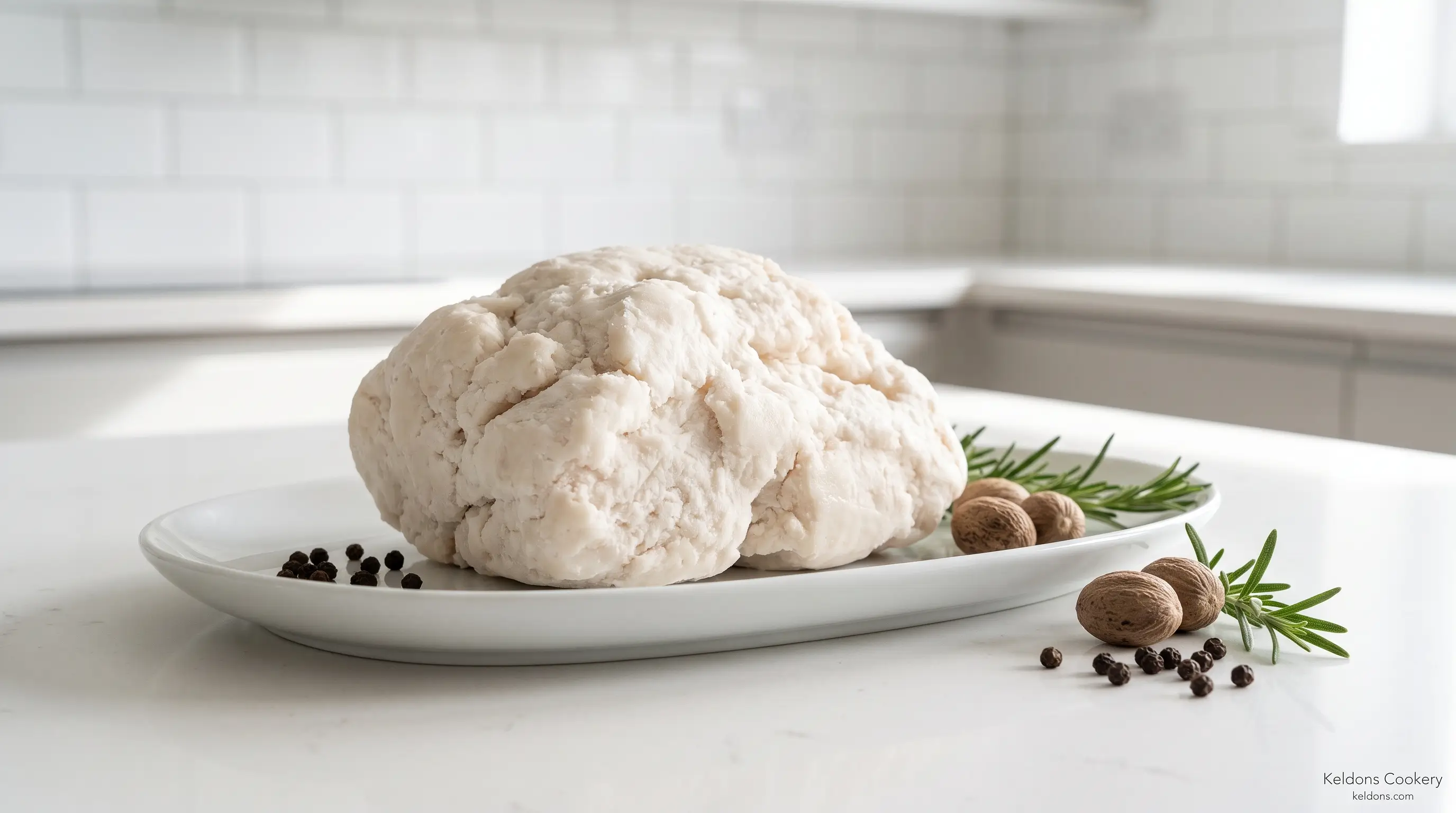
Lamb Suet
Nutritional Values
Close Cousins & Stand-Ins
- Beef Suet: Supplies an identical dry, crumbly texture and high melting threshold that shreds effortlessly into authentic steamed puddings and pie crusts.
- Chilled Leaf Lard: Offers a neutral, ultra-clean flavor profile that delivers comparable flaky layers across both sweet dessert pastries and savory pot pies.
- Grated Butter: Works as a quick chilled substitute inside flaky biscuit mixes, though its lower melting point demands very fast, delicate handling.
Cook Smarter, Not Harder
- Freezer Grate Trick: Freeze whole lobes rock solid before grating on a box shredder to produce neat, dry ribbons that blend instantly into cold flour.
- Low-Heat Water Render: Add a splash of water to your rendering pot to keep the bottom from scorching while hard fat chunks melt into clear liquid gold.
- Double Cheesecloth Strain: Pour hot melted fat through layered cheesecloth to trap tiny crackling sediments, guaranteeing pure, snow-white rendered tallow.
Advertisement
Longevity
- Pantry Jar Stash: Pour clean, filtered melted tallow into airtight glass canning jars; store in a cool, dark cupboard to stay fresh for up to a whole year.
- Freezer Shred Pack: Toss grated raw suet with a tablespoon of cornstarch inside zip-top bags and freeze flat for up to eight months of instant pastry use.
Savvy Savings
- Butcher Scrap Bargain: Ask local butcher counters for raw kidney fat trimmings to secure pounds of world-class baking fat for pennies on the dollar.
- Natural Seasoning Wax: Melt leftover suet trimmings to season cast-iron skillets and restore wooden cutting boards without buying commercial conditioners.
Advertisement
Why Your Body Smiles
- Satiating Fatty Acids: Packs rich stearic acid and nourishing stable saturated fats that provide slow-burning metabolic fuel and lasting meal satisfaction.
- Fat-Soluble Vitamins: Carries bioavailable vitamins A, D, and K2 that work together to nourish skeletal bone density and reinforce cellular resilience.
Advertisement
A Pure Fat That Is Suet To Be Your Favorite
Do not let modern dietary fads scare you away from the magical world of traditional pasture-raised fats. When you fold this snow-white treasure into your pastry dough or render it into shimmering golden tallow for crispy roast potatoes, you unlock an old-school flakiness that tubs of vegetable shortening can only dream about. Visit your neighborhood butcher, fire up the burner, and bake like an artisan.Advertisement
Advertisement
Advertisement
Handy Tip
When making ice cream at home, chill the ice cream mixture thoroughly in the refrigerator before churning. This helps prevent ice crystals and makes sure you end with a smoother texture. Taking the time to cool your mixture can make the difference between good and great homemade ice cream.
Featured Offering
Basil Tabbouleh
Recipe of: Lebanese

Filed Under: Grain
Prep Method: Mix
Made with: 12 Ingredients
Advertisement
Keldons Cookery © 1998 - 2026 All rights Reserved | Secured with SSL
Homemade Goodness. Cook what you eat. Love what you cook!