Dry Red Wine
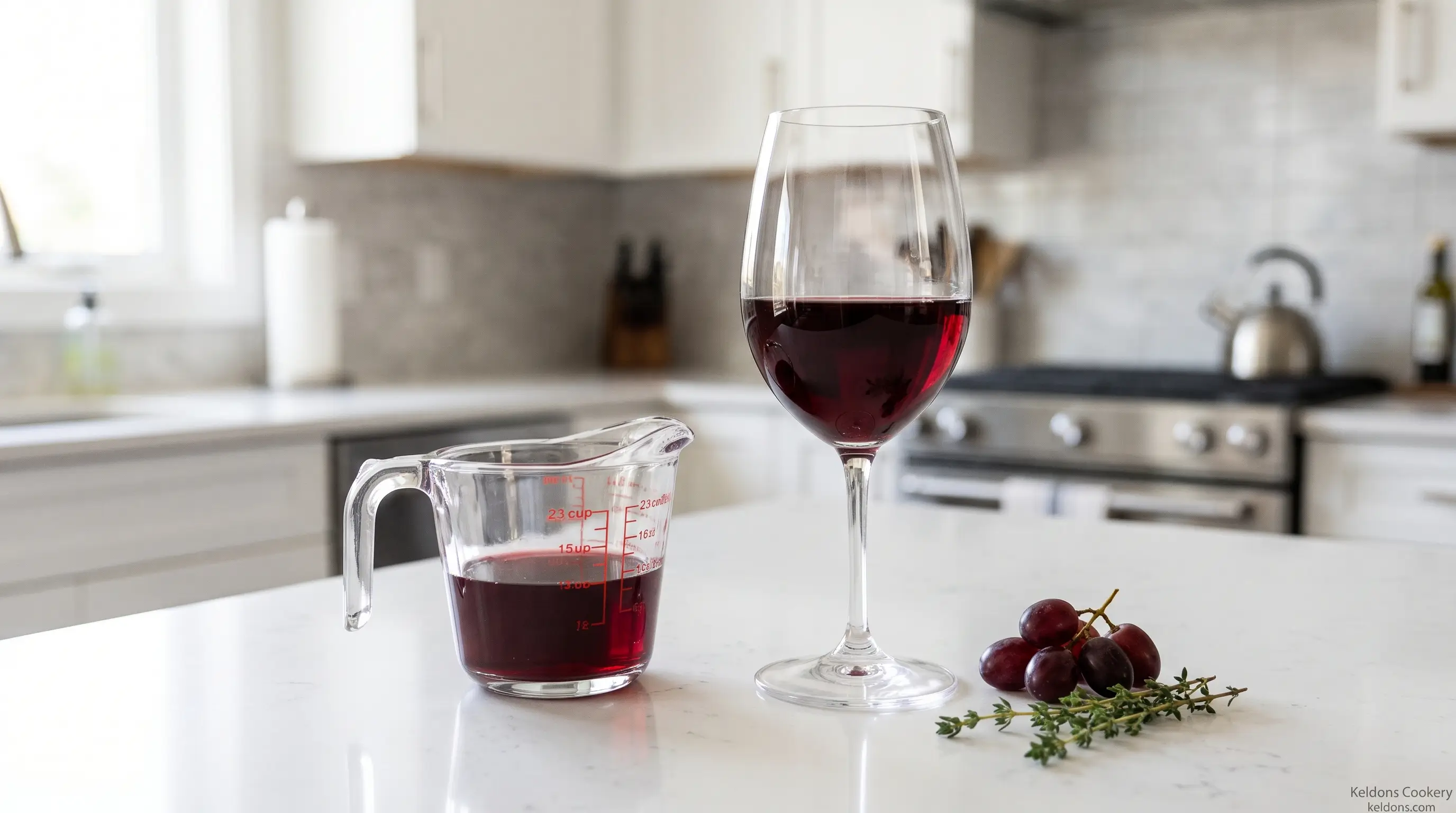
Nutritional Values
Acidity, Tannins, and Zero-Sugar Depth
- Dry Means Not Sweet: Unlike sweet dessert ports or fruity sangria blends, dry red wine finishes crisp and clean so reducing a cup down in a skillet concentrates savory depth instead of syrupy sugar.
- Bright Natural Acidity: Wine's natural tartness cuts cleanly through rich beef fat, heavy butter sauces, and slow-cooked pork, waking up heavy dishes so every bite tastes balanced and lively.
- Tannin Structure in Braises: Grape tannins bind gently with meat proteins during long, slow simmering, helping tough beef chuck or lamb shanks turn tender while building a velvety, full-bodied gravy.
Picking the Best Bottle for the Stove
- Drinkable Quality Rule: Never buy salty supermarket "cooking wine," which packs harsh preservatives and excess sodium; instead, choose an affordable, everyday table bottle you would happily sip in a glass.
- Medium-Bodied All-Rounders: Merlot, Pinot Noir, and Côtes du Rhône deliver bright berry fruit and moderate tannins that shine in mushroom sauces, braised chicken, and classic beef bourguignon.
- Bold Full-Bodied Reds: Cabernet Sauvignon, Malbec, and Syrah stand up to heavily seared steaks, short ribs, and rich tomato ragùs without losing their robust, dark-fruit backbone.
Advertisement
Everyday Cooking Techniques That Shine
- Skillet Pan Deglazing: Pour half a cup of dry red wine into a hot pan right after searing steaks or chops, scraping up the golden browned fond with a wooden spoon for an instant pan sauce.
- Low-and-Slow Oven Braises: Submerge seasoned beef short ribs or pot roast halfway in red wine and beef stock, simmering covered for hours until the meat falls apart with a fork.
- Simmered Tomato Ragùs: Splash dry red wine into browned sausage, onions, and garlic before adding crushed tomatoes, letting the wine bubble away for five minutes to add deep, slow-cooked richness.
Simmering Rules for Smooth, Balanced Sauces
- Cook Off Raw Alcohol: Always let red wine simmer briskly for at least three to five minutes after hitting the pan so sharp raw alcohol vapors evaporate before you add cream or butter.
- Avoid Heavy Oak Bombs: Skip heavily oaked wines when making long reductions, because concentrating strong vanilla and wood flavors over high heat can leave your finished sauce tasting bitter.
- Cold Butter Finish: Swirl a tablespoon of cold unsalted butter into reduced red wine sauce off the heat to tame sharp edges and create a glossy, restaurant-style sheen.
Advertisement
Smart Storage for Open Cooking Bottles
- Recork and Refrigerate: Push the cork back into leftover red wine and stash the bottle upright in your refrigerator, where cool temperatures keep it fresh for cooking for up to two weeks.
- Freeze Wine Cubes: Pour leftover splashes from dinner parties into an ice cube tray and freeze solid, giving you pre-portioned flavor bombs ready to drop straight into weeknight pan sauces.
- Keep Unopened Bottles Cool: Store unopened bottles on their side in a dark, cool pantry away from stove heat or sunny windows so the wine stays vibrant until you are ready to cook.
Advertisement
Stop Whining and Start Deglazing
Dry red wine is the secret weapon that turns browned bits stuck to the bottom of a hot skillet into liquid gold in under five minutes. You do not need an expensive collector's vintage to make magic happen—just a solid, drinkable everyday bottle kept handy near the stove or frozen into handy cooking cubes. Splash a little into your next stew, ragù, or steak pan and watch ordinary weeknight dinners taste like you simmered them all Sunday.Advertisement
Quick Picks
Advertisement
Advertisement
Handy Tip
When making ice cream at home, chill the ice cream mixture thoroughly in the refrigerator before churning. This helps prevent ice crystals and makes sure you end with a smoother texture. Taking the time to cool your mixture can make the difference between good and great homemade ice cream.
Featured Offering
Grilled Duckling With Plum Sauce
Recipe of: Chinese

Filed Under: Wild Game
Prep Method: BBQ / Grill
Made with: 14 Ingredients
Advertisement
Keldons Cookery © 1998 - 2026 All rights Reserved | Secured with SSL
Homemade Goodness. Cook what you eat. Love what you cook!