Caster Sugar
Nutritional Values
How Caster Sugar Compares to Other Sugars
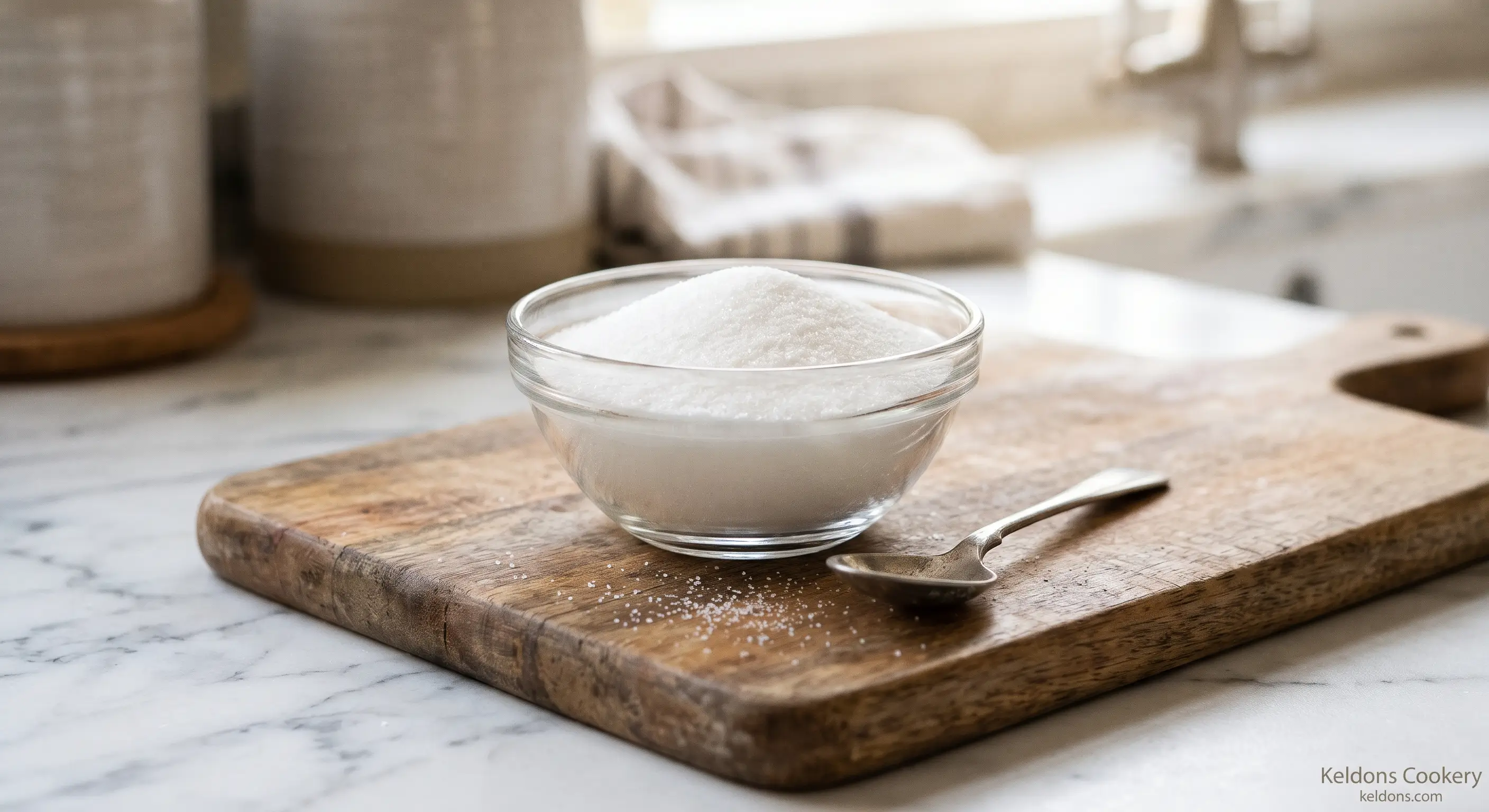
- The Middle-Ground Crystal Size: Milled much finer than standard granulated sugar yet noticeably grainier than powdery confectioners' sugar, these tiny crystals dissolve rapidly without needing any anti-caking starches mixed inside.
- Granulated Sugar Comparison: Regular white table sugar has larger, heavier crystals that can sink in delicate cake batters or leave a gritty crunch when stirred into cold iced tea, cocktails, or whipped cream.
- Powdered Sugar Distinction: Unlike confectioners' sugar, caster sugar contains zero cornstarch, making it ideal for crisp, glossy meringues and caramelized toppings where extra starch would turn the texture chalky.
Best Culinary Uses for Superfine Crystals
- Glossy and Stable Meringues: Whipping superfine crystals gradually into beaten egg whites dissolves the sugar fast, creating a dense, shiny, marshmallow-like foam that bakes into crisp pavlovas without weeping syrup.
- Light and Tender Sponge Cakes: Creaming caster sugar with softened butter traps thousands of tiny air pockets quickly, producing a velvety, even crumb in Victoria sponges, pound cakes, and delicate shortbread biscuits.
- Instant Cold Beverage Sweetener: Stirring a spoonful into iced coffee, fresh lemonade, or shaken cocktails melts cleanly in seconds, eliminating the pile of undissolved sugar grit left sitting at the bottom of your glass.
Advertisement
Buying Guide and International Labels
- North American Grocery Labels: Look for packages labeled superfine sugar, ultrafine sugar, or bar sugar in United States and Canadian supermarkets, as these products share the exact same crystal size and baking behavior.
- Cane Versus Beet Origins: Both pure cane and sugar beet versions perform identically in everyday home baking, though dedicated pastry chefs often prefer pure cane varieties for clean caramelization and delicate flavor.
- Golden Caster Varieties: Unrefined golden caster sugar retains a whisper of natural cane molasses, lending a warm honey color and subtle caramel note to fruit crumbles, scones, and rustic buttery shortbreads.
Easy DIY Pantry Substitutions
- Food Processor Homemade Swap: Pulse standard granulated white sugar in a clean, dry food processor or spice grinder for fifteen to twenty seconds until the grains look noticeably finer, stopping before it turns into dust.
- One-to-One Measuring Ratio: Substitute superfine sugar directly in place of regular granulated sugar at an exact one-to-one volume ratio, though weighing your ingredients on a kitchen scale always guarantees best accuracy.
- When Not to Swap Powdered: Never replace caster sugar with confectioners' sugar in baked batters or meringues, because the added cornstarch and ultra-fine dust will dry out your crumb and alter the final structure.
Advertisement
Storage Tips to Keep Crystals Free-Flowing
- Airtight Pantry Canister: Pour opened bags into a tightly sealed glass or BPA-free plastic container so ambient kitchen humidity cannot bind the tiny, high-surface-area crystals together into solid sugar clumps.
- Keep Away From Heat and Steam: Store your sugar jar in a cool, dark cupboard far from boiling stovetops, dishwashers, and sunny windows where moisture condensation quickly ruins the free-flowing pour.
- Breaking Up Minor Clumps: If slight humidity causes small soft lumps to form, simply press them gently with the back of a spoon or give the sealed container a brisk shake to restore individual crystals.
Advertisement
Cast Your Baking Doubts Aside
Caster sugar may look like ordinary table sugar at first glance, but its superfine crystals are a true secret weapon for smoother frostings, taller sponge cakes, and lump-free summer drinks. Keep a jar tucked into your baking cupboard—or spin regular granulated sugar in your food processor in seconds—and you will never wrestle with gritty batters or undissolved meringue streaks again. Simple, versatile, and endlessly reliable, it deserves a permanent spot on every home cook's shelf.Advertisement
Advertisement
Advertisement
Handy Tip
Keep your wooden cutting board clean and fresh, simply sprinkle coarse salt over the surface. Using a lemon half, scrub the board, letting the salt and lemon do the heavy lifting. Not only does this method clean, it also deodorizes, giving your board a fresh scent.
Featured Offering
Peppermint Schnapps
Recipe of: Canada

Filed Under: Alcohol
Prep Method: Mix
Made with: 4 Ingredients
Advertisement
Keldons Cookery © 1998 - 2026 All rights Reserved | Secured with SSL
Homemade Goodness. Cook what you eat. Love what you cook!