Habanero Pepper
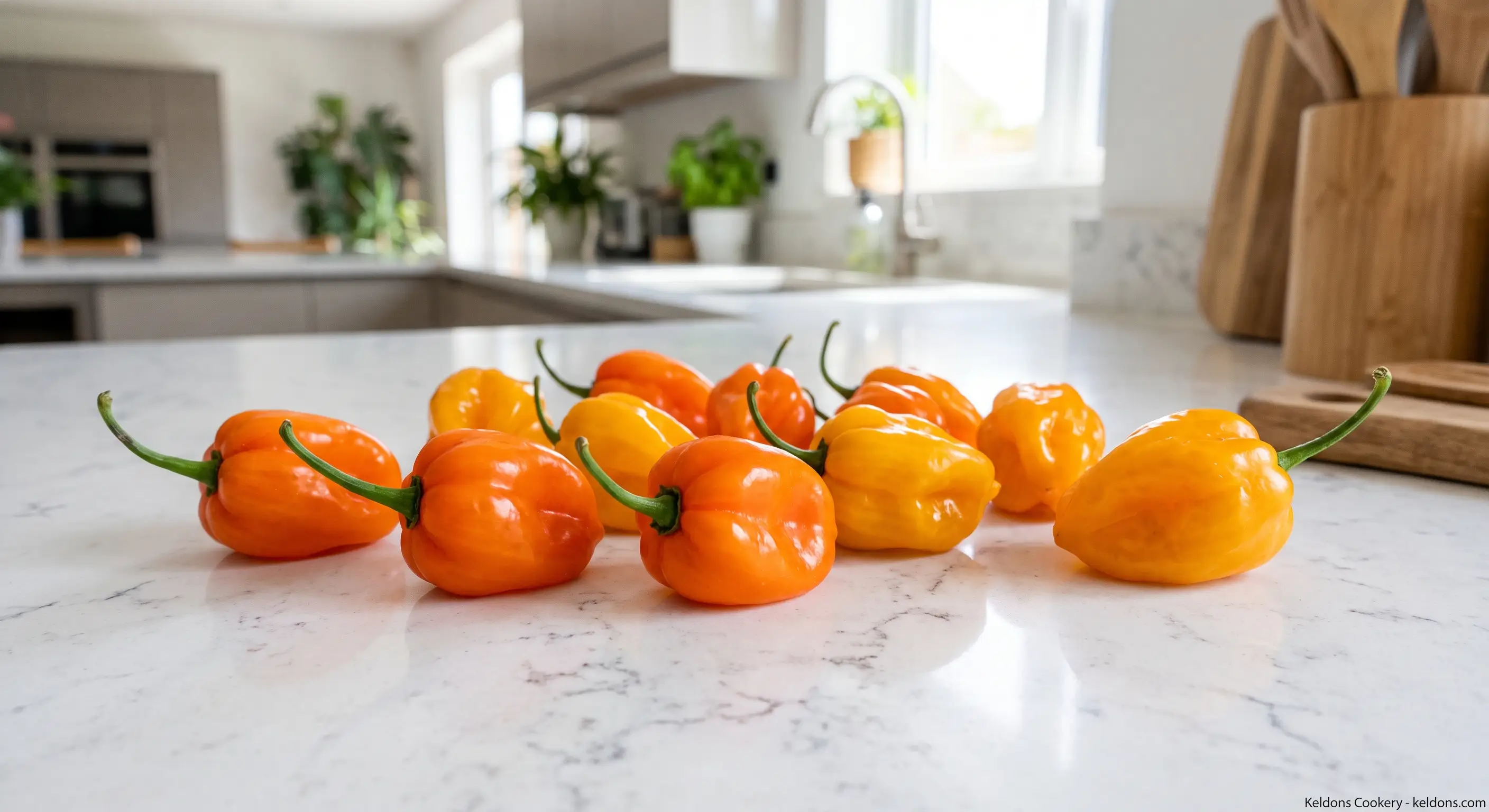
Nutritional Values
Heat Level & Fruity Aroma
- Delayed Capsaicin Burn: Habaneros hit the palate with sweet tropical fruit notes for a few seconds before building into a deep, lingering throat and tongue burn that easily outpaces standard jalapeños by forty times.
- Floral & Citrus Notes: Beneath their blistering heat, ripe orange and red habaneros carry distinct aromas of apricot, mango, and citrus zest that pair naturally with sweet tropical fruits, lime juice, and roasted garlic.
- Color Ripeness Stages: Immature green habaneros taste grassy and sharp, while fully ripened orange, peach, and chocolate-brown varieties offer richer fruity complexity alongside maximum capsaicin concentration inside.
Safe Prepping & Handling Rules
- Wearing Kitchen Gloves: Always slip on disposable nitrile or latex gloves before slicing habaneros, because capsaicin oil clings stubbornly to skin and transfers painfully to eyes, noses, and sensitive areas hours later.
- Removing White Pith: Slice off the stem end and scrape away the pale inner placental ribs and seeds with a small spoon if you want to capture the sweet floral aroma while dialing back the fiercest scorching heat.
- Dedicated Cutting Surface: Chop habaneros on a non-porous plastic or glass cutting board rather than porous wood, and wash your knife and board immediately with hot soapy water so lingering oils do not taint later prep.
Advertisement
Balancing Heat in Recipes
- Pairing With Tropical Fruit: Blend minced habanero with ripe mango, pineapple, papaya, or peach to create vibrant salsas and glazes where natural fruit sugars tame the sharp edge of capsaicin without muting its flavor.
- Cutting Burn With Acid: Whisk finely grated habanero into fresh lime, sour orange, or apple cider vinegar marinades, using bright acidity to lift the heavy heat and balance rich roasted pork, chicken, or grilled shrimp.
- Infusing Whole Peppers: Drop one whole, unpierced habanero into simmering pots of black beans, coconut curry, or stew, letting its fruity perfume infuse the broth while keeping the fiery seeds safely sealed inside.
Smart Ways to Dial Back Fire
- Dairy Rescue Strategy: Serve spicy habanero dishes alongside sour cream, Greek yogurt, queso fresco, or coconut milk, because dairy casein proteins bind directly to capsaicin molecules and wash away burning sensations.
- Mincing Extra Fine: Finely mince or grate tiny amounts of fresh pepper so its heat distributes evenly throughout a sauce or marinade instead of leaving large, surprise chunks that overwhelm an unsuspecting bite.
- Blending With Mild Chiles: Combine one seeded habanero with roasted bell peppers, poblanos, or sweet carrots when making homemade hot sauce to build generous volume and bright color with a manageable heat level.
Advertisement
Storing Fresh & Dried Peppers
- Crisper Drawer Storage: Store unwashed whole habaneros inside a breathable paper bag or loosely vented produce bag in your refrigerator crisper drawer, where they will stay crisp and potent for up to two weeks.
- Freezing Whole Peppers: Freeze whole washed and dried habaneros on a baking sheet before transferring to a freezer bag, allowing you to grate frozen peppers directly into hot pans whenever a recipe needs instant heat.
- Dehydrating for Powder: Halve peppers while wearing gloves and dehydrate at low heat until brittle, then grind into a vivid orange chili powder stored in an airtight glass jar away from sunlight for year-round seasoning.
Advertisement
Some Like It Habanero-Hot
Habanero peppers prove that dynamite really does come in tiny, bright-orange packages, delivering sweet apricot fragrance right before setting your taste buds on a memorable adventure. Treat them with respect, wear your kitchen gloves, and balance their fiery kick with bright citrus or ripe mango. Used with a steady hand, just half a pepper brings bold Caribbean sunshine to your kitchen without making dinner guests reach for the fire extinguisher.Advertisement
Advertisement
Advertisement
Handy Tip
When measuring sticky oils like sesame oil, coat the measuring spoon with a neutral oil first to help the sticky oil slide off easily. This simple trick prevents waste and mess by making sure of a more accurate measure and clean release from the spoon.
Featured Offering
Shredded Beef Abon
Recipe of: Indonesian

Filed Under: Beef
Prep Method: Stove Top
Made with: 12 Ingredients
Advertisement
Keldons Cookery © 1998 - 2026 All rights Reserved | Secured with SSL
Homemade Goodness. Cook what you eat. Love what you cook!