Apple Cider Vinegar
Nutritional Values
In a Pinch Substitutions
- White Wine Vinegar: Substitute white wine vinegar one-for-one in salad dressings, marinades, and pan sauces for matching five-percent acidity and clean, fruity brightness without darkening light ingredients.
- Unseasoned Rice Vinegar: Swap in unseasoned rice vinegar cup-for-cup for slaws and light glazes, adding a tiny pinch of brown sugar to mirror apple cider vinegar's subtle orchard warmth.
- Freshly Squeezed Lemon Juice: Use fresh lemon juice in equal amounts for marinades, quick pickles, or baking soda batters whenever you want bright, natural citrus acidity straight from the fruit bowl.
- Sherry or Champagne Vinegar: Replace apple cider vinegar measure-for-measure with sherry or champagne vinegar in autumn vinaigrettes and pork pan sauces to capture warm, nuanced fruit-acid complexity.
Raw Unfiltered vs. Clear Filtered Styles
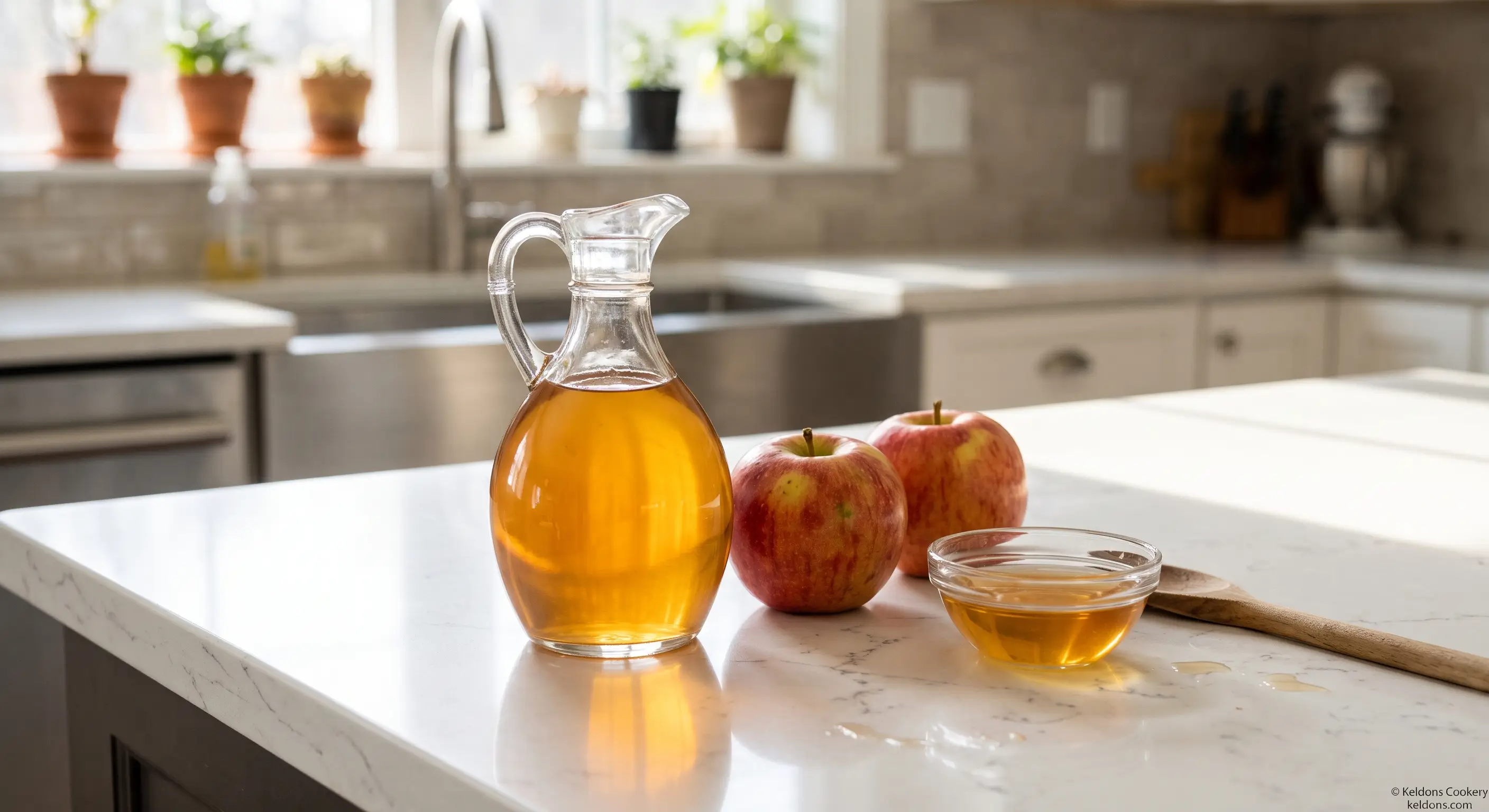
- Raw Unfiltered With the Mother: Left unpasteurized and unstrained, this cloudy amber vinegar contains beneficial strands of natural acetic acid bacteria and enzymes called the mother for deeper rustic apple flavor.
- Crystal-Clear Filtered Vinegar: Pasteurized and filtered for brilliant golden clarity, this smooth pantry staple delivers reliable five-percent acidity ideal for clear pickling brines, glazes, and baking batters.
- Watch Out for Flavored Impostors: Check ingredient labels before buying, as inexpensive apple-flavored vinegars are often plain distilled white grain vinegar tinted with caramel coloring rather than real fermented apples.
- Cold-Pressed Artisanal Orchard Blends: Small-batch bottles fermented from heirloom apples like Honeycrisp or Granny Smith offer noticeably rounder, sweeter fruit character tailored for finishing salads and roasted vegetables.
Advertisement
Flavor Pairings & Everyday Kitchen Roles
- Crisp Autumn Salads & Slaws: Whisk apple cider vinegar with Dijon mustard, maple syrup, and extra-virgin olive oil to balance hearty kale salads, shaved Brussels sprouts, and creamy picnic coleslaw.
- Slow-Cooked Pork & Barbecue Sauces: Stir a splash into pulled pork, braised ribs, or tangy tomato barbecue sauce to cut through rich rendered fat and elevate smoky spices with bright orchard acidity.
- Instant Buttermilk Baking Trick: Combine one tablespoon of apple cider vinegar with one cup of milk and rest for five minutes to create soured milk that activates baking soda in fluffy pancakes and biscuits.
- Deglazing Savory Pan Sauces: Splash into a hot skillet after searing pork chops, chicken thighs, or mushrooms to lift browned fond off the pan into a glossy, restaurant-worthy sauce in seconds.
Pantry Immortality & Bottle Care
- Virtually Endless Shelf Life: Thanks to its high natural acetic acid content, apple cider vinegar resists bacterial spoilage and remains safe in a cool, dark kitchen cupboard for years without refrigeration.
- Swirl Raw Bottles Before Pouring: Give raw, unfiltered bottles a gentle swirl before measuring so the nutrient-rich mother settled at the bottom distributes evenly throughout your dressing or marinade.
- Keep Lids Snug Against Air: Tighten the cap immediately after each use to prevent moisture evaporation, which concentrates acidity over time and invites pesky kitchen fruit flies toward the spout.
- Use Non-Reactive Bowls & Jars: Always store and mix apple cider vinegar in glass, ceramic, or stainless steel containers rather than bare aluminum or cast iron, which react with fruit acids and leave metallic flavors.
Advertisement
Savvy Savings
- Buy Large Glass Jugs for Frequent Use: Purchasing a thirty-two-ounce or half-gallon glass bottle saves forty to fifty percent per ounce compared to buying small sixteen-ounce bottles for weekly cooking.
- Transfer to a Narrow-Spout Cruet: Decant bulk apple cider vinegar into a small countertop pouring cruet so you measure neat teaspoons instead of accidentally splashing half a cup into a hot pan.
- Reuse Quick-Pickle Brines for Meat: Save leftover apple cider vinegar brine from pickled red onions or cucumbers to tenderize and season grilled chicken breasts or pork tenderloin at zero extra cost.
- Start a Homemade Batch From Scraps: Submerge clean organic apple cores and peels in water with a spoonful of sugar and a splash of raw vinegar to ferment your own batch right on the counter.
Advertisement
Core Values & Orchard Tang in Every Splash
Apple cider vinegar is the unsung hero sitting quietly on the pantry shelf that can rescue a flat soup, tenderize a tough roast, or fake a cup of buttermilk in five minutes flat. A quick splash wakes up heavy flavors without masking the ingredients you worked hard to cook. Keep a bottle handy near your olive oil, give the mother a gentle swirl when using raw styles, and let that crisp orchard tang shine.Advertisement
Advertisement
Advertisement
Handy Tip
When boiling rice, stir a little olive oil or cooking oil into the water. This simple hack prevents the grains from clumping and sticking together, making sure each grain of rice remains separate and fluffy. It's a small step but it makes a big difference.
Featured Offering
Basic Brown Rice
Recipe of: Canada

Filed Under: Grain
Prep Method: Stove Top
Made with: 4 Ingredients
Advertisement
Keldons Cookery © 1998 - 2026 All rights Reserved | Secured with SSL
Homemade Goodness. Cook what you eat. Love what you cook!