Artichokes
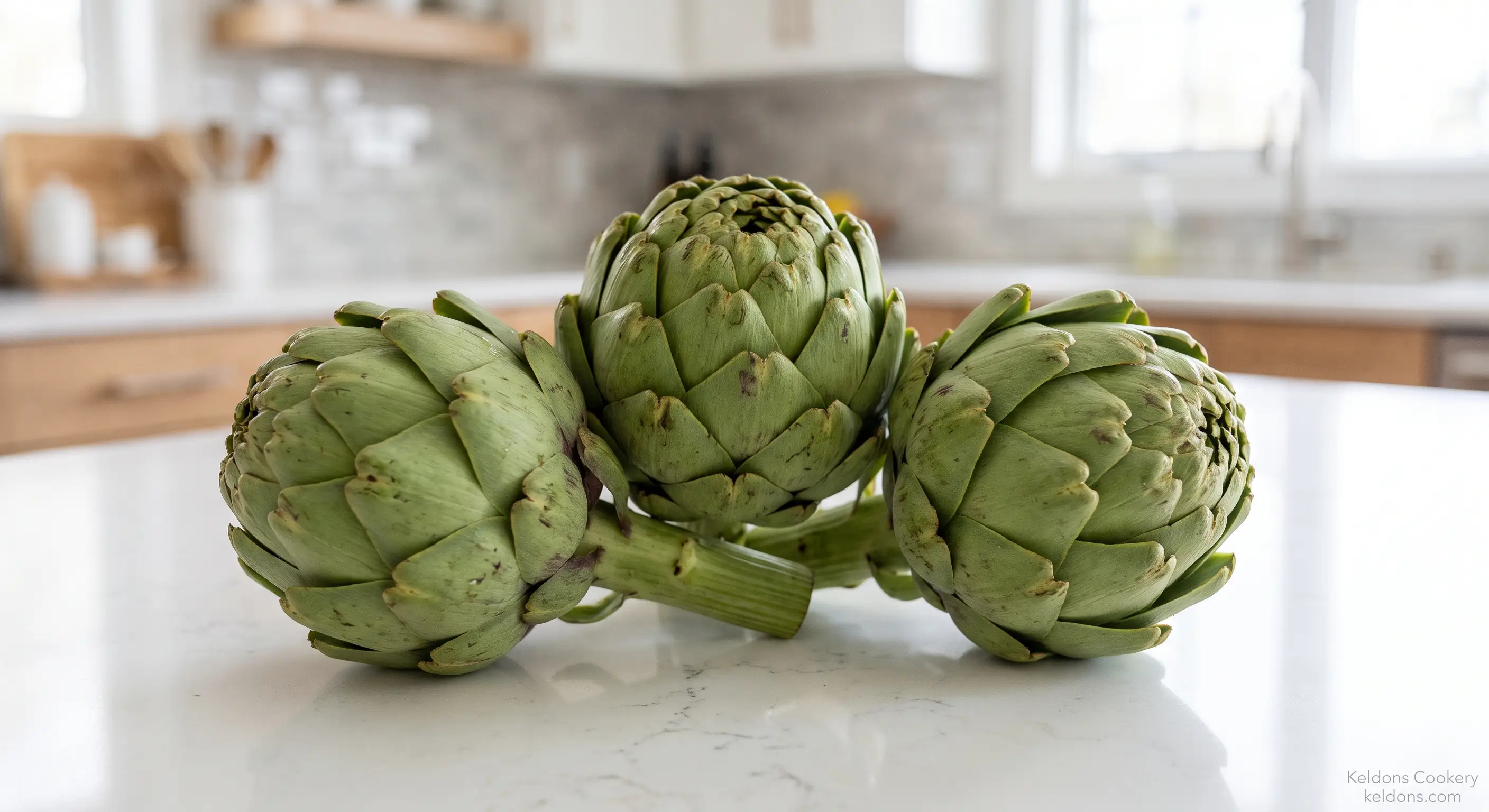
Nutritional Values
Pro-Move Prep
- Rub Cut Edges With Lemon: Immediately swipe halved lemon across every trimmed leaf tip, stem, and heart to stop natural enzymes from turning the exposed green flesh dark brown within seconds.
- Snip the Thorny Tips: Use sturdy kitchen shears to clip the sharp pointed tips off the outer leaves before steaming or boiling so nobody pokes a finger while pulling leaves at the table.
- Scoop Out the Fuzzy Choke: Once cooked or halved raw, use a small metal spoon or melon baller to scrape out the hairy, inedible center fuzz cleanly, revealing the smooth, tender heart underneath.
In a Pinch Substitutions
- Jarred Marinated Artichoke Hearts: Drain and rinse oil-packed hearts to toss straight into pastas, pizzas, and warm dips when fresh whole globes are out of season or you want zero prep time.
- Canned Water-Packed Quarters: Plain canned artichoke hearts deliver clean, earthy flavor without added herb vinegar, making them ideal for crispy baked appetizers and creamy spinach dips.
- Cardoon Stalks: If you spot celery-like cardoons at an Italian market, peel and braise the ribs for the exact same nutty, mineral-rich artichoke flavor in winter stews and gratins.
Advertisement
Flavor Pairings That Pop
- Melted Garlic Butter: Warm salted butter infused with smashed garlic and lemon juice clings to scraped artichoke leaves, turning simple steamed globes into an effortless finger-food appetizer.
- Sharp Aged Parmigiano: Nutty grated hard cheese amplifies the earthy sweetness of roasted artichoke halves while creating a golden, savory crust under a hot broiler.
- Fresh Mint and Parsley: Bright green herbs cut through the dense, mineral richness of braised Roman-style artichokes, keeping oil-cooked dishes lively and aromatic.
Keep It Alive
- Unwashed Crisper Storage: Store whole unwashed artichokes inside a loosely closed plastic bag sprinkled with a few drops of water in the fridge crisper drawer for up to five days.
- Trim the Stem Base: Slice a thin quarter-inch off the bottom of the stem before refrigerating so the flower bud stays hydrated and firm rather than turning woody and limp.
- Submerge Cooked Hearts: Keep leftover cooked artichoke hearts covered in olive oil or lemon water inside an airtight glass container in the refrigerator for up to three days.
Advertisement
Worth the Splurge?
- Heavy Spring Globes: Splurge on peak spring artichokes that feel noticeably heavy for their size, as dense heads pack thicker leaf pulp and larger, meatier hearts inside.
- Don't Toss the Stems: Peel away the tough fibrous outer green skin of the stem with a vegetable peeler; the pale inner core tastes just as sweet and tender as the heart itself.
- Baby Artichokes for Zero Waste: Buy compact baby artichokes when available because their inner chokes have not formed yet, letting you trim the outer leaves and eat the entire bud whole.
Advertisement
Have a Heart, Eat an Artichoke
Artichokes may look like armored medieval pinecones at first glance, but a quick trim and a squeeze of lemon unlock one of the most rewarding vegetables in the kitchen. Whether you pull the leaves one by one through warm garlic butter or roast halved baby buds until crispy at the edges, every bite delivers rich, nutty satisfaction. Grab a heavy globe, sharpen your shears, and dig right into the good stuff.Advertisement
Advertisement
Advertisement
Handy Tip
If your honey has crystallized or is too thick, place the honey container in a bowl of warm water for a few minutes to loosen it up without losing its natural properties. This gentle method returns honey to its smooth texture, making it easy to pour or spread and enjoy.
Featured Offering
Gribiche Sauce
Recipe of: France

Filed Under: Make Your Own
Prep Method: Blender
Made with: 9 Ingredients
Advertisement