Apple Cider
Nutritional Values
Cloudy Orchard Depth & Tartness
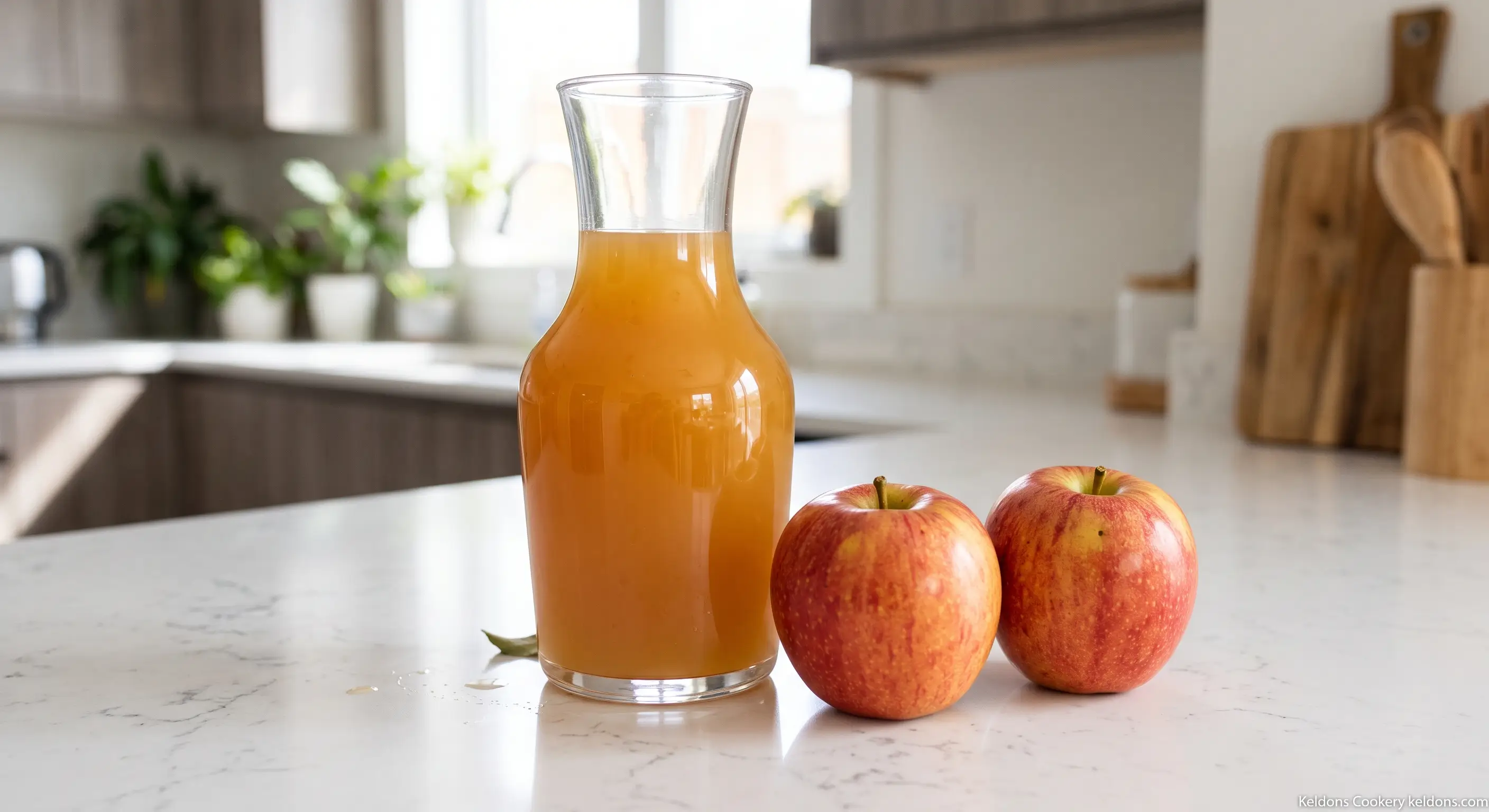
- Unfiltered Pulp & Body: Because fresh apple cider skips fine filtration, tiny suspended fruit solids give it a rich amber cloudiness and velvety mouthfeel that clings better to roasted meats and pan sauces than clear juice.
- Sweet-Tart Orchard Balance: Pressed from blends of sweet and sharp heirloom apples, real cider balances natural fruit sugars with crisp malic acid, keeping simmered glazes and braises bright rather than cloying.
- Cider vs. Filtered Apple Juice: While filtered apple juice tastes uniformly sweet and light, unfiltered cider carries deeper, slightly tannic orchard aroma that holds its bold apple character even after long simmering.
Reducing & Mulled Simmering Rules
- Syrupy Cider Glaze Reduction: Simmer two cups of apple cider steadily over medium heat until reduced to half a cup of glossy amber syrup, creating an instant sweet-tart glaze for pork tenderloin, salmon, or Brussels sprouts.
- Gentle Mulling Without Boiling: Warm apple cider with whole cinnamon sticks, star anise, cloves, and orange peel over low heat without letting it reach a rolling boil, preserving fresh orchard brightness without bitter spice extraction.
- Shaking Settled Pulp First: Always give your jug of unfiltered cider a brisk shake before pouring so settled fruit sediment redistributes evenly into every measuring cup for consistent body and flavor.
Advertisement
Savory Braises, Brines & Baking Uses
- Brining & Braising Pork Chops: Dissolve kosher salt, brown sugar, and crushed garlic into apple cider for a quick pork chop brine, or deglaze hot roasting pans with cider and Dijon mustard for velvety autumn pan gravy.
- Apple Cider Donuts & Spice Cakes: Boil down apple cider until thick and concentrated before whisking it into donut batter, bundt cakes, or waffle mix to pack intense orchard flavor without thinning out the dough.
- Autumn Vinaigrettes & Squash Soups: Whisk reduced apple cider into roasted butternut squash soup or blend it with apple cider vinegar, shallots, and olive oil for a vibrant fall salad dressing.
Regional Naming & Smart Swaps
- North American vs. UK Terminology: In Canada and the United States, apple cider means fresh non-alcoholic pressed juice, whereas in the UK, Ireland, and Australia, "cider" refers to fermented alcoholic hard cider.
- Unfiltered Apple Juice Substitute: If fresh seasonal apple cider is unavailable out of season, substitute cloudy unfiltered apple juice spiked with a teaspoon of apple cider vinegar to mimic its natural tartness.
- Distinguishing Cider From Vinegar: Never confuse sweet drinking apple cider with fermented apple cider vinegar in a recipe, as vinegar is sharply acidic and will overwhelm batters or braises if swapped cup-for-cup.
Advertisement
Chilled Jug Storage & Freezing Tips
- Coldest Fridge Shelf Storage: Keep fresh unpasteurized or UV-treated apple cider tightly capped on a cold interior refrigerator shelf at 35°F to 38°F, drinking or cooking with it within seven to ten days.
- Freezing Bulk Orchard Jugs: Pour two inches of cider out of a plastic gallon jug to allow room for expansion before freezing solid, keeping peak autumn harvest flavor ready to thaw all winter long.
- Freezing Concentrated Cider Cubes: Reduce extra apple cider by half on the stove, cool completely, and freeze in silicone ice cube trays so you can drop concentrated apple flavor straight into winter pan sauces.
Advertisement
How Do You Like Them Apple Ciders?
Apple cider is pure autumn magic in a jug, effortlessly jumping from cozy cinnamon-spiced mugs by the fire to glossy pan sauces for pork chops and concentrated reductions for bakery-worthy donuts. Just give the jug a good shake before pouring, keep it chilled on a cold interior fridge shelf, and boil it down whenever you want bold orchard flavor without extra liquid. Honestly, keeping a jug on hand is the core secret to fall cooking.Advertisement
Advertisement
Advertisement
Handy Tip
If your honey has crystallized or is too thick, place the honey container in a bowl of warm water for a few minutes to loosen it up without losing its natural properties. This gentle method returns honey to its smooth texture, making it easy to pour or spread and enjoy.
Featured Offering
Spiced Honey Maple Zucchini Harvest Bread
Recipe of: Canada

Filed Under: Fruit
Prep Method: Oven
Made with: 13 Ingredients
Advertisement