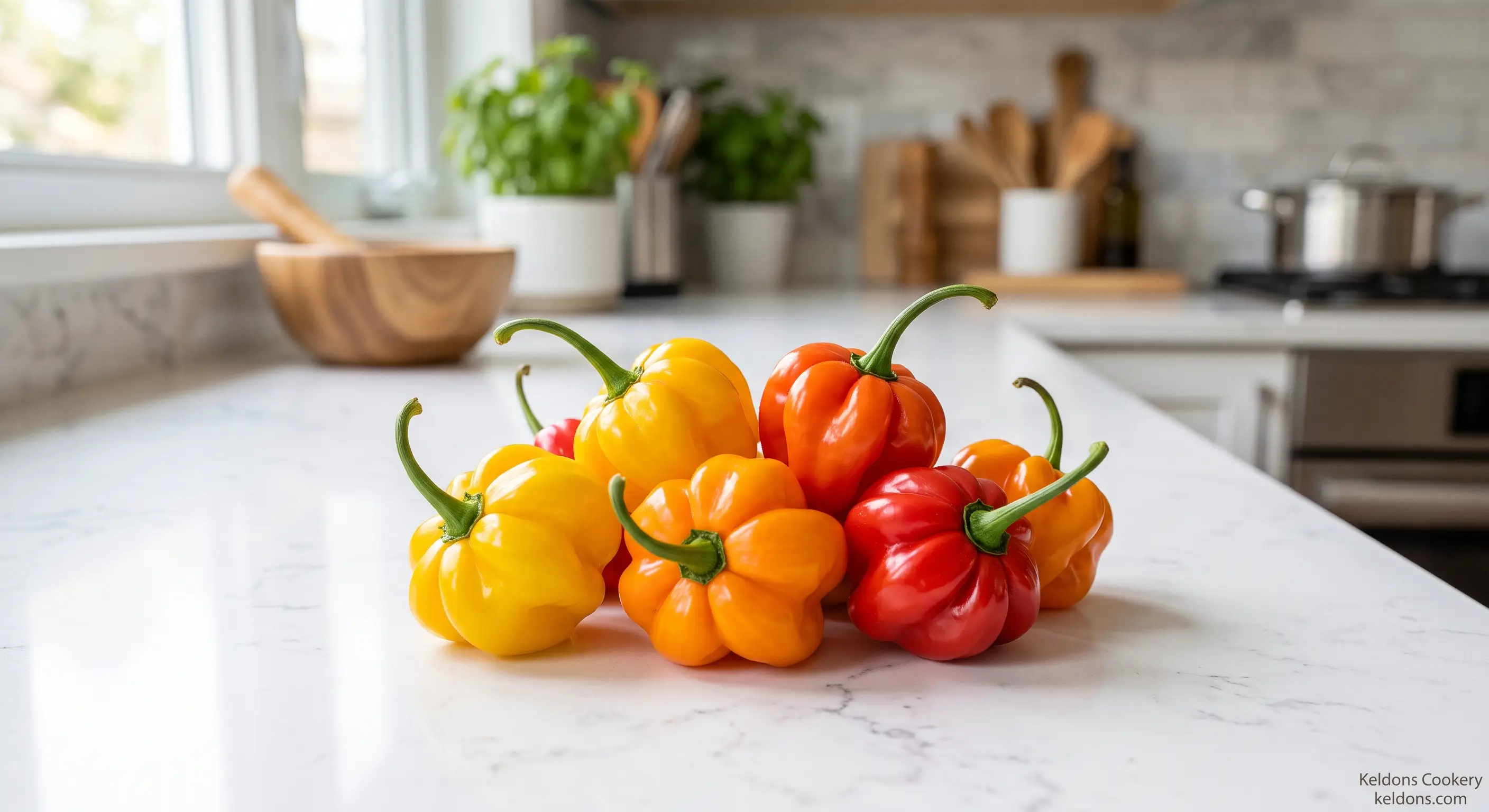
Scotch Bonnet
Nutritional Values
Kitchen Cheat Codes
- Whole Simmer Infusion: Drop a whole, unpierced Scotch Bonnet into simmering rice and peas or stews to infuse sweet tropical aroma, then lift it out intact before serving so the dish stays mild.
- Gloves Before Slicing: Always wear disposable nitrile gloves when seeding or mincing fresh pods, because potent capsaicin oils cling stubbornly to skin and burn eyes or faces hours later.
- Membrane Heat Control: Scrape out the pale inner ribs and seeds with a small spoon before dicing to keep all that signature fruity Caribbean flavor while dialing back the fiery burn.
Flavor Pairings That Pop
- Allspice & Thyme: Blend minced Scotch Bonnet with ground allspice, fresh thyme leaves, scallions, and garlic to build an authentic, deeply aromatic Jamaican jerk marinade for chicken or pork.
- Sweet Tropical Fruit: Pair finely diced pods with ripe mango, pineapple, lime juice, and cilantro so natural fruit sugars tame the sharp capsaicin kick in vibrant salsas and glazes.
- Rich Coconut Milk: Simmer whole or halved peppers in creamy coconut milk broths with ginger and turmeric, allowing the soothing dairy-free fats to round out the intense heat.
Advertisement
Close Cousins & Stand-Ins
- Habanero Direct Swap: Substitute orange or red habanero peppers one-for-one in any recipe, as they share nearly identical Scoville heat levels and closely related citrus-floral undertones.
- Serrano Plus Mango: Combine two minced serrano chiles with a spoonful of sweet mango purée when you cannot find super-hot peppers and want to mimic both heat and tropical fruitiness.
- Datil Pepper Stand-In: Use fresh datil peppers if available locally, offering comparable fiery intensity alongside a sweet, tangy citrus punch ideal for hot sauces and seafood boils.
Staying Alive: Shelf & Stash
- Paper Towel Crisper: Wrap unwashed peppers loosely in a dry paper towel inside an open zip-top bag in the fridge crisper drawer to prevent trapped condensation and keep skins glossy for two weeks.
- Whole Freezer Stash: Freeze whole, dry Scotch Bonnets straight in a labeled freezer bag for up to six months; they grate easily from frozen right into hot sauces, curries, and marinades.
- Vinegar Hot Sauce: Slice surplus peppers into a sterilized glass jar with garlic, salt, and white or apple cider vinegar for a shelf-stable homemade table sauce that lasts months.
Advertisement
Rookie Mistakes to Avoid
- Bursting the Simmer Pod: Stirring too aggressively while simmering a whole pepper in soup can rupture its thin skin, instantly unleashing full-strength capsaicin fire across the entire pot.
- Water After the Burn: Chugging cold water after biting into raw Scotch Bonnet only spreads capsaicin oil around your mouth; reach for cold milk, yogurt, or bread to neutralize the heat.
- Dry Pan Searing: Tossing minced Scotch Bonnet into a scorching dry skillet aerosolizes irritating capsaicin fumes into your kitchen air, so always sauté gently in oil with good ventilation.
Advertisement
Put a Bonnet on That Burn
Scotch Bonnets prove that true heat is never just about pain, it is about big, sunny, tropical flavor that wakes up every taste bud in the room. Treat these ruffled little firecrackers with respect, keep your rubber gloves handy, and let a single pod work magic in your next pot of stew, salsa, or jerk marinade. Just remember to wash your hands twice before touching your face, unless you want a culinary memory that lasts until Tuesday.Advertisement
Advertisement
Advertisement
Handy Tip
Speed up the browning of your tomatoes on the grill by sprinkling them with a pinch of sugar before grilling. This small trick not only helps them brown faster but also enhances their natural sweetness, giving you beautifully caramelized tomatoes in no time.
Featured Offering
Chocolate Espresso Fudge Sauce
Recipe of: Italy

Filed Under: Make Your Own
Prep Method: Stove Top
Made with: 9 Ingredients
Advertisement
Keldons Cookery © 1998 - 2026 All rights Reserved | Secured with SSL
Homemade Goodness. Cook what you eat. Love what you cook!