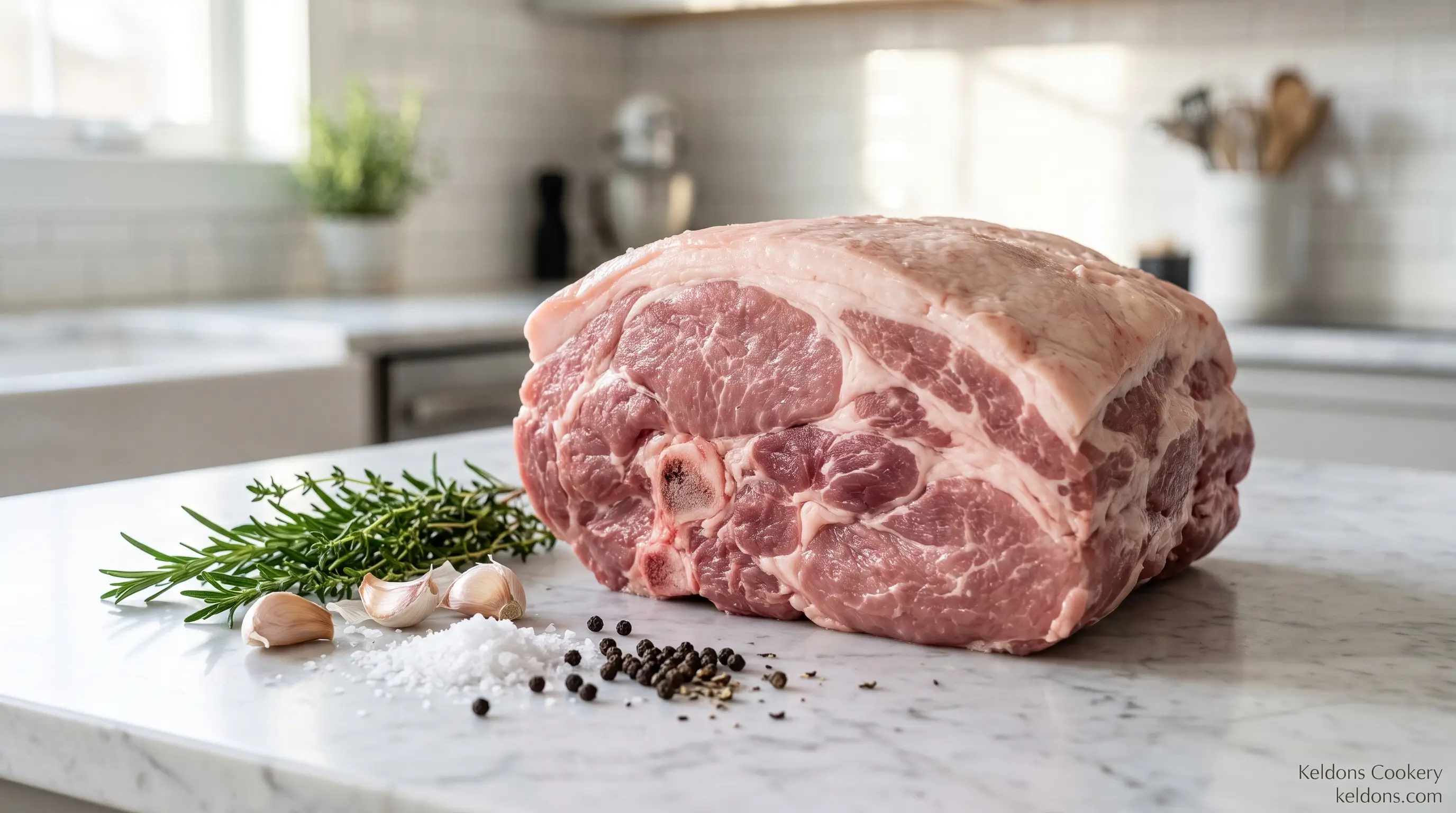
Pork Butts
Nutritional Values
In a Pinch Substitutions:
- Picnic Shoulder: Swap in pork picnic shoulder at an even ratio for pulled pork, noting its thicker fat cap and skin require slightly longer cooking to tenderize fully.
- Beef Chuck Roast: Grab a well-marbled chuck roast to mimic the shreddable tenderness in barbecue tacos and braises, offering a deeply savory beef alternative flawlessly.
- Skinless Pork Loin: Use pork loin rubbed with extra oil only for fast roasting, recognizing that its low fat content will dry out quickly if cooked low and slow for hours.
Tricks and Hacks
- Butcher Paper Wrap: Wrap the meat in unwaxed butcher paper once it hits the stall at 165 degrees to lock in moisture while preserving that shatter-crisp mahogany bark.
- Fat Cap Scoring: Score the top fat layer in a crosshatch diamond pattern before seasoning, letting spice rubs and rendered juices penetrate deep into the upper meat.
- Cooler Rest Time: Rest smoked pork inside an insulated cooler wrapped in towels for two hours before shredding; this lets internal juices redistribute without cooling down.
Advertisement
Longevity
- Shelf Life: Keep raw pork butt sealed in its packaging inside the coldest shelf of your refrigerator for up to four days, cooking promptly once unwrapped and seasoned.
- Freezer Life: Vacuum-seal raw or shredded cooked pork in heavy freezer bags to enjoy rich, tender barbecue flavor with zero freezer burn for up to twelve full months.
Savvy Savings
- Money Saver: Purchase two-pack whole bone-in butts at wholesale warehouse clubs to feed a massive party for pennies per serving compared to individual cut chops.
- Other Uses: Trim excess hard fat and cube leftover roast scraps to grind into high-flavor breakfast sausage patties or season hearty pots of pinto beans seamlessly.
Advertisement
Health Benefits
- Nutritional Highlights: Rich in complete animal protein, thiamine, selenium, and zinc, slow-cooked pork shoulder delivers powerful essential micronutrients in every bite.
- Body Benefits: Plentiful vitamin B6 and niacin actively support daily nervous system health, promote sustained cellular energy, and aid natural muscle tissue recovery.
Advertisement
No Ifs, Ands, or Butts
There is no denying that mastering pork butt cements your reputation as the ultimate weekend cook. It asks for patience, generous seasoning, and a little bit of tender loving smoke, but it pays you back tenfold with towering mountains of juicy, tender comfort food. Don't let the cut's silly anatomical misnomer fool you—this is pure culinary royalty. Now fire up that grill, grab your tongs, and get shredding.Advertisement
Quick Picks
 / 1716
 / 3129 / 3119 / 2412
Advertisement
Advertisement
Handy Tip
For the best volume and texture in whipped cream, make sure the whipping cream is well chilled before you start. You can also chill the bowl and beaters for even better results. This simple hack raises the cream's ability to whip up nicely and hold its shape, making your desserts look and taste divine.
Featured Offering
Kiros Kai Faki: Pork Hocks And Pea Soup
Recipe of: Star Trek

Filed Under: Pork
Prep Method: Stove Top
Made with: 6 Ingredients
/ 4649Advertisement
Keldons Cookery © 1998 - 2026 All rights Reserved | Secured with SSL
Homemade Goodness. Cook what you eat. Love what you cook!