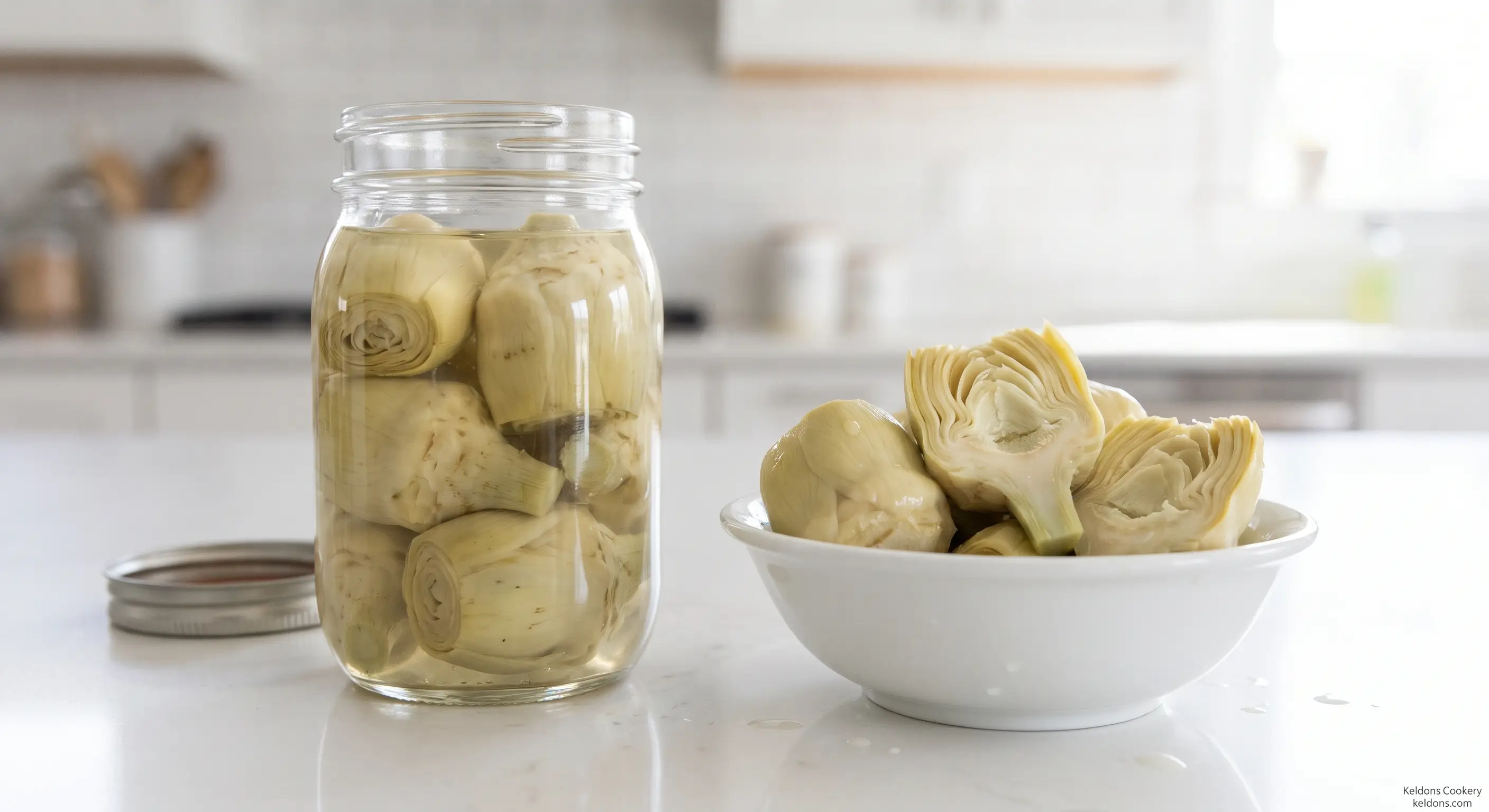
Baby Artichokes
Nutritional Values
Close Cousins & Stand-Ins
- Quartered Artichoke Hearts: Offer the exact same tender texture and mild nutty flavor from the pantry aisle, though larger outer petals may need a quick rough chop before stirring into dips.
- Marinated Artichoke Hearts: Step right in with identical tender cores, though you should rinse off the tangy herb oil first if your recipe calls for plain water-packed buds.
- Hearts of Palm: Deliver a similar silky, firm-yet-tender bite when sliced into coins for salads and warm bakes, trading the earthy artichoke taste for a delicate, mild sweetness.
Kitchen Cheat Codes
- Pat Dry Before Searing: Blot drained buds thoroughly with a clean paper towel before hitting hot olive oil so they develop golden caramelized edges instead of steaming in brine.
- Save That Herb Oil: Strain the seasoned oil from marinated jars instead of pouring it down the sink, using it to whisk quick salad vinaigrettes or drizzle over warm crusty bread.
- Quick Brine Rinse: Give water-packed buds a fast cold water rinse in a colander when making delicate cream sauces so excess canning salt never throws off your seasoning balance.
Advertisement
Pantry Immortality
- Cool Cupboard Stash: Store unopened glass jars in a dark, cool pantry away from stove heat to keep their tender texture and mild flavor fresh for up to two full years.
- Submerge After Opening: Transfer leftover buds into an airtight glass container and cover them completely with fresh olive oil or original brine, refrigerating for up to five days.
Rookie Mistakes to Avoid
- Skipping The Drain: Never dump the jar liquid straight into hot dips or pasta sauces unless requested, as excess watery brine turns creamy dishes thin, sour, and overly salty.
- Overcooking Tender Buds: Stir drained baby artichokes into soups and skillet pastas during the final five minutes of cooking, since they are already fully cooked inside the jar.
Advertisement
Fuel Factor
- High-Fiber Filling: Packs four grams of gut-friendly dietary fiber per half-cup serving, helping weeknight pasta dishes and grain bowls keep you full without heavy fat.
- Low-Calorie Bulk: Adds rich, meaty texture and savory satisfaction to creamy dips and flatbreads for just forty-five calories per serving, stretching meals effortlessly.
Advertisement
No Choke Here Just Pure Pantry Magic
Keep a few jars of these tender little gems tucked behind your pasta boxes and you are always five minutes away from a dinner upgrade. They skip every ounce of thorny prep work, soak up garlic and lemon like champs, and turn plain weeknight skillets into something worthy of company. Drain them well, brown them golden, and let your pantry pull off the easiest culinary rescue of the week.Advertisement
Quick Picks
Advertisement
Advertisement
Handy Tip
Don't throw away those apple cores. They can be repurposed to create a delightful apple-infused water. Just slice up a few apples, cores included, and add them to a pitcher of ice water, in no time at all, you'll have a refreshing, flavorful drink to enjoy.
Featured Offering
Wonton Wrappers
Recipe of: Chinese

Filed Under: Grain
Prep Method: Mix
Made with: 4 Ingredients
Advertisement
Keldons Cookery © 1998 - 2026 All rights Reserved | Secured with SSL
Homemade Goodness. Cook what you eat. Love what you cook!