Wheat Germ
Nutritional Values
Raw vs. Toasted Varieties
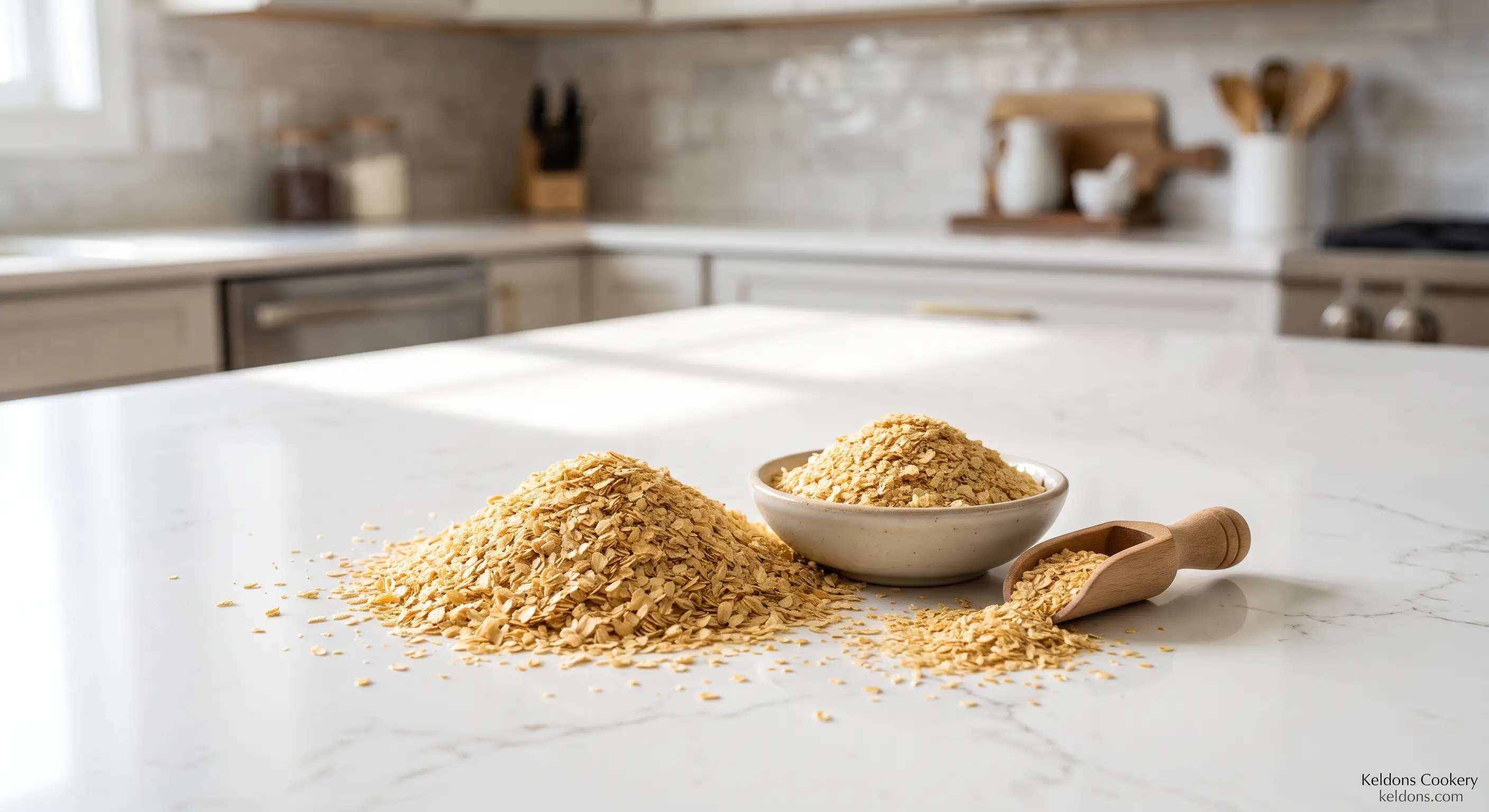
- Toasted Wheat Germ: Gently heat-treated to deepen its warm, nutty aroma and crisp golden crunch, toasted wheat germ is ready to sprinkle straight from the jar onto yogurt parfaits, cereal bowls, and fresh fruit.
- Raw Natural Wheat Germ: Unheated and softer in texture with a mild, sweet cereal taste, raw wheat germ blends seamlessly into homemade bread doughs, muffin batters, and morning smoothies without adding heavy toastiness.
- Honey-Crunch Flavored Blends: Specialty grocery jars lightly coat toasted flakes with honey or brown sugar for an extra-sweet topping ideal for ice cream sundaes, baked apples, and morning oatmeal bowls.
Everyday Breakfast & Smoothie Upgrades
- Oatmeal & Yogurt Topper: Stir two tablespoons of toasted flakes into hot rolled oats or Greek yogurt alongside sliced bananas and berries for instant whole-grain body and a pleasant toasted-nut crunch.
- Invisible Smoothie Thickener: Blend a spoonful of raw wheat germ into fruit or peanut butter smoothies to add creamy thickness, plant protein, and dietary fiber without altering your favorite morning drink flavors.
- Pancake & Waffle Boost: Replace up to one-quarter cup of all-purpose flour with wheat germ in weekend pancake or waffle batter to create tender, golden flapjacks with rich, wholesome bakery aroma.
Advertisement
Baking & Breadcrumb Swaps
- Nutrient-Rich Flour Substitution: Swap out two to four tablespoons of regular flour per cup in cookies, muffins, banana bread, and yeast rolls to boost moistness, golden crust color, and nutty whole-grain flavor.
- Crispy Casserole & Bake Topping: Toss toasted wheat germ with melted butter, grated Parmesan cheese, and dried herbs to create a crunchy golden crust over baked mac and cheese or broccoli gratins.
- Meatball & Burger Binder: Use wheat germ instead of plain dry breadcrumbs when mixing ground beef, turkey, or veggie burgers to lock in savory juices while adding subtle nutty richness to every bite.
Understanding Delicate Natural Oils
- High Unsaturated Fat Content: Unlike starchy white flour, the wheat embryo holds roughly ten percent natural plant oil, which gives it wonderful flavor and moisture but makes it prone to oxidizing quickly at room temperature.
- Light & Heat Sensitivity: Exposure to warm pantry shelves, bright kitchen sunlight, or open air breaks down those delicate fatty acids, turning sweet nutty flakes bitter, sharp, or paint-like within weeks.
- Why Millers Remove It: Commercial flour producers sift out the germ when making refined white flour specifically so bags can sit on supermarket shelves for months without spoiling or developing off-flavors.
Fridge & Freezer Storage Rules
- Refrigerate Immediately After Opening: Once you break the freshness seal on a jar or bag of wheat germ, transfer it straight to the refrigerator where cold temperatures preserve its delicate oils for up to six months.
- Use Airtight Glass Containers: Keep opened flakes sealed tightly inside a glass jar with a rubber gasket so refrigerator moisture and stray onion or cheese odors never seep into the absorbent golden grains.
- Freeze for Long-Term Freshness: Store extra bags of raw or toasted wheat germ in the freezer for up to one full year—the dry flakes never freeze into a solid block and can be scooped straight into recipes.
Advertisement
Inspect wheat germ before scooping it into your bowl or batter by checking its color and texture first; fresh flakes look warm golden-tan and feel dry, flaky, and light rather than clumped or oily. Bring an open jar close to your nose for a deep sniff—fresh wheat germ smells clean, sweet, and mildly nutty like toasted grain, whereas spoiled wheat germ smells sharp, bitter, waxy, or faintly like old crayons. Taste a tiny pinch raw; any soapy or bitter bite means the oils have turned. Like we always say at Keldons Cookery, if your leaveners don't fizz and your flour smells stale, your baked goods will fail. Fresh staples make honest bakes.
Advertisement
Don't Let This Germ Bug You
Wheat germ may have the most unfortunate name in the entire grocery store, yet this tiny golden powerhouse is the exact opposite of something you want to wash off your hands. Tucked quietly in the cereal or baking aisle, a simple jar lets you sneak extra fiber, protein, and nutty crunch into everything from morning pancakes to Sunday meatballs. Just remember to park it in the fridge after opening so it stays fresh and delicious.Advertisement
Advertisement
Advertisement
Handy Tip
When making ice cream at home, chill the ice cream mixture thoroughly in the refrigerator before churning. This helps prevent ice crystals and makes sure you end with a smoother texture. Taking the time to cool your mixture can make the difference between good and great homemade ice cream.
Featured Offering
Baking Powder #2
Recipe of: England

Filed Under: Make Your Own
Prep Method: Mix
Made with: 3 Ingredients
Advertisement
Keldons Cookery © 1998 - 2026 All rights Reserved | Secured with SSL
Homemade Goodness. Cook what you eat. Love what you cook!