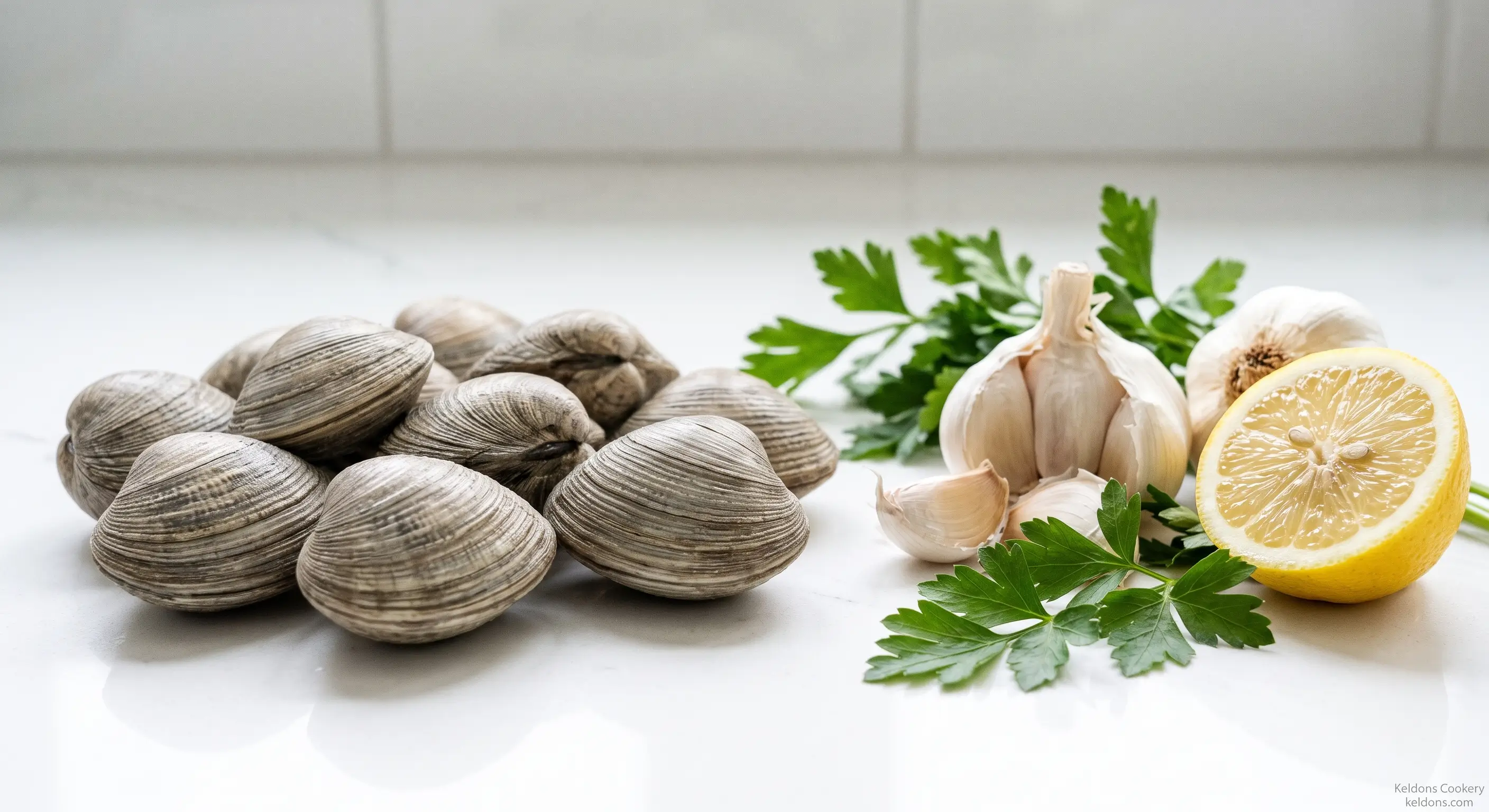
Littleneck Clams
Nutritional Values
Close Cousins & Stand-Ins
- Prince Edward Island Mussels: Steam open in the exact same five-minute window and release sweet ocean liquor that works seamlessly in garlic white-wine pasta broths and coastal stews.
- Manila or Cockle Clams: Offer similarly petite shells and tender, sweet meat with ridges along the shell exterior, substituting one-for-one in quick skillets and steamed bowls.
- Fresh Bay Scallops: Deliver comparable delicate sweetness and quick-cooking convenience for creamy seafood pastas when live shell-on clams are unavailable at your market.
- Canned Whole Baby Clams: Provide reliable briny flavor and bottled clam juice for weeknight linguine sauces and chowders when fresh live shellfish is out of season.
Kitchen Cheat Codes
- Cornmeal Salt-Water Purge: Soak live clams in cold salted tap water with a tablespoon of cornmeal for thirty minutes so they filter out trapped sand before hitting your skillet.
- Lift, Never Pour, Out of Water: Scoop purged clams out of their soaking bowl by hand rather than dumping through a strainer, leaving heavy grit settled safely at the bottom.
- Pull Shells as They Pop: Transfer individual clams to a warm serving bowl the second their shells open wide so early openers stay plump and tender instead of turning rubbery.
- Save Every Drop of Broth: Strain the remaining steaming liquid through a fine coffee filter or paper towel to catch stray sand, leaving pure liquid gold for pasta or risotto.
Advertisement
Hard Clam Size Grades
- Littleneck Clams: Measure under two inches wide and represent the youngest, tenderest hard-shell grade, prized for raw half-shell platters, quick steaming, and whole pasta dishes.
- Topneck Clams: Sit slightly larger at two to three inches across, offering a meatier bite that holds up well on hot backyard grills, clambakes, and broiled casino platters.
- Cherrystone Clams: Reach roughly three inches wide with firmer, heartier meat best suited for chopping into baked stuffed clams, fritters, or hearty coastal seafood stews.
- Quahog Chowder Clams: Grow over three inches across with tough, deeply briny muscle that requires mincing and slow simmering to shine inside classic New England clam chowder.
Staying Alive: Shelf & Stash
- Breathable Damp Towel Cover: Place live clams in a single layer inside a shallow bowl draped with a damp kitchen towel in the fridge so they stay moist while breathing freely.
- Never Seal in Airtight Bags: Keep live shellfish out of knotted plastic bags or sealed containers, because trapped carbon dioxide suffocates them quickly and ruins freshness.
- Keep Out of Fresh Water: Store clams dry over drained ice rather than submerged in plain tap water, which shocks saltwater mollusks and kills them within hours.
- Cook Within Forty-Eight Hours: Steam live littlenecks within one to two days of purchase for peak sweet ocean flavor, tender bite, and dependable food safety.
Advertisement
Why Your Body Smiles
- Unmatched Vitamin B12 Density: Deliver over forty times your daily vitamin B12 needs in a single modest serving, fueling sharp neurological health and steady cellular energy.
- Lean, High-Absorption Iron: Supply concentrated bioavailable iron alongside copper and potassium to support healthy red blood cells with virtually zero saturated fat.
- Clean Marine Protein: Pack over twenty grams of complete, easily digested protein under one hundred thirty calories to keep weeknight meals light yet deeply satisfying.
- Low-Mercury Sustainable Choice: Rank among the cleanest, lowest-mercury seafood options available while naturally filtering coastal waters as they grow.
Advertisement
Happy as a Clam in Your Skillet
Never let live shellfish intimidate you when littleneck clams are practically engineered for fast, stress-free weeknight cooking. Give them a quick cold-water soak to spit out any sand, toss them into sizzling garlic, olive oil, and dry white wine, and watch them pop open into their own built-in serving bowls in five minutes flat. Grab a hunk of crusty bread to mop up that briny broth and treat yourself to seaside dining right at home.Advertisement
Quick Picks
Advertisement
Advertisement
Handy Tip
Make your own ginger juice easily by using a garlic press. Just take a 1 x 2 inch piece of ginger root, squeeze it with the press, and quickly get about 1 tablespoon of fresh ginger juice. This hack is a quick way to add a burst of flavor to your drinks and dishes with minimal effort.
Featured Offering
Red Snapper With Achiote Paste
Recipe of: Mexico

Filed Under: Fish
Prep Method: Oven
Made with: 9 Ingredients
Advertisement
Keldons Cookery © 1998 - 2026 All rights Reserved | Secured with SSL
Homemade Goodness. Cook what you eat. Love what you cook!